
President Ruto: Sh2.6bn Mau Forest Evictees Paid, Dispute Ends
Summary
- President William Ruto announced a Sh2.6 billion payment to 13,000 families evicted from the Mau Forest six years ago.
- Each beneficiary family received Sh200,000 via M-Pesa to aid in their resettlement and rebuilding efforts.
- This payment follows a 2023 initiative where 2,000 families in Mau Forest received Sh300,000 each for relocation.
- The government also acquired 5,800 acres of land to settle squatters previously on former PC Isaiah Cheluget's property, with title deeds currently being processed.
- During his Narok tour, Ruto also announced Sh1.2 billion for Johanna Ng'eno University and launched an 18-kilometer road project in Emurua Dikirr.
Key Development: Mau Forest Evictees Compensation
President Ruto emphasized that this action officially closes a protracted and often painful chapter for these communities, marking a definitive resolution to the Mau Forest resettlement problem that has plagued the region for years.
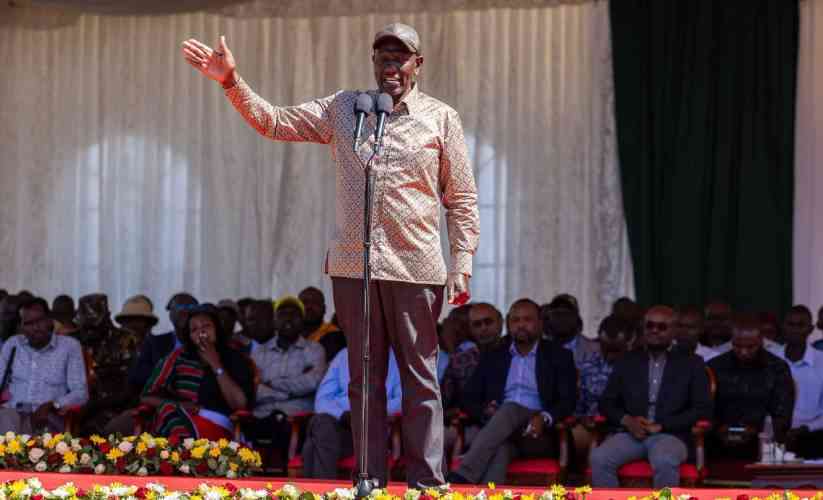
President William Ruto recently announced a significant financial disbursement aimed at resolving a long-standing land dispute, signaling a major step in the government's efforts to address historical grievances. During the final day of his two-day tour of Narok County, speaking from Sogoo in Narok South Constituency on Wednesday, President Ruto confirmed the payment of Sh2.6 billion to 13,000 families who were evicted from the Mau Forest six years prior. This substantial allocation represents a direct intervention to facilitate the resettlement and rehabilitation of those displaced.
Each of the 13,000 beneficiary families received Sh200,000 directly via M-Pesa. This direct financial aid is intended to empower the evictees to rebuild their lives and secure new land away from the critical Mau Forest water tower. President Ruto emphasized that this action officially closes a protracted and often painful chapter for these communities, marking a definitive resolution to the Mau Forest resettlement problem that has plagued the region for years.
Furthermore, the President announced that the management of the Mau Forest will now be overseen by the County Government of Narok, underscoring a localized approach to environmental conservation and resource stewardship. This move aims to ensure sustainable management of the vital ecosystem while addressing the human element of past evictions.
Addressing Historical Land Disputes
This recent payment builds upon previous government initiatives to tackle the complex issue of Mau Forest historical land disputes. In 2023, the administration provided Sh300,000 each to 2,000 families who had been living in temporary shelters within the Mau Forest. That earlier intervention was similarly designed to enable these families to relocate and acquire alternative land, further demonstrating a commitment to Kenya Mau Forest compensation.
Beyond the Mau Forest evictees, President Ruto also highlighted broader efforts to resolve other significant land grievances. He confirmed the government's acquisition of 5,800 acres of land specifically for the resettlement of families who have long lived as squatters. This land, previously owned by the family of former Provincial Commissioner Isaiah Cheluget, is now being processed for title deeds, aiming to provide secure tenure for its new occupants. These actions collectively underscore a developing Kenya land compensation policy focused on rectifying past injustices and providing stability to affected communities.
President Ruto used the occasion to critique political figures who, he argued, have historically politicized the Mau Forest issue without offering tangible solutions. He contrasted their approach, which he termed the "Mau question," with his administration's focus on providing a "Mau answer," asserting that the current actions represent a concrete resolution to the long-standing challenges faced by the evictees.
Broader Development Commitments
The financial disbursements and land resettlement initiatives were part of a wider array of development announcements made during President Ruto's tour of Narok County, reflecting a comprehensive strategy for regional growth. In Emurua Dikirr Constituency, the President allocated Sh1.2 billion for the construction of Johanna Ng'eno University. During the foundation stone laying ceremony, he affirmed that this new institution would fulfill a promise made to local residents and significantly expand access to higher education for students across the nation.
Named in honor of Johana Ng'eno, the university is projected to not only provide educational opportunities but also stimulate economic activity by creating employment and attracting new investments to the region. Additionally, President Ruto launched the construction of an 18-kilometer road project, connecting Mogondo, Cheramgoi, Mogor, and Soit, also within Emurua Dikirr. This infrastructure development is expected to enhance connectivity and unlock further economic potential in the area, complementing the Narok land resettlement funds and other development efforts.
Government's Policy Direction and Accountability
President William Ruto is currently serving as the fifth and current President of Kenya. He also took the opportunity to reiterate his administration's commitment to its electoral pledges, stating that at least 80 percent of the promises outlined in the 2022 campaign manifesto have been fulfilled. He emphasized that future leadership selection by Kenyans would be based on tangible development records rather than mere political rhetoric or "sloganeering."
This comprehensive approach, encompassing significant financial compensation for the Ruto Sh2.6bn Mau Forest evictees, broader land resettlement, and substantial infrastructure and educational investments, signals a clear policy direction. It highlights the government's intent to actively resolve historical land grievances and drive regional development, potentially setting a precedent for how future large-scale evictions or land disputes might be addressed under Kenya land compensation policy.
Practical Implications
This development signals the government's commitment to resolving historical land grievances through compensation and resettlement, potentially setting a precedent for future claims involving large-scale evictions or land disputes. Lawyers should monitor this policy direction for its implications on land law, property rights, and administrative actions concerning environmental conservation and community resettlement.
Source
How does this affect you?
Get an AI analysis of this article grounded in your jurisdictions, practice areas, and any policy documents you've uploaded to Wansom.
Wansom is AI and can make mistakes.