
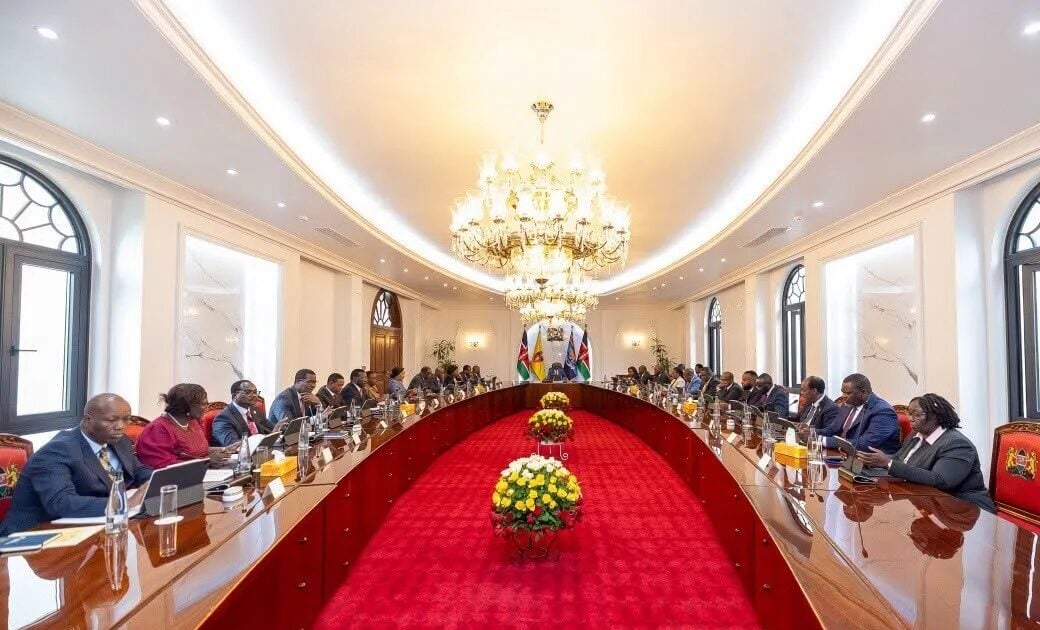
Kenya High Court: Ruto Cabinet Gender Rule Challenge Certified Urgent
Summary
- An urgent application seeks to suspend Kenya's Cabinet and Cabinet Secretaries due to alleged non-compliance with a court order.
- The application, filed by several civil society groups, claims President Ruto failed to reconstitute the Cabinet within 120 days as ordered on June 30, 2026.
- Petitioners are requesting the suspension of official functions, a halt to salary approvals for Cabinet Secretaries, and a declaration of willful contempt against the President.
- The challenge centers on Article 27(8) of the Constitution, which mandates that no more than two-thirds of appointive public bodies be of the same gender.
- The High Court is scheduled to hear this critical matter before a three-judge bench on December 1, 2026.
High Court Challenge to Ruto Cabinet
Lawyers and compliance officers must closely monitor the proceedings of this case, as a successful application could fundamentally alter the operational landscape of the government.
A significant legal challenge has emerged in Kenya, with the High Court certifying as urgent an application seeking to suspend the Cabinet and its Secretaries. This move stems from allegations that President William Ruto failed to adhere to a prior court directive mandating the reconstitution of the Cabinet within a 120-day timeframe. The implementation period for this order, issued on June 30, 2026, concluded on October 28, prompting the current legal action.
The application, brought forth by a coalition of civil society organizations including Katiba Institute, the Centre for Rights Education and Awareness (CREAW), Transparency International Kenya, CRAWN Trust, and the Women’s Movement of Kenya, contends that the President did not comply with the earlier judgment. Among the specific remedies sought by the petitioners is the immediate cessation of official functions by the Cabinet and its Secretaries. They also aim to prevent the Secretary to the Cabinet from convening meetings, documenting decisions, or disseminating Cabinet resolutions.
Demands for Accountability and Compliance
Further to the suspension requests, the petitioners are pushing for the Controller of Budget to halt the approval of salaries and benefits for Cabinet Secretaries, as well as any authorization of expenditure related to Cabinet business, effective from October 28. This comprehensive challenge underscores a demand for strict adherence to judicial pronouncements and constitutional principles.
In a move to ensure accountability, the application also calls for the Attorney-General to be summoned to provide an explanation for the alleged non-compliance. The organizations are additionally seeking a declaration that the President's failure to implement the court's judgment constitutes willful contempt of court. This critical Ruto Cabinet gender rule challenge Kenya is slated for a hearing before a three-judge bench on December 1, 2026.
Constitutional Gender Rule and Cabinet Composition
The core of this legal dispute revolves around Kenya's constitutional two-thirds gender rule, specifically Article 27(8), which mandates that no more than two-thirds of members in appointive public bodies can be of the same gender. The High Court's judgment on June 30, 2026, had previously assessed President Ruto's Cabinet, noting its composition of 18 men and 7 women among 25 members. This assessment indicated a potential breach of the gender rule.
It is crucial to understand that the constitutional two-thirds gender rule applies to the entire Cabinet, not solely to the 22 Cabinet Secretaries. The calculation for High Court gender rule compliance must also factor in the President, the Deputy President, the Attorney-General, and any other constitutionally recognized Cabinet members. While Article 152(1)(d) of the Constitution permits the President to appoint between 14 and 22 Cabinet Secretaries, President William Ruto's administration, as of November 10, 2026, comprises 22 Cabinet Secretaries, including Prime Cabinet Secretary Musalia Mudavadi, who also holds the portfolio for Foreign and Diaspora Affairs.
Why It Matters
The outcome of this High Court challenge carries significant ramifications for governance and legal certainty in Kenya. Should the application to suspend the Cabinet and its Secretaries prove successful, it could lead to the invalidation of both past and future Cabinet decisions. Such a scenario would introduce substantial legal uncertainty regarding government actions, regulatory directives, and the legitimacy of ongoing public sector engagements.
Lawyers and compliance officers must closely monitor the proceedings of this case, as a successful application could fundamentally alter the operational landscape of the government. The potential for a declaration of willful contempt against the President and the suspension of key government functions underscores the gravity of this legal battle and its far-reaching implications for constitutional adherence and the rule of law in Kenya.
Practical Implications
Lawyers and compliance officers should closely monitor the outcome of this High Court challenge, as a successful application to suspend the Cabinet and its Secretaries could invalidate past and future Cabinet decisions, creating significant legal uncertainty regarding government actions, regulatory directives, and the legitimacy of ongoing public sector engagements.
Source
How does this affect you?
Get an AI analysis of this article grounded in your jurisdictions, practice areas, and any policy documents you've uploaded to Wansom.
Finish Reading the Full Story and the Expert Analysis.
Get the latest legal & regulatory intelligence in Kenya
Wansom is AI and can make mistakes.