
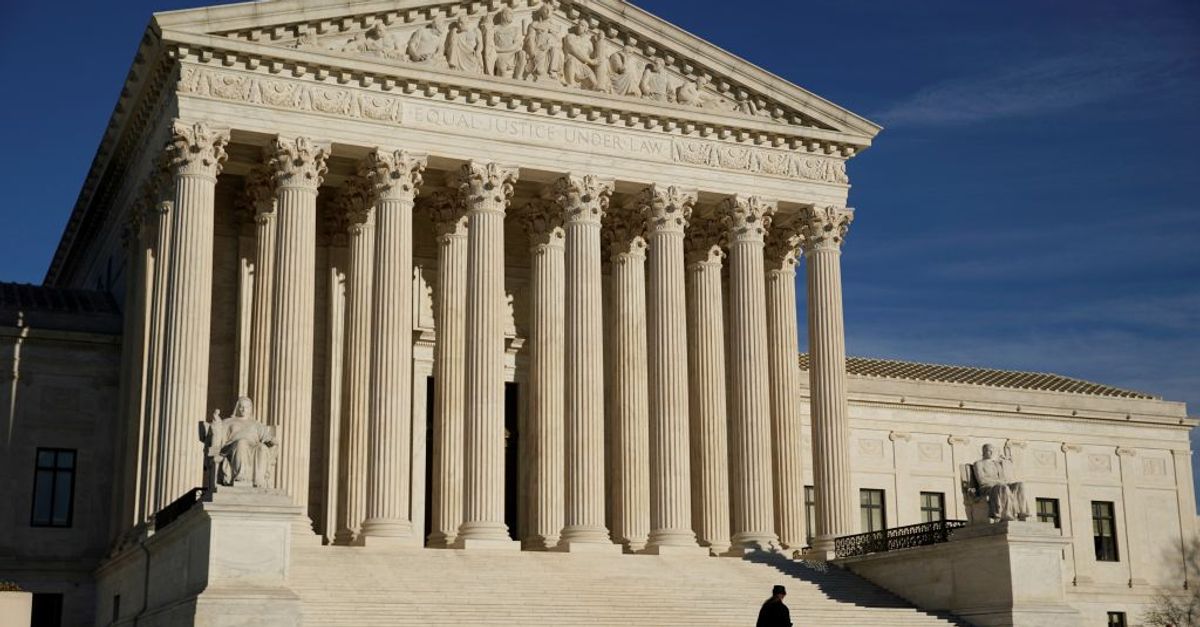
Roberts Court: First, Second Amendment Changes Reshape US Law
Summary
- The Roberts Court has dramatically reoriented the interpretation of the First and Second Amendments over the last two decades.
- Twenty years ago, the Supreme Court strictly enforced the separation of church and state and deferentially reviewed free exercise restrictions.
- At the Roberts Court's inception in 2006, the concept of "religious liberty" was nascent, and conservative justices were skeptical of religious exemptions from neutral laws.
- Historically, the 1878 Reynolds v. United States case protected religious belief in polygamy but allowed prosecution for its practice.
- Two decades ago, the Supreme Court played no role in enforcing the Second Amendment, a situation that has since fundamentally changed.
A Shifting Constitutional Landscape
The past two decades have witnessed a profound reorientation in the Supreme Court's approach to fundamental constitutional rights, particularly concerning the First and Second Amendments.
The past two decades have witnessed a profound reorientation in the Supreme Court's approach to fundamental constitutional rights, particularly concerning the First and Second Amendments. This significant transformation, largely shaped by the Roberts Court, marks a stark departure from the judicial doctrines prevalent at the turn of the millennium. At that time, the nation's highest court maintained a strict enforcement of the separation between church and state, while simultaneously adopting a deferential stance towards government restrictions on the free exercise of religion. Furthermore, the Second Amendment, which protects the right to keep and bear arms, was not an area where the Supreme Court played an active enforcement role.
This dramatic evolution in Roberts Court First Second Amendment changes is chronicled through various editions of a prominent legal casebook, with its first publication in 2008 and the most recent slated for December. The initial edition reflected a legal environment where the modern understanding of "religious liberty" was still in its nascent stages, a perspective that has since undergone considerable expansion. This historical context provides a crucial backdrop for understanding the constitutional law Roberts Court trends that have reshaped American jurisprudence.
Evolution of Religious Liberty
When the Roberts Court began its tenure in 2006, the concept of "religious liberty" as it is understood today was largely undeveloped in Supreme Court First Amendment jurisprudence. At that time, conservative justices, notably led by Justice Antonin Scalia, expressed skepticism regarding claims from religious individuals seeking exemptions from laws that were neutral in their application and generally applicable to all citizens, meaning these laws did not specifically target any particular faith. The doctrine surrounding the free exercise of religion was not considered a particularly contentious area of law, a sentiment reflected in the first edition of a casebook, where the entire chapter dedicated to this topic spanned only 20 pages.
A foundational case illustrating the historical approach to religious freedom was Reynolds v. United States, decided in 1878. This landmark ruling established a distinction between religious belief and religious conduct. In Reynolds, the Supreme Court affirmed protection for the religious belief in polygamy but upheld the legality of prosecuting individuals for the practice of it. This precedent underscored a judicial philosophy that, for many years, allowed for greater governmental regulation of religiously motivated actions, a position that has been significantly re-evaluated under the Free Exercise Clause Roberts Court interpretations.
The Second Amendment's Emergence
Concurrent with the shifts in Supreme Court First Amendment jurisprudence, the Roberts Court Second Amendment evolution represents an equally significant change. Just two decades ago, the Supreme Court had no discernible role in the enforcement or interpretation of the Second Amendment. This absence of judicial engagement meant that the scope and application of the right to bear arms were largely left to legislative bodies and lower courts, without the definitive guidance from the nation's highest judicial authority that is now commonplace.
The transformation from a dormant constitutional provision to a frequently litigated and robustly interpreted right highlights the profound impact of the Roberts Court. This change has fundamentally altered the legal landscape surrounding firearms, moving from a period of judicial non-intervention to one where the Court actively shapes the boundaries of gun ownership rights.
Broader Implications of Judicial Reorientation
The collective changes observed in both First and Second Amendment interpretations signify a comprehensive "reorientation" of constitutional law by the Roberts Court. This period has been characterized by a more expansive view of individual rights in certain areas, particularly regarding religious liberty Supreme Court interpretation and the right to bear arms. The initial skepticism towards First Amendment religious exemptions from neutral laws has given way to a more accommodating stance, while the Second Amendment has been elevated from a largely unenforced provision to a central focus of constitutional litigation.
These developments underscore a dynamic period in American legal history, where long-standing precedents and understandings of fundamental rights have been critically re-examined and, in many cases, redefined. The trajectory of these amendments under the Roberts Court indicates a sustained effort to expand the scope of individual liberties in specific contexts, marking a significant chapter in constitutional law Roberts Court trends.
Practical Implications
Attorneys advising on constitutional law, particularly First Amendment free exercise and Second Amendment rights, must understand the Roberts Court's evolving jurisprudence to accurately assess legal challenges and compliance risks for clients, anticipating a more expansive interpretation of these rights.
Source
How does this affect you?
Get an AI analysis of this article grounded in your jurisdictions, practice areas, and any policy documents you've uploaded to Wansom.
Finish Reading the Full Story and the Expert Analysis.
Get the latest legal & regulatory intelligence in United States
Wansom is AI and can make mistakes.