
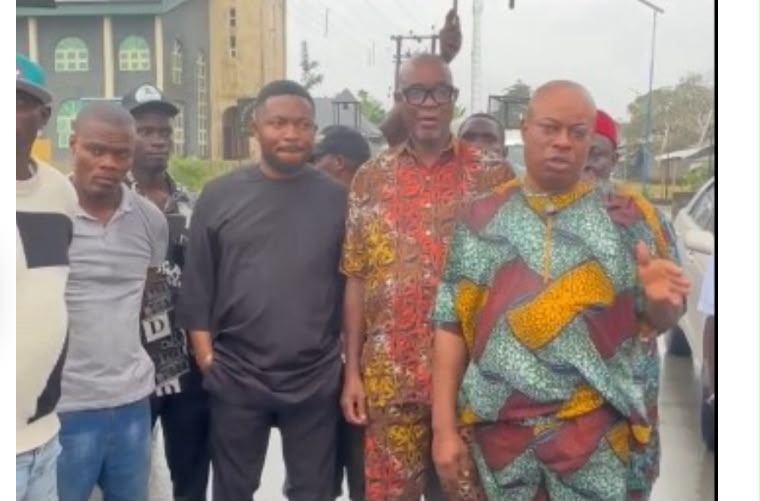
Rivers ADC: Police Meeting Disruption Leads to Member Arrests
Summary
- The African Democratic Congress (ADC) in Rivers State reported that police and a local security committee disrupted one of its meetings and arrested members.
- The ADC expressed concern for Isaiah Thomas, whose residence in Omuoko village, Aluu, was allegedly attacked, looted, and burnt in August.
- The attack on Thomas's home reportedly occurred after a political meeting, raising fears of politically motivated violence.
- These incidents highlight potential abuses of power by state actors and local security committees against political opposition in Rivers State.
Allegations of Disruption and Arrests
These events highlight potential abuses of power by state actors and local security committees against political opposition, which can have far-reaching consequences for electoral integrity and fundamental freedoms.
The African Democratic Congress (ADC) in Rivers State has voiced significant concerns regarding alleged interference with its political activities, specifically citing a recent incident where a party meeting was reportedly disrupted. The party claims that both the Nigerian police and a local security committee were involved in the disturbance, which culminated in the arrest of several ADC members.
This alleged **Rivers ADC police meeting disruption** represents a serious challenge to the freedom of assembly and political association. The involvement of state security apparatus alongside a local committee raises questions about the impartiality of law enforcement in the region and the potential for politically motivated actions against opposition parties. The **ADC Rivers members arrested** during the incident underscore the direct impact on individuals attempting to engage in legitimate political discourse.
Such actions, if confirmed, could stifle the democratic process by intimidating political actors and their supporters. The ADC's report highlights a pattern where political gatherings are not only monitored but actively suppressed, potentially limiting the space for diverse political viewpoints to be expressed and debated within Rivers State.
Broader Context of Political Violence
Beyond the immediate disruption and arrests, the ADC has expressed particular alarm over the plight of Isaiah Thomas, a party affiliate whose residence in Omuoko village, Aluu, allegedly suffered a violent attack. According to the party, Thomas's home was looted and subsequently set ablaze in August, an incident that reportedly occurred in the aftermath of a political meeting.
This specific instance of **Isaiah Thomas residence attack** points to a more severe form of **Aluu Omuoko political violence** that extends beyond mere meeting disruptions to direct physical harm and property destruction. The timing of the attack, following a political gathering, suggests a retaliatory or suppressive motive, further exacerbating fears among political opposition members in the state. The alleged involvement of a local security committee in the broader context of political interference also brings into focus the nature of **Rivers State security committee actions** and their potential role in such incidents.
The destruction of private property and the targeting of individuals based on their political affiliation are grave developments that undermine the rule of law and human rights. Such incidents contribute to an environment of fear, discouraging active participation in the political process and raising concerns about the safety of political actors who are not aligned with the dominant powers.
Implications for Democratic Process
The reported actions against the ADC, including the disruption of its meeting, the arrest of its members, and the alleged attack on Isaiah Thomas's residence, collectively paint a concerning picture for the health of democracy in Rivers State. The alleged **Nigerian police political interference**, coupled with the involvement of local security committees, suggests a coordinated effort to suppress political dissent and opposition activities.
These events highlight potential abuses of power by state actors and local security committees against political opposition, which can have far-reaching consequences for electoral integrity and fundamental freedoms. When security forces, whose primary role is to maintain peace and order impartially, are perceived to be acting as instruments of political suppression, public trust in institutions erodes. This climate can deter citizens from exercising their constitutional rights to assembly and expression, thereby narrowing the democratic space.
For lawyers advising political parties or human rights organizations in Rivers State, these incidents underscore the critical need to monitor such actions for potential human rights violations, unlawful arrests, and property damage. Preparing for legal challenges or the defense of affected individuals becomes paramount in upholding justice and ensuring accountability for actions that threaten the democratic fabric.
Practical Implications
This incident highlights potential abuses of power by state actors and local security committees against political opposition. Lawyers advising political parties or human rights organizations in Rivers State should monitor such actions for potential human rights violations, unlawful arrests, and property damage, and prepare for legal challenges or defense of affected individuals.
Source
How does this affect you?
Get an AI analysis of this article grounded in your jurisdictions, practice areas, and any policy documents you've uploaded to Wansom.
Finish Reading the Full Story and the Expert Analysis.
Wansom is AI and can make mistakes.