
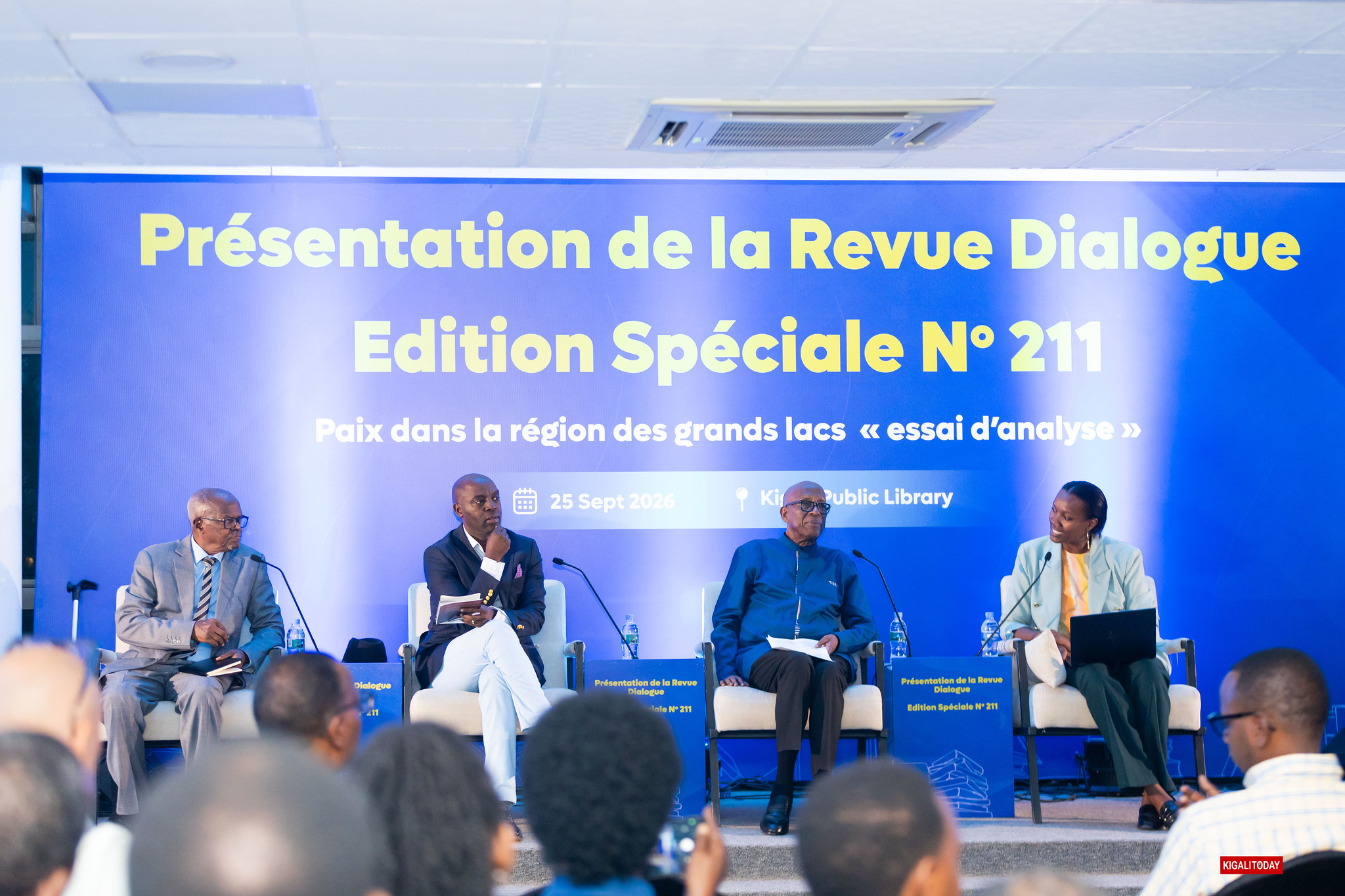
Revue Dialogue: Great Lakes Genocide Ideology Evolves, Targets New Generation
Summary
- The latest edition of *Revue Dialogue*, presented in Kigali, examines how genocide ideology is adapting and influencing a post-1994 generation in the Great Lakes region.
- Research in Edition 211 focuses on ongoing anti-Tutsi violence in eastern DRC, the role of armed groups, and how ideology embeds in daily life.
- Freddy Mutanguha, CEO of the Aegis Trust and Director of the Kigali Genocide Memorial, expressed concern that while original perpetrators age, their children are being trained with the same destructive mindset.
- Major General (Retired) Jack Nziza noted the ideology has "graduated" and is actively transmitted to youth in eastern DRC through propaganda.
- Lawyer Alice Karekezi emphasized the need to understand DRC's political history and make accumulated regional knowledge accessible to the public.
Unpacking Evolving Genocide Ideology in the Great Lakes
Nziza asserts that the ideology has "graduated" or "improved" compared to its form before or during the genocide, citing continuous efforts to expose children and young people in eastern DRC to narratives that consistently portray Tutsi as an immutable enemy.
The latest edition of *Revue Dialogue* was recently unveiled in Kigali, drawing attention to a critical and enduring challenge in the Great Lakes region. Thirty-two years after the Genocide against the Tutsi, a central question persists: how has the ideology that fueled mass killings managed to outlive its original proponents and adapt to contemporary circumstances? Experts are now cautioning that this dangerous ideology is evolving, specifically targeting and influencing a generation that was not yet born when the genocide occurred.
Edition 211 of *Revue Dialogue* delves into the ongoing anti-Tutsi violence affecting Rwandophone communities in the eastern Democratic Republic of Congo (DRC), meticulously examining the ideological forces that continue to shape the regional landscape. The publication explicitly refrains from treating genocide ideology as a mere historical artifact from Rwanda's past. Instead, its comprehensive research explores the current political environment that enables anti-Tutsi rhetoric, scrutinizes the role played by various armed groups in perpetuating this narrative, and investigates the mechanisms through which such ideology becomes deeply embedded in daily social and political life. This focus highlights the urgent need for compliance officers and legal counsel operating in the Great Lakes region, particularly eastern DRC, to understand the evolving nature of this threat.
Generational Transmission and Ideological Reinvention
Freddy Mutanguha, CEO of the Aegis Trust and Director of the Kigali Genocide Memorial, brings a personal historical perspective to the publication's warnings. Founded in 1967 as a forum for intellectual reflection and research, *Dialogue* progressively became more outspoken about political division and discrimination within Rwanda. Mutanguha recalls that these crucial warnings went unheeded by politicians leading up to the 1994 Genocide against the Tutsi. His current concern centers on the transmission of this ideology: while those who propagated it during the genocide, such as members of the Interahamwe and ex-FAR, are now elderly, their children and a new, younger generation are being indoctrinated with the same destructive mindset.
The research featured in the new edition specifically traces the evolution of the FDLR (Democratic Forces for the Liberation of Rwanda) over time, illustrating how younger individuals are being drawn into a movement whose ideological foundations are directly linked to the forces responsible for the genocide. Major General (Retired) Jack Nziza, Vice Chairperson of the Rwanda Demobilization and Reintegration Commission, emphasizes that a significant part of the danger lies in the ideology's capacity for reinvention. Nziza asserts that the ideology has "graduated" or "improved" compared to its form before or during the genocide, citing continuous efforts to expose children and young people in eastern DRC to narratives that consistently portray Tutsi as an immutable enemy. He further identifies propaganda, publications, and other communication channels as integral components of the machinery through which this ideology continues to circulate, underscoring that military defeat alone cannot eradicate an ideology transmitted across generations.
Historical Roots and Future Challenges
Alice Karekezi, a lawyer and contributor to *Dialogue*, argues that a comprehensive understanding of the present situation necessitates a deeper dive into the Democratic Republic of Congo's political history. This includes examining the persistent weakness of state institutions and the recurring exploitation of ethnic identity in political conflicts. Karekezi's contribution suggests that the research, rather than providing definitive answers, has opened up more profound questions, prompting a call for further investigation into how this critical knowledge can be effectively packaged for direct consumption and how *Dialogue* can maximize its demonstrated potential.
Karekezi also challenged researchers to consider the practical application of knowledge once it has been generated. Despite the region's extensive accumulation of historical accounts, political analyses, and documentation, a substantial portion of this valuable information remains inaccessible to the general public. This challenge is particularly pertinent in the current era, highlighting the ongoing need for effective dissemination strategies. For legal counsel and compliance officers, this evolving generational transmission of genocide ideology in the Great Lakes region has significant implications for assessing political stability, ensuring human rights compliance, and evaluating risks associated with regional operations and investments.
Practical Implications
Compliance officers and legal counsel operating in the Great Lakes region, particularly eastern DRC, should be aware of the evolving nature and generational transmission of genocide ideology, which could impact political stability, human rights compliance, and risk assessments for regional operations and investments.
Source
How does this affect you?
Get an AI analysis of this article grounded in your jurisdictions, practice areas, and any policy documents you've uploaded to Wansom.
Finish Reading the Full Story and the Expert Analysis.
Get the latest legal & regulatory intelligence in Rwanda
Wansom is AI and can make mistakes.