
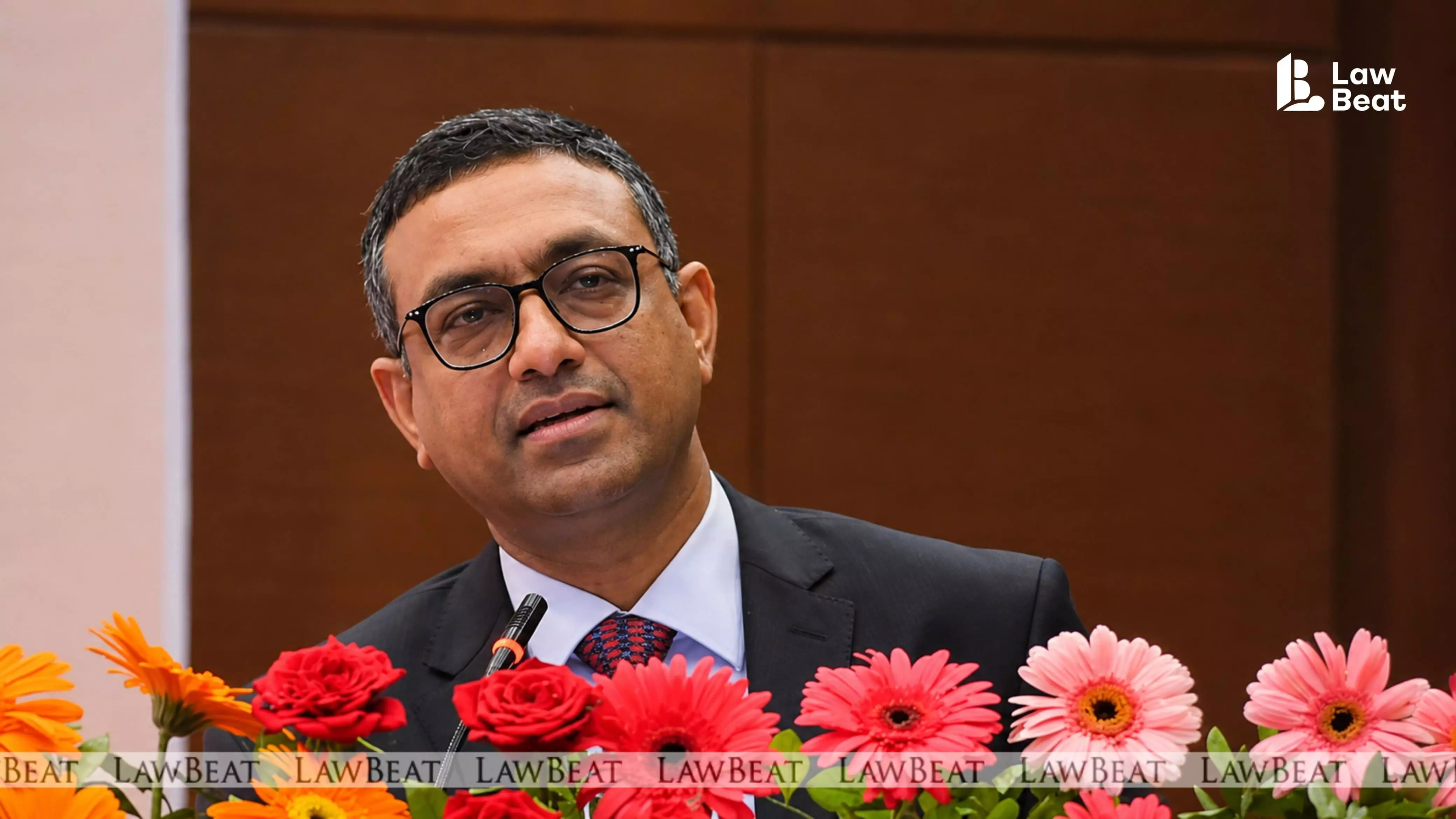
"Responsibility For Administering Justice Cannot Be Outsourced": Senior Advocate Rajshekhar Rao On AI In Court
What Happened
Home / Top Stories "Responsibility For Administering Justice Cannot Be Outsourced": Senior Advocate Rajshekhar Rao On AI In Courts X Judges, not AI, must remain in the driver's seat of justice, says Senior Advocate Rajshekhar Rao Senior Advocate Rajshekhar Rao said at DNLU Jabalpur that the judge, not artificial intelligence, must remain in the driver's seat of adjudication Artificial intelligence may make courts faster and easier to reach, but the responsibility for deciding cases must stay with a human judge, Senior Advocate Rajshekhar Rao told law students, faculty and judges at the inaugural JusTech National Conclave at Dharmashastra National Law University (DNLU), Jabalpur. Speaking at a session on the interplay between artificial intelligence and the future of justice, Rao said, "The question is not whether artificial intelligence will transform the judiciary. It almost certainly will. The more consequential question to my mind is who or what … should be in the driver's seat when justice is being administered." His answer was unequivocal: "it is the judge." Rao, who said this was his first visit to Jabalpur, addressed his remarks "largely [to] the younger lot" . He organised the speech around three questions: the potential of AI for access to justice in India, the constitutional and institutional risks of adopting it, and how the legal profession, the judiciary and institutions should respond. Rao opened with an account of a legal-aid matter he argued as a young lawyer before the late Justice Valmiki Mehta of the Delhi High Court on 23 December 2011, the last working day before the winter break. He appeared for a woman with a minor child who had been evicted from her matrimonial home by her father-in-law. At the time, he said, "the Supreme Court was rather more emphatic that a daughter-in-law had no claim to the estate of her in-laws." Rao recalled that, moments before his matter was called, Justice Mehta had admonished a senior advocate in an earlier item: "This is the problem with you lawyers. you don't advise your clients. How can you advise a lady that she has a right in her father-in-law's estate?" When Rao rose to say he had "a slightly different point to make", the judge replied, "Of course you do, young man, but you haven't made it." Justice Mehta then pointed him to the child's claim, Rao said: "You have founded your case on the right of the mother. You have forgotten about the right of her child. Have you seen the Hindu Adoptions and Maintenance Act? According to you the father is unavailable and he's not been seen for the last seven plus years. Isn't there a presumption that he is dead? And is there no right that the minor has in the estate of his grandfather?" The judge asked him to file an affidavit raising additional grounds the same day. Rao said that when he returned, Justice Mehta told his client, "Madam, the law is entirely against you. Your young man has also failed you. This is all I can do to try and give you justice. I'm admitting your petition. Make sure you educate your son so that he can take care of you." The woman, Rao said, left the house "with a settlement in 2023 with a son who's now an engineer who's looking after his mother." He described it as "the defining aspect of what justice is." He later returned to the episode to make his point about technology, "The technology would have probably said sorry supreme court says this is a daughter-in-law asking for a right in a father-in-law's estate. No relief. would not have taken that additional step forward and found a way to do justice." Rao said he expected a human presence on the bench "at least in our lifetime hopefully and going forward always" , a presence that takes an oath under the Constitution as a judge of a High Court or the Supreme Court. That oath, he said, "formally insulates this entire structure." He framed the debate as "the classic tussle between logic and experience", contrasting Sir Edward Coke's dictum that "reason is the li
Source
Source: Original reporting via LawBeat
How does this affect you?
Get an AI analysis of this article grounded in your jurisdictions, practice areas, and any policy documents you've uploaded to Wansom.
Finish Reading the Full Story and the Expert Analysis.
Get the latest legal & regulatory intelligence in India
Wansom is AI and can make mistakes.