
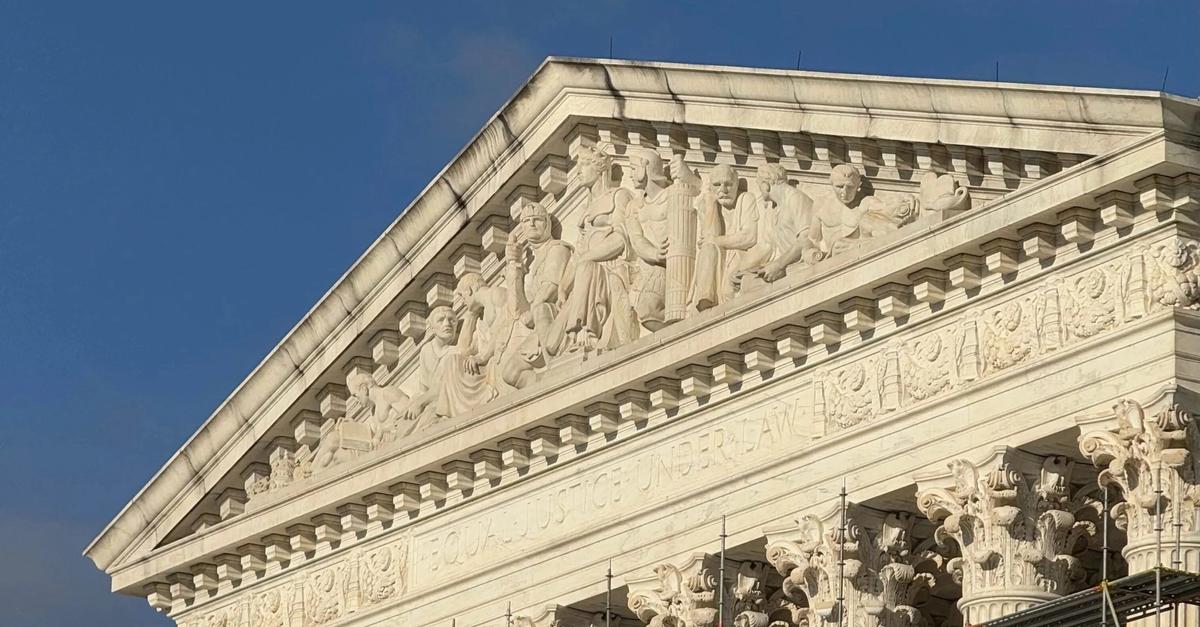
Republican Senators Defend Supreme Court Justices From Trump
Summary
- Republican senators defended Supreme Court justices against President Trump's criticisms regarding a mail-in ballot decision, emphasizing judicial independence.
- President Trump accused his appointed justices of issuing "faulty, political, and ridiculous decisions" on tariffs and birthright citizenship via Truth Social.
- Justice Amy Coney Barrett acknowledged a climate of increased attacks on the judiciary but sidestepped direct comments on President Trump's specific remarks.
- The Supreme Court is currently considering a Trump administration request to use a federal database to identify noncitizens on state voter rolls.
- A recent Supreme Court ruling expanded presidential power to remove agency heads, with ongoing legal questions about the termination of "inferior officers."
Presidential Criticism and Congressional Defense
Republican senators have notably rallied to the defense of the Supreme Court, asserting the judiciary's independence in the face of presidential criticism.
President Donald Trump recently voiced strong disapproval of Supreme Court justices he appointed, specifically Neil Gorsuch, Brett Kavanaugh, and Amy Coney Barrett, after the Court declined to permit his administration to implement certain aspects of a plan to have the U.S. Postal Service screen mail-in ballots. Writing on Truth Social, the President contended that these justices “are merely a shell of their original selves” for not supporting his initiatives. This particular decision by the Supreme Court, which rejected a proposal to alter mail-in balloting processes across the United States just weeks before Election Day, drew the President's ire.
In response to these comments, Republican senators have notably rallied to the defense of the Supreme Court, asserting the judiciary's independence in the face of presidential criticism. Senator John Kennedy, a Louisiana Republican and member of the Senate Judiciary Committee, stated his belief that he knows each justice personally and that they strive to interpret the law as they see it, fulfilling their professional duty. Similarly, Senator John Cornyn, a Texas Republican also on the Judiciary Committee, dismissed President Trump's assessment of the justices, emphasizing that an independent judiciary stands as the most crucial institution within the government.
Beyond the mail-in ballot dispute, President Trump has repeatedly criticized Justice Barrett and other justices in recent months for rulings that went against his signature policies. On a Saturday, he again took to Truth Social to accuse the justices of issuing “faulty, political, and ridiculous decisions” concerning tariffs and birthright citizenship, claiming these rulings had cost the United States “trillions of dollars.” He further posted that the Supreme Court “has lacked the Courage to MAKE AMERICA GREAT AGAIN,” describing it as “a sad chapter in the life and times of America,” while expressing confidence that “we will prevail!”
Judicial Independence Under Scrutiny
Justice Amy Coney Barrett, during an appearance at the University of Virginia on a Thursday, was directly questioned about President Trump’s recent remarks. However, she chose to sidestep the specific inquiry, stating, “I don’t want to talk about anything that the president has said in particular.”
When asked whether disparaging comments made over the past year by President Trump and White House Deputy Chief of Staff Stephen Miller had contributed to an increase in threats against the judiciary, Justice Barrett addressed the broader issue. She acknowledged a surge in attacks on the judiciary and “everyone in Washington,” remarking, “We certainly live in a time and in a climate where people are quick to say things that I certainly wish – you know – that they wouldn’t.” She also reflected on the personal impact of her career, noting that her ascent to the Supreme Court has at times left her feeling isolated, describing it as a “lonely job” and finding it more challenging to forge new friendships as a justice.
Current and Pending Supreme Court Matters
The Supreme Court is currently poised to consider a request from the Trump administration to authorize the use of the Department of Homeland Security’s Systematic Alien Verification for Entitlements (SAVE) database. This database would be utilized to identify noncitizens listed on state voter rolls. The legal dispute surrounding this request has been fully briefed, and a decision from the Court could be issued at any moment.
Looking ahead, the justices are scheduled to convene for their “long conference” on Monday, September 28, which is now just one week away. During this session, they will deliberate on the numerous petitions for review that accumulated throughout their summer recess. This conference is a critical juncture for determining which cases the Court will hear in the upcoming term.
In a separate development, a June ruling by the Supreme Court, which focused on former FTC commissioner Rebecca Slaughter, significantly overturned a key restraint on presidential authority. This decision effectively granted President Trump expanded power to remove the heads of executive agencies. However, the Court deliberately left unresolved the question of a president’s authority to terminate so-called “inferior officers,” a legal question that is now actively being litigated in lower courts. On a recent Friday, the Justice Department presented arguments suggesting that the scope of the *Slaughter* ruling should also extend to more junior employees.
A Historical Perspective on Judicial Confirmations
Forty-five years ago, the Senate unanimously confirmed Sandra Day O’Connor’s appointment to the Supreme Court. This historical event underscores a period of bipartisan consensus in judicial appointments, offering a contrast to the current climate of intense scrutiny and political division surrounding the judiciary.
Source
How does this affect you?
Get an AI analysis of this article grounded in your jurisdictions, practice areas, and any policy documents you've uploaded to Wansom.
Finish Reading the Full Story and the Expert Analysis.
Get the latest legal & regulatory intelligence in United States
Wansom is AI and can make mistakes.