
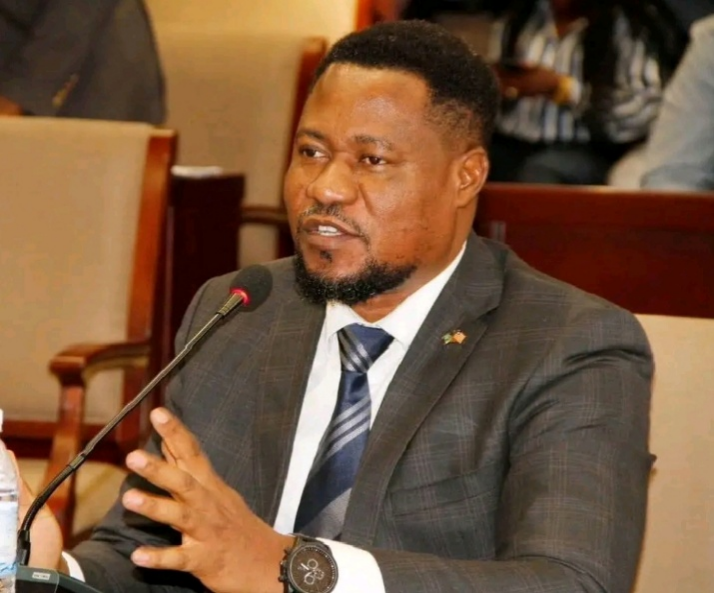
Rep. Taylor: Challenges Liberia City Status Revocation Decision
Summary
- Maryland County District #3 Representative Austin B. Taylor challenged the Ministry of Local Government's decision to revoke city status from several communities.
- The Ministry's September 2026 decision cited communities' failure to meet criteria, leaving only Pleebo and Harper as recognized cities in Maryland County.
- Representative Taylor argued that residents should not be penalized for the government's failure to provide basic services like running water and banking.
- He questioned the Ministry's unilateral decision-making process, asserting that the Local Government Act requires legislative deliberation.
- Two communities in Taylor's district, Karloken City and Glofaken City, lost their city status, despite prior warnings and appeals for extensions by Superintendent Nathaniel Toe, Jr. in August 2026.
Legislative Challenge to City Status Revocation
Representative Taylor underscored the government's fundamental responsibility to ensure that communities are equipped with necessary services, rather than holding citizens accountable for their absence.
Maryland County District #3 Representative Austin B. Taylor has formally contested a recent decision by the Ministry of Local Government to strip several communities of their city status. This challenge was voiced on Tuesday, October 14, during the First Sitting of the Third Quarter of the House of Representatives. The Ministry's nationwide directive, initially announced in September 2026, cited the failure of these communities to meet established criteria for municipal recognition.
In Maryland County, this decision has significantly altered the local governance landscape, leaving only Pleebo and Harper officially recognized as cities, while other previously designated urban areas have had their status revoked. Representative Taylor strongly argued against penalizing residents for deficiencies that he attributes to the government's own failure to provide essential services and infrastructure. He questioned the fairness of revoking city status when the absence of basic amenities, such as running water and banking institutions, stems from a lack of governmental provision.
Legal and Procedural Scrutiny
Representative Taylor underscored the government's fundamental responsibility to ensure that communities are equipped with necessary services, rather than holding citizens accountable for their absence. He pointedly asked whether it was the role of citizens or local inhabitants to establish banks or provide running water, asserting that these are governmental obligations. Taylor emphasized that the government should not "renegade" on the status of communities and their citizens simply due to the lack of these basic provisions.
Beyond the issue of service provision, the lawmaker raised serious questions regarding the procedural legitimacy of the Ministry's decision-making process. Citing the Liberia Local Government Act, Representative Taylor contended that the responsible minister lacked the authority to unilaterally make such a significant determination regarding Liberia municipal status criteria. He insisted that the minister should instead present the matter to the Legislature, allowing lawmakers to deliberate on the issue before any final decision on city status revocation is enacted. He further joined calls for the minister and their deputies to appear before the Legislature to provide a comprehensive explanation for their actions, warning that a failure to offer a satisfactory account should prompt the Legislature to consider taking appropriate action against them.
Historical Context and Local Impact
Austin B. Taylor also highlighted the historical context of many affected communities, noting that some have existed for decades, even approaching a century, since Liberia gained independence in 1847. He questioned why, after such a long period, the government had not ensured the necessary infrastructure was in place to help these established communities meet the current requirements for city status. This historical perspective frames his broader critique of governmental oversight and long-term planning.
The debate holds particular relevance for Maryland County, where two communities within Representative Taylor’s electoral district, Karloken City in Karluway Statutory District and Glofaken City in Barrobo Statutory District, have specifically lost their official city recognition under the Liberia Ministry of Local Government city status decision. Interestingly, efforts to address infrastructure deficits in these very communities were already underway in August 2026. Maryland County Superintendent Nathaniel Toe, Jr. had previously announced government plans to address cities lacking essential infrastructure, including city halls. Superintendent Toe had appealed for an extension, requesting that affected cities be granted until December to meet the required standards, while also cautioning that the Ministry would proceed with action after this deadline if infrastructure remained inadequate. Superintendent Toe had taken his oath of office on August 11, 2026, just two days prior to these public statements.
Practical Implications
Lawyers and compliance officers in Liberia should closely monitor the legislative challenge to the Ministry of Local Government's unilateral decision-making regarding city status, as it questions the legal process under the Local Government Act and could lead to judicial review or legislative action impacting municipal governance and local regulatory frameworks.
Source
How does this affect you?
Get an AI analysis of this article grounded in your jurisdictions, practice areas, and any policy documents you've uploaded to Wansom.
Finish Reading the Full Story and the Expert Analysis.
Get the latest legal & regulatory intelligence in Liberia
Wansom is AI and can make mistakes.