
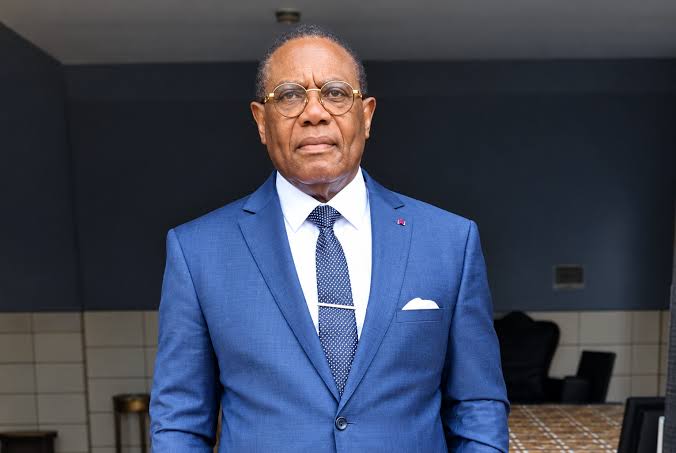
Cameroun: Remy Nama Prête Serment comme Président du Conseil Constitutionnel
Summary
- Remy Nama has been appointed as the new president of Cameroon's Constitutional Council.
- Abdoulaye Daouda was also named a new member of the Constitutional Council.
- President Paul Biya issued decrees for both appointments on October 16, 2026.
- They are scheduled to take their official oath before a joint session of Parliament on November 11, 2026, at the Paul Biya Glass Palace.
- This ceremony is a constitutional prerequisite for their assumption of duties within the judicial body.
Key Leadership Changes at Cameroon's Constitutional Council
The composition and leadership of the Constitutional Council carry profound implications for Cameroon's legal and political framework.
President Paul Biya has officially appointed Remy Nama as the new president of the Constitutional Council of Cameroon, alongside Abdoulaye Daouda, who will serve as a new member of the esteemed body. These pivotal appointments, which will shape the future direction of constitutional interpretation in the nation, were formally announced through presidential decrees issued on October 16, 2026. The changes come at a crucial time, filling vacancies that arose within the Council and ensuring the continuity of its essential functions in upholding the rule of law.
Remy Nama assumes the presidency following the demise of Clément Atangana, who was the inaugural president of the Constitutional Council and passed away on October 4, 2026. His leadership will be instrumental in guiding the Council's decisions. Concurrently, Abdoulaye Daouda steps in to replace Bah Oumarou Sanda, who died in August 2026. Both new members are now prepared to undertake their significant responsibilities within this institution, often recognized as the "council of elders," pending the completion of their formal induction.
Imminent Swearing-In Ceremony
The formal engagement for Remy Nama and Abdoulaye Daouda is scheduled for Wednesday, November 11, 2026, when they will take their official oath of office. This solemn ceremony will be conducted before a joint session of the Cameroonian Parliament, referred to as the Congress, which brings together representatives from both the National Assembly and the Senate. The event is slated to commence at 11:00 AM at the prestigious Paul Biya Glass Palace, a venue reserved for significant state occasions and legislative proceedings.
The convocation of this special parliamentary Congress was formally mandated by an order issued from its bureau, bearing the signature of President Théodore Datouo. This unified legislative body will play a vital role in officially receiving the oath from the two recently designated members of the Constitutional Council. The timing of this important constitutional event is noteworthy, as it is set to occur on the day immediately following the commencement of the November parliamentary session, which is primarily dedicated to the critical task of examining and voting on the state budget for the upcoming fiscal year. This highlights the integration of the judicial and legislative branches in this formal process.
Constitutional Authority and Future Impact
The act of taking an oath before the Congress represents a fundamental constitutional requirement that Remy Nama and Abdoulaye Daouda must fulfill before they can fully assume their official duties. This established procedure ensures that all new members of the Constitutional Council publicly affirm their commitment to their responsibilities, thereby reinforcing the integrity and legitimacy of their roles. Immediately following this ceremony, the two individuals will formally adopt their respective attributes: Remy Nama as the president and both as counselors, marking their official entry into this pivotal judicial institution.
The composition and leadership of the Constitutional Council carry profound implications for Cameroon's legal and political framework. As the ultimate arbiter of constitutional matters, the Council is tasked with interpreting the nation's foundational law, resolving contentious electoral disputes, and meticulously reviewing the constitutionality of proposed and existing legislation. Therefore, changes in its membership, particularly at the presidential level, can significantly influence the trajectory of constitutional jurisprudence, impact the resolution of future electoral challenges, and shape the overall stability of democratic processes. The "Remy Nama serment Conseil constitutionnel Cameroun" event is thus a critical juncture for the nation's governance, with potential long-term effects on legal strategies and outcomes across various sectors.
Practical Implications
Lawyers practicing in Cameroon, particularly in public or constitutional law, should note the new composition of the Constitutional Council. Changes in leadership and membership of this key judicial body can influence future constitutional interpretations, electoral dispute resolutions, and the review of legislation, potentially impacting legal strategies and outcomes.
Source
How does this affect you?
Get an AI analysis of this article grounded in your jurisdictions, practice areas, and any policy documents you've uploaded to Wansom.
Finish Reading the Full Story and the Expert Analysis.
Get the latest legal & regulatory intelligence in Cameroon
Wansom is AI and can make mistakes.