
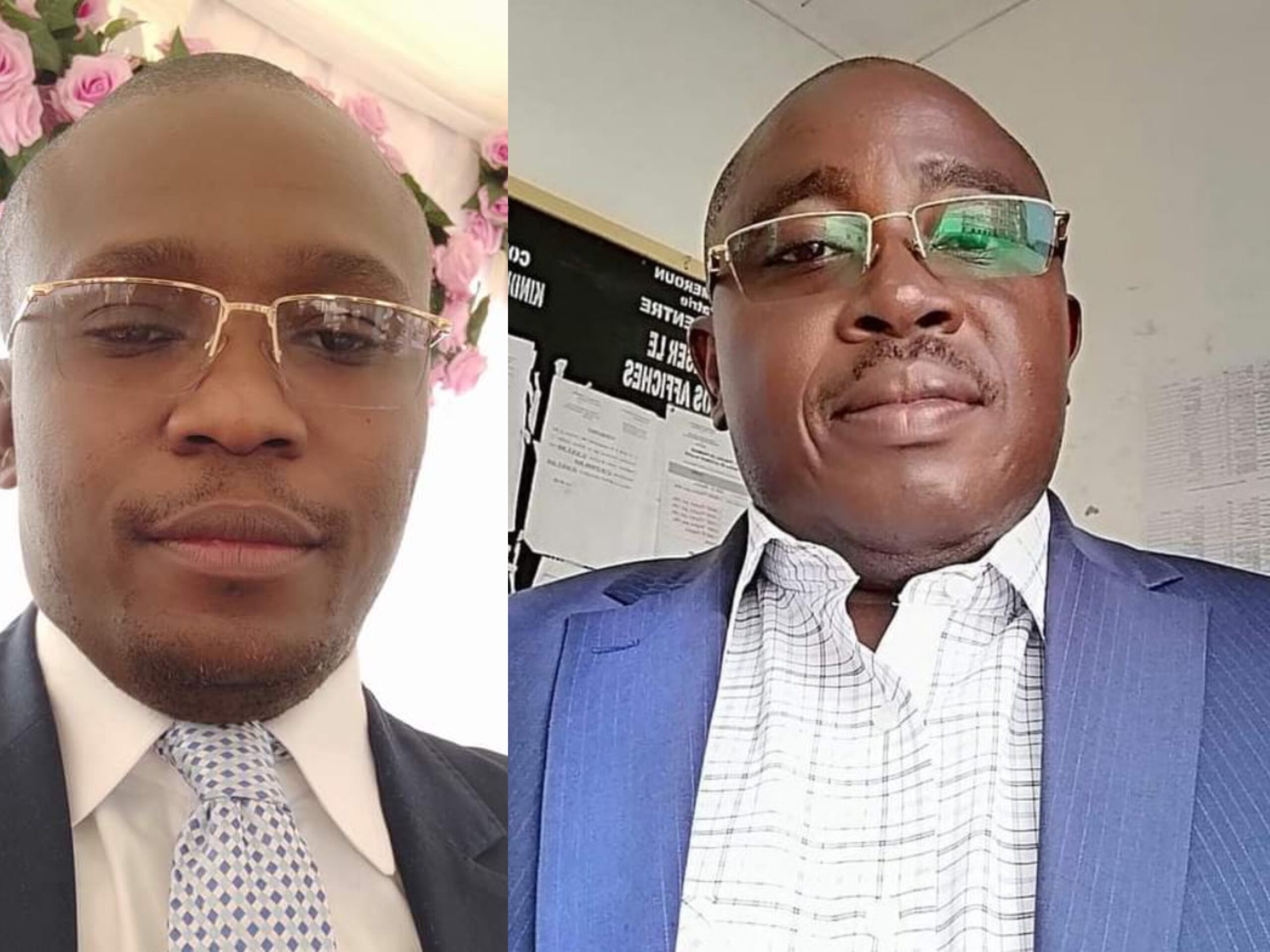
Yaoundé Military Tribunal: Remplacement Commissaire Gouvernement Revealed
Summary
- Journalist Christophe Bobiokono announced an upcoming Kalara magazine article detailing the replacement of the Government Commissioner at the Yaoundé Military Tribunal.
- The replacement is attributed to the Commissioner's alleged neglect of his primary prosecutorial duties in criminal trials.
- Bobiokono criticized Moussa Njoya's understanding of criminal procedure, citing examples from cases involving M. Atangana Mebara, Marafa Hamidou Yaya, and Yves Michel Fotso.
- The journalist linked Njoya to a wealthy accused in the *Affaire Martinez Zogo Cameroun*, suggesting a pursuit of financial gain.
- Bobiokono previously highlighted the former Commissioner's "follies" regarding the *Affaire Martinez Zogo*, which were exposed in a prior Kalara edition.
Leadership Change at Yaoundé Military Tribunal Announced
The impending replacement of the Government Commissioner at the Yaoundé Military Tribunal carries significant implications for the administration of justice in Cameroon, particularly concerning the Droit pénal militaire Cameroun.
Christophe Bobiokono, a prominent journalist and director of publications, has revealed that the forthcoming edition of Kalara magazine will feature an in-depth investigation into a significant development at the Yaoundé Military Tribunal. The report will detail the replacement of the Government Commissioner, a key figure responsible for the prosecution within the military justice system. Bobiokono indicated that this change stems from the Commissioner's alleged neglect of his fundamental responsibilities in criminal proceedings, specifically his primary role as the lead official for the prosecution.
This announcement by Bobiokono was made in the context of a public dispute with Moussa Njoya, described by Bobiokono as a political science student. Bobiokono characterized Njoya's recent writings as verbose and ill-informed, particularly in response to one of Bobiokono's earlier posts. He also questioned Njoya's self-proclaimed titles of "Dr" or "Professor," suggesting they are used inappropriately. The journalist's statement underscores a broader critique of Njoya's understanding of legal principles and procedural intricacies.
Bobiokono's remarks also touched upon Njoya's alleged associations, including with M. Ngoh Ngoh and M. Mopa Fatouin. He suggested that Njoya might be attempting to align himself with a wealthy individual accused in the high-profile *Affaire Martinez Zogo Cameroun*, implying a pursuit of financial gain given the accused's "notoriously known largesse." Bobiokono sarcastically referred to Njoya as a "bounty hunter," further highlighting the contentious nature of their public discourse. The upcoming *Kalara magazine enquête* promises to shed more light on the circumstances surrounding the *Remplacement Commissaire gouvernement Tribunal militaire Yaoundé*.
Clarifying Criminal Procedure in Cameroon
In his critique of Moussa Njoya's legal understanding, Christophe Bobiokono offered crucial clarifications regarding criminal procedure, particularly relevant to the *Fonctionnement Tribunal militaire Yaoundé* and broader *Droit pénal militaire Cameroun*. He emphasized that in criminal matters, a court's jurisdiction is established through a specific judicial act, known as an "ordonnance de renvoi" or referral order. This act precisely identifies the individuals involved, the specific facts alleged against them, and the exact legal qualifications of those facts.
Bobiokono underscored that once a case is brought before the court in this manner, there is no possibility for an "élargissement," meaning the scope of the charges or the individuals involved cannot be arbitrarily expanded. While the joinder of distinct legal procedures is permissible and frequently occurs, he firmly stated that a witness can never transition to the status of an accused during the judgment phase of a trial. He expressed surprise that someone claiming academic credentials, especially in law, would be unaware of such fundamental principles.
To illustrate his points, Bobiokono referenced past high-profile cases. He clarified that M. Atangana Mebara faced prosecution for attempted embezzlement related to funds designated for a presidential aircraft. Separately, Marafa Hamidou Yaya and Yves Michel Fotso were prosecuted for the actual embezzlement of the same sum. Bobiokono highlighted that the latter case originated from the former due to a procedural flaw attributed to the same investigating judge, M. Pascal Magnanguemabe. These examples serve to reinforce the strict procedural requirements that, according to Bobiokono, the former Government Commissioner at the Yaoundé Military Tribunal may have overlooked.
Implications for Justice and Public Trust
The impending replacement of the Government Commissioner at the Yaoundé Military Tribunal carries significant implications for the administration of justice in Cameroon, particularly concerning the *Droit pénal militaire Cameroun*. Christophe Bobiokono's assertion that the Commissioner had "forgotten his main mission" as the primary prosecution official suggests a potential systemic issue or a lapse in prosecutorial rigor that could have affected numerous criminal trials. This change signals a possible re-evaluation of leadership and approach within a key judicial institution.
The context of the *Affaire Martinez Zogo Cameroun* further amplifies the importance of this development. Bobiokono previously lauded a Kalara magazine edition that, according to him, exposed the "follies" of the Government Commissioner concerning the Martinez Zogo case, including "divagations about Modeste Mopa." This public criticism, which occurred at the Djeuga Hôtel during the 30th anniversary of Mutations and was witnessed by many, indicates a history of concerns regarding the Commissioner's handling of sensitive and high-profile matters. The replacement could therefore be seen as a direct response to these criticisms and a move towards restoring confidence in the prosecutorial arm of the military tribunal.
For legal practitioners and observers of the Cameroonian justice system, the detailed article in the upcoming *Kalara magazine enquête* will be crucial. It is expected to provide a documented account of the reasons behind the *Remplacement Commissaire gouvernement Tribunal militaire Yaoundé*, offering insights into the specific failures or shortcomings that led to this decision. Such transparency could influence future prosecutorial strategies, judicial oversight, and public perception of the *Fonctionnement Tribunal militaire Yaoundé*, especially in complex criminal cases. The shift in leadership at such a critical juncture underscores the ongoing scrutiny of judicial processes in the country.
Practical Implications
The announced replacement of the Government Commissioner at the Yaoundé Military Tribunal, due to alleged failures in criminal trials, signals a potential shift in prosecutorial approach and leadership at this key court. Lawyers practicing criminal law in Cameroon, particularly those with cases before the military tribunal, should monitor the upcoming Kalara publication for details that could impact their legal strategies or client representation.
Source
How does this affect you?
Get an AI analysis of this article grounded in your jurisdictions, practice areas, and any policy documents you've uploaded to Wansom.
Finish Reading the Full Story and the Expert Analysis.
Wansom is AI and can make mistakes.