
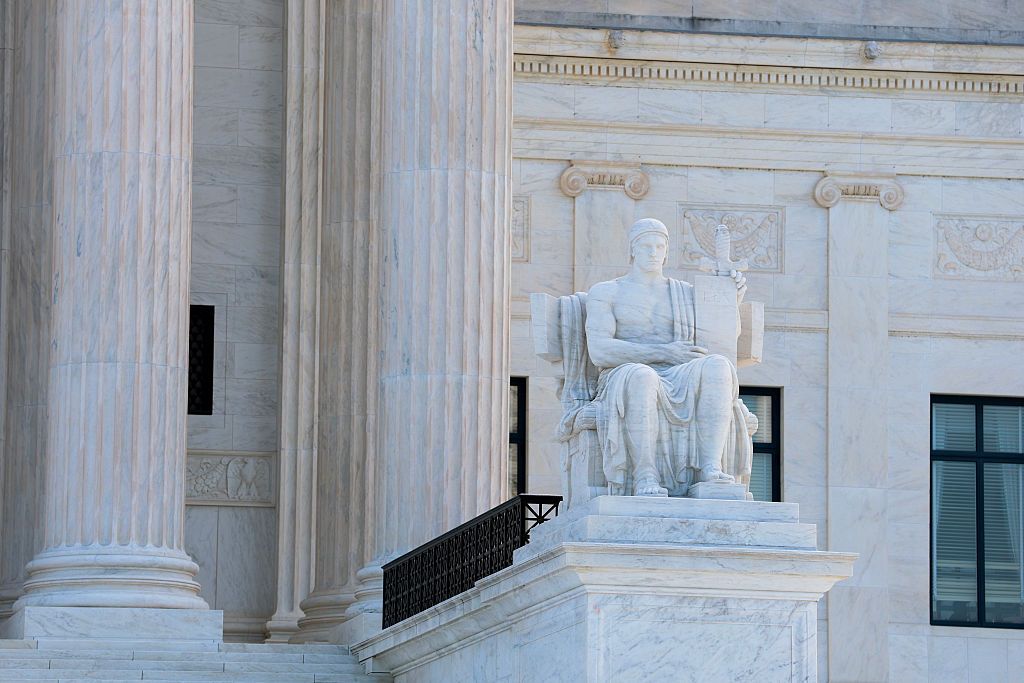
Refugees, Asylum, and Supreme Court Exceptionalism
What Happened
American exceptionalism, the idea that the United States is uniquely virtuous, has deep roots that predate the nation itself. The founders of New England, in words echoed by President Ronald Reagan, famously declared that it was to be “as a citty upon a Hill. The eies of all people are upon us.”At best, American exceptionalism can be beneficent in intent and beneficial in result. In time the New England states would become leaders in the abolition of slavery. Closer to our time, the United States would translate its victory in the Second Word War into the Marshall Plan, the World Bank, and the currently embattled international legal order under the aegis of the United Nations. The 18th Amendment, the juvenile death penalty (until 2005), and the failure to guarantee a right to healthcare furnish examples of exceptionalism gone wrong.And then there is the Supreme Court’s wariness toward international law. At the Founding and for decades thereafter, the court tended to embrace “the law of nations,” either as a guide to interpreting relevant statutes or even as furnishing a rule of decision in appropriate circumstances. In more recent times, however, majorities have balked at viewing treaties as self-executing, taking guidance from the International Court of Justice, or applying statutes that expressly incorporate “the law of nations” into domestic law.A grant of certiorari just this month will likely confirm the trend. The case is Mullin v. Refugee and Immigrant Center for Educa
Source
How does this affect you?
Get an AI analysis of this article grounded in your jurisdictions, practice areas, and any policy documents you've uploaded to Wansom.
Finish Reading the Full Story and the Expert Analysis.
Get the latest legal & regulatory intelligence in United States
Wansom is AI and can make mistakes.