
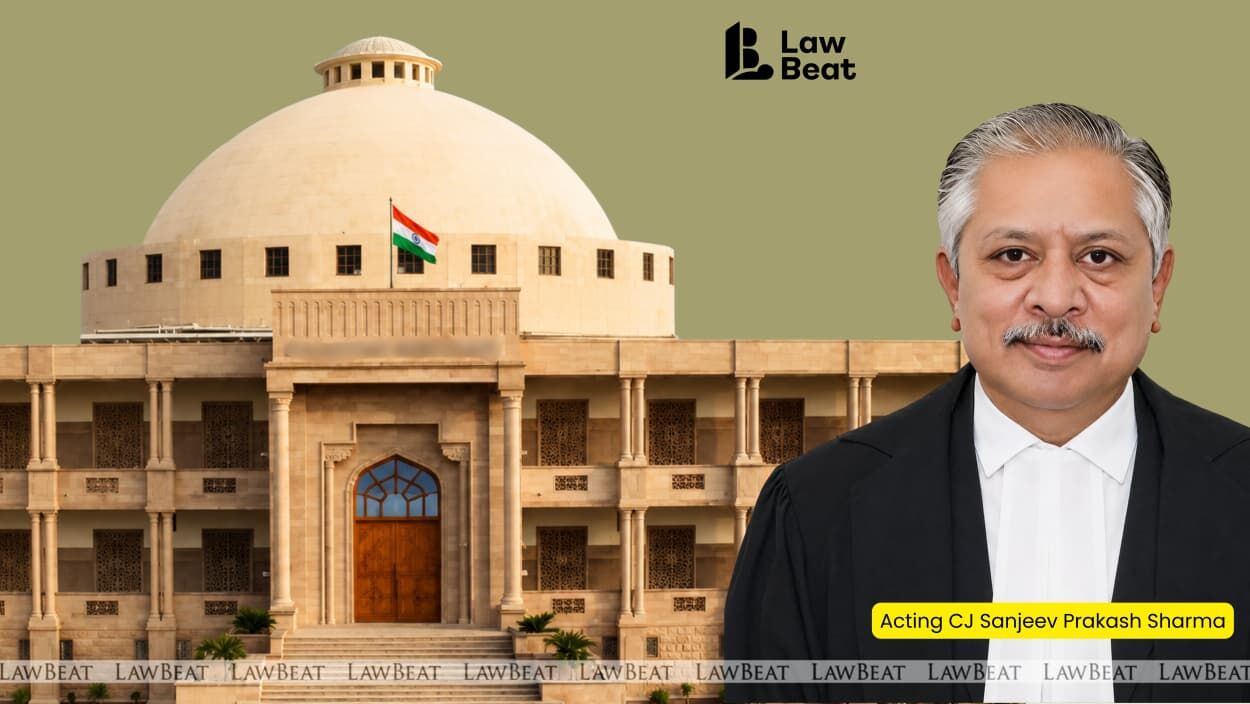
Justice Sanjeev Sharma Denies Justice Sandeep Mehta Allegations: Rajasthan HC Leadership
Summary
- Rajasthan High Court Acting Chief Justice Sanjeev Prakash Sharma has publicly denied allegations of favoritism and administrative misconduct made against him by Justice Sandeep Mehta.
- Justice Sharma stated he has submitted a detailed, evidence-backed response to the Supreme Court, refuting claims made in letters dated August 2, 10, and 17.
- The Supreme Court Collegium has recommended Justice Sanjay K Agarwal of the Chhattisgarh High Court as the new Chief Justice for Rajasthan, following lawyer protests and the controversy.
- Chief Justice of India Surya Kant clarified that the allegations are under examination and cannot be adjudicated publicly, emphasizing due process for Justice Sharma.
- Justice Sharma, who returned as Acting Chief Justice in May 2025 and is set to retire in September 2026, temporarily stepped back from judicial duties amidst the protests.
Acting Chief Justice Denies Allegations Amidst High Court Turmoil
The Supreme Court's firm stance on internal examination and due process for judges, as articulated by CJI Surya Kant, reinforces the judiciary's commitment to maintaining its integrity and independence from public pressure.
Rajasthan High Court Acting Chief Justice Sanjeev Prakash Sharma has publicly refuted a series of serious allegations leveled against him by Justice Sandeep Mehta, describing them as entirely baseless and motivated by animosity. This strong denial comes in the wake of significant developments, including the Supreme Court Collegium's recommendation of Chhattisgarh High Court judge Justice Sanjay K Agarwal to assume the role of the new Chief Justice for Rajasthan, effectively signaling a change in leadership. The controversy has also seen lawyers across the Jaipur and Jodhpur Benches engage in protests, leading Justice Sharma to temporarily withdraw from judicial duties for a week.
Justice Sharma articulated his position in a public statement, asserting that he has formally presented his detailed response, complete with supporting evidence, to the Supreme Court. He specifically addressed the letters from Justice Sandeep Mehta, which he characterized as containing "baseless, false, and fact-less allegations." The core of the controversy stems from these letters, dated August 2, August 10, and August 17, in which Justice Mehta raised grave concerns regarding the administrative practices within the Rajasthan High Court under Justice Sharma's leadership. These accusations included claims of favoritism, the misuse of administrative powers, and the manipulation of case listings, culminating in an urgent appeal to Chief Justice of India Surya Kant to appoint a permanent Chief Justice from outside the High Court.
Allegations Detail Misconduct and Administrative Concerns
The specific instances cited in Justice Sandeep Mehta's letters paint a picture of alleged judicial misconduct and administrative impropriety. Among the claims were accusations that Justice Sharma threatened fellow judges with retaliatory transfers, leveraging his perceived proximity to the Chief Justice of India. Furthermore, the letters highlighted an instance where valuable land appeals originating in Udaipur were reportedly listed before Justice Sharma's own bench in Jaipur, despite a prior ruling by him that prohibited such matters from being moved from Jodhpur to Jaipur.
Additional complaints surfaced, including one from Justice Uma Shankar Vyas, which alleged vindictive behavior directed towards his wife, a senior judicial officer. The letters also flagged a significant delay in the inauguration of a new court building in Jodhpur. Separately, another complaint accused Justice Sharma of facilitating appointments for associates to Permanent Lok Adalat positions and recommending advocates for elevation to the bench who were not actively practicing law. These detailed allegations underscore the gravity of the Rajasthan High Court Acting CJ Sharma controversy.
Supreme Court's Stance on Judicial Allegations and Succession
In response to the escalating public discourse surrounding these allegations, Chief Justice of India Surya Kant issued a clarifying statement, emphasizing the Supreme Court's procedural approach to such matters. CJI Kant underscored that the allegations were still under examination and should not be considered established findings simply because they had entered the public domain. He firmly stated that the contents of Justice Mehta's letters "cannot be adjudicated in the public domain," stressing the imperative of affording Justice Sharma a fair opportunity to respond before any conclusions are drawn. The Chief Justice of India also reiterated that complaints against sitting judges must not be resolved through "competing claims in the media," reinforcing the principle of internal judicial review.
This development coincides with the Supreme Court Collegium's recommendation for Justice Sanjay K Agarwal to become the regular Chief Justice of the Rajasthan High Court. Justice Sharma, who was appointed a judge of the Rajasthan High Court in November 2016, had a judicial career path that included transfers to the Patna High Court in 2022 and subsequently to the Punjab and Haryana High Court. He returned to Rajasthan as Acting Chief Justice under a Collegium resolution passed in May 2025, a position he has held for nearly a year, and from which he is scheduled to retire on September 26, 2026. The Supreme Court Collegium Rajasthan CJ recommendation effectively addresses the immediate demands of the protesting lawyers.
Implications for Judicial Integrity and Leadership
The unfolding events surrounding Justice Sanjeev Sharma denies Justice Sandeep Mehta allegations highlight critical aspects of judicial governance and the process of judicial appointments. The Supreme Court's firm stance on internal examination and due process for judges, as articulated by CJI Surya Kant, reinforces the judiciary's commitment to maintaining its integrity and independence from public pressure. This approach ensures that serious accusations of judicial misconduct Rajasthan High Court are handled through established internal mechanisms rather than through media trials, safeguarding the reputation of both the accused and the institution.
The Collegium's decision to recommend a new Chief Justice, Justice Sanjay K Agarwal, while the allegations against the incumbent Acting Chief Justice are still under review, demonstrates the proactive role of the Collegium in ensuring stable and effective leadership within High Courts. This situation underscores the delicate balance between addressing concerns about judicial conduct and maintaining the operational continuity and public trust in the judicial system. The resolution of such high-profile controversies is crucial for upholding the judiciary's foundational principles and ensuring public confidence in its administrative and adjudicatory functions.
Practical Implications
This development highlights the Supreme Court's procedural stance on judicial misconduct allegations, emphasizing due process and internal review over public adjudication. Lawyers should be aware of the Collegium's role in judicial appointments and how such controversies can impact judicial leadership and stability within High Courts.
Source
How does this affect you?
Get an AI analysis of this article grounded in your jurisdictions, practice areas, and any policy documents you've uploaded to Wansom.
Finish Reading the Full Story and the Expert Analysis.
Wansom is AI and can make mistakes.