
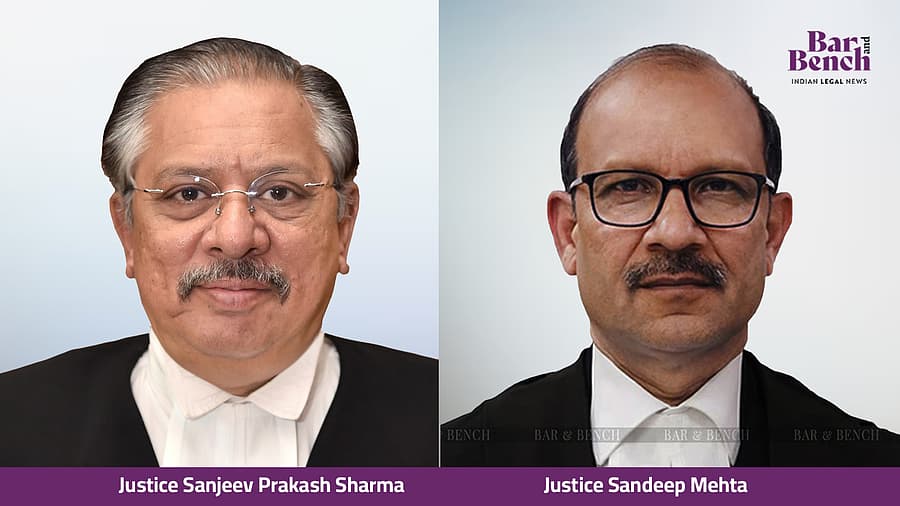
Rajasthan HC Acting CJ: Denies Allegations by Justice Sandeep Mehta
Rajasthan High Court Acting Chief Justice Sanjeev Prakash Sharma has issued a statement in India, denying allegations made by Supreme Court Justice Sandeep Mehta regarding the manipulation of case listings and misuse of administrative powers.
This public denial by an Acting Chief Justice regarding serious allegations from a Supreme Court Justice highlights a significant internal dispute within the Indian judiciary, potentially impacting public trust and the perceived integrity of judicial administration. Allegations of case listing manipulation and misuse of administrative powers strike at the heart of judicial independence and fairness, which are foundational principles of the rule of law. While the outcome of this dispute is not reported, the very existence of such public statements and counter-statements underscores the gravity of the issues raised and the potential for broader institutional implications for judicial governance and accountability.
The controversy touches upon the administrative functions of a High Court Chief Justice, specifically concerning case allocation and administrative powers, which are governed by High Court Rules and the overarching constitutional framework for judicial administration in India. The involvement of the Chief Justice of India (CJI) as the recipient of Justice Mehta's letters and the authority to approve Justice Sharma's public statement indicates the hierarchical structure of the Indian judiciary and the CJI's role in overseeing judicial conduct and administration. The allegations themselves relate to principles of natural justice, transparency, and accountability within the judicial system. The outcome of this matter is not yet reported, nor are any formal proceedings mentioned beyond the exchange of letters and public statements.
Attorneys should be aware that such high-profile internal judicial disputes, even without a formal reported outcome, can create an environment of scrutiny around judicial processes. While the specific allegations concern administrative functions, they can indirectly influence perceptions of judicial fairness and efficiency. Practitioners should continue to rely on established court procedures and rules, but also remain cognizant of the broader institutional context. The emphasis on transparency and accountability, even in internal judicial matters, reinforces the importance of these principles in all legal proceedings. The resolution of such matters, if it becomes public, could lead to reforms in judicial administration or case listing protocols, impacting how cases are managed and perceived.
How does this affect you?
Get an AI analysis of this article grounded in your jurisdictions, practice areas, and any policy documents you've uploaded to Wansom.
Finish Reading the Full Story and the Expert Analysis.
Wansom is AI and can make mistakes.