
Rachel Shelden: The Political Supreme Court's Forgotten 19th-Century History
Summary
- Rachel A. Shelden's book, *The Political Supreme Court: A Forgotten History*, argues that the 19th-century US Supreme Court was far more politically integrated than its modern counterpart.
- Chief Justice John Roberts' view of an apolitical judiciary, detached from political branches and public opinion, contrasts with historical realities.
- Nineteenth-century justices regularly 'rode circuit,' presiding over federal trials in their home regions, fostering deep connections with local communities and officials.
- Shelden introduces the concept of 'judicial representation,' where justices brought regional perspectives to the court due to their direct engagement with the populace.
- The modern ideal of a detached, apolitical judge is not as historically 'originalist' as commonly believed, according to the book.
The Shifting Ideal of Judicial Detachment
Far from the modern perception of an apolitical 'umpire,' the historical record reveals that the ideal of a detached judge is not as deeply rooted in the Supreme Court's origins as often presumed.
The contemporary understanding of the United States Supreme Court often emphasizes its role as an impartial arbiter, distinct from the political branches of government. This perspective is encapsulated by Chief Justice John Roberts, who has asserted that the judiciary should not be dictated to by political entities regarding legal interpretations, nor should its decisions be swayed by public sentiment. This vision of a court operating above the fray of political influence has become a widely accepted norm in how Americans perceive the highest judicial body.
However, a new historical analysis challenges this modern ideal, revealing a significantly different reality for the 19th-century US Supreme Court. Rachel A. Shelden's insightful book, *The Political Supreme Court: A Forgotten History*, meticulously details how the court of that era, and the public's perception of it, diverged sharply from current expectations. The notion of a judge as a detached, apolitical "umpire" is, according to Shelden's research, a more recent construct and not as historically foundational as many might assume, especially when considering the originalist interpretations of the court's role.
A Court Deeply Integrated in Public Life
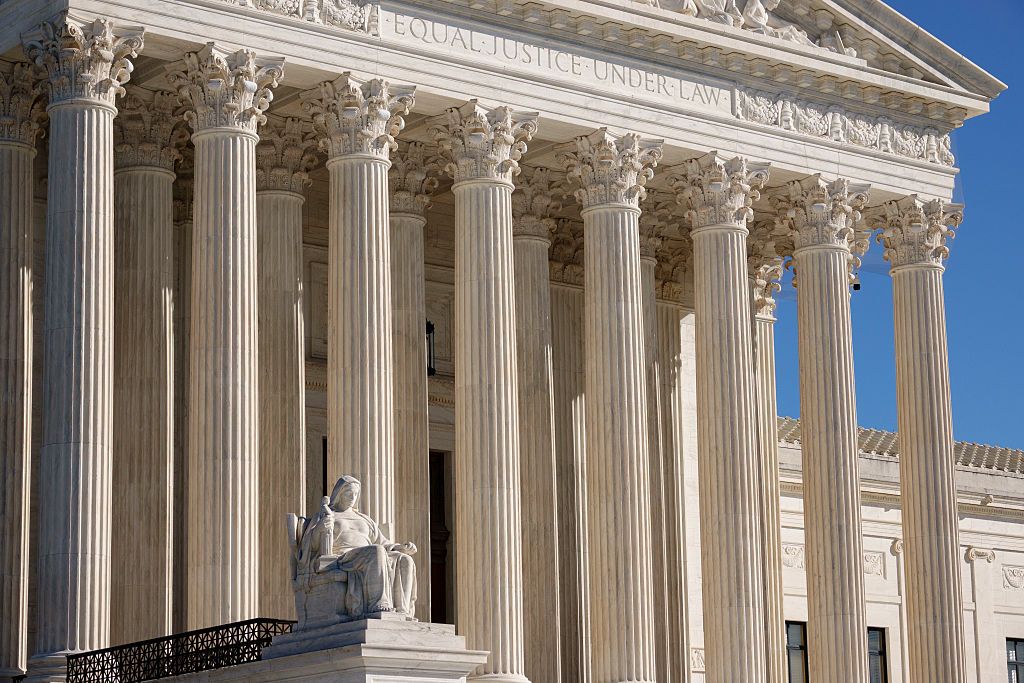
Shelden’s work opens with a vivid scene from 1849, depicting Abraham Lincoln presenting arguments before the Supreme Court. The institution Lincoln and his legal contemporaries knew was far from the imposing, marble edifice, seemingly removed from everyday political life, that we envision today. A key practice illustrating this difference was the justices' tradition of "riding circuit."
Each justice was assigned a specific region, typically the area from which they originated, and would travel through it to preside over federal trial courts. This direct engagement brought the justices into consistent contact with local legal professionals, government officials, and the broader communities they served. This practice fostered a deep connection between the judiciary and the populace, contrasting sharply with the more insulated role often associated with modern judicial independence.
The Concept of Judicial Representation
This historical practice of circuit riding led to what Rachel Shelden terms "judicial representation." This concept posits that a justice would inherently bring the unique perspectives and concerns of their assigned region to the Supreme Court's deliberations, owing to their intimate familiarity with the people and issues of that area. They were, in essence, seen as implicitly representing the interests and viewpoints of their home regions within the highest court.
While today's Supreme Court justices are still assigned to specific circuits, typically corresponding to their geographical origins, the nature of their engagement has fundamentally changed. The historical context provided by *The Political Supreme Court: A Forgotten History* underscores that the 19th-century court was not designed or perceived as an isolated entity, but rather as an integral, politically aware component of the national fabric, challenging contemporary assumptions about judicial representation history and the evolution of the judiciary's role.
Practical Implications
This article, reviewing a historical book, offers lawyers a deeper understanding of the US Supreme Court's historical evolution, particularly the shift from a more politically integrated 19th-century court to the modern ideal of judicial detachment. While not presenting an immediate actionable item, it provides valuable context for interpreting judicial philosophy, the concept of judicial independence, and the historical underpinnings of legal precedent, which can inform academic discourse or complex constitutional arguments.
Source
How does this affect you?
Get an AI analysis of this article grounded in your jurisdictions, practice areas, and any policy documents you've uploaded to Wansom.
Finish Reading the Full Story and the Expert Analysis.
Get the latest legal & regulatory intelligence in United States
Wansom is AI and can make mistakes.