
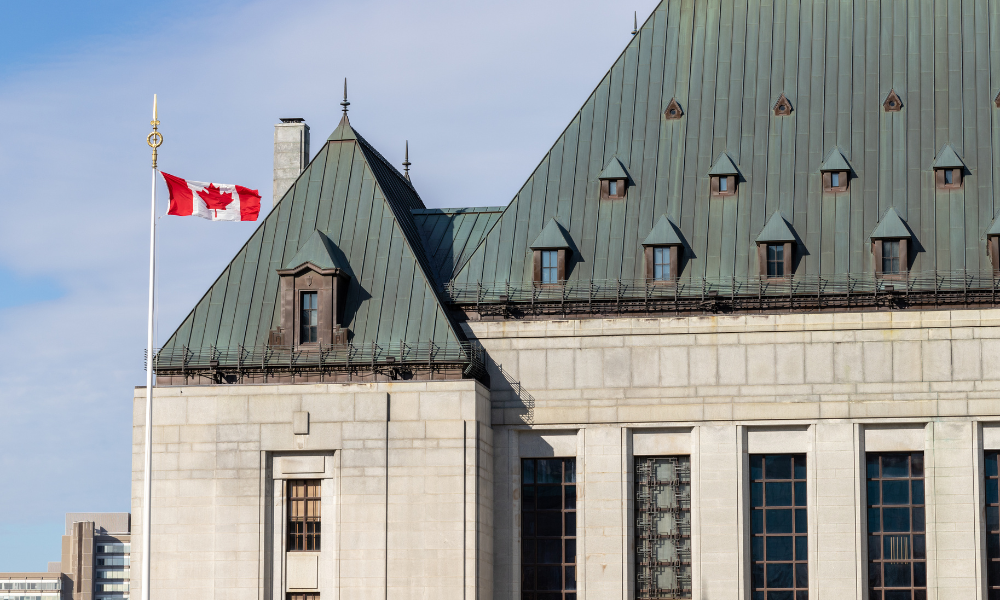
Supreme Court: Quebec v. SGS Canada Inc. SCC Affirms Federal Labour
Summary
- The Supreme Court of Canada ruled that Montreal grain inspectors' labour activities fall under derivative federal jurisdiction.
- This decision in Quebec (Attorney General) v. SGS Canada inc. clarifies the test for federal jurisdiction over third-party service providers.
- SGS Canada inc. employees inspect and grade grain for federally regulated grain elevators under the Canada Grain Act.
- Labour relations in Canada are typically provincial, but federal jurisdiction applies if services are vital to a federal undertaking.
- A split court affirmed that derivative federal jurisdiction applies, despite a dissenting view that provincial law should govern.
What Happened
This landmark ruling by the Supreme Court of Canada provides crucial clarification on the test for determining derivative federal jurisdiction over labour relations, particularly for third-party service providers to federally regulated undertakings.
The Supreme Court of Canada recently issued a split decision in Quebec (Attorney General) v. SGS Canada inc., determining that the labour activities of a group of Montreal-based grain inspectors and graders fall under derivative federal jurisdiction. This ruling upholds the findings of two lower courts and Quebec's Administrative Labour Tribunal, which had previously concluded that provincial jurisdiction did not apply to these employees. The case centered on the unionization efforts of 14 employees of SGS Canada inc., a company providing inspection and certification services.
Typically, labour relations, including collective bargaining and union activities, are governed by provincial laws in Canada. However, federal jurisdiction can apply in specific circumstances, either directly, when an employer operates a federal work or undertaking, or derivatively, when a third party provides services deemed vital, essential, or integral to such a federal entity. The high court's decision clarified the application of this derivative jurisdiction, affirming its relevance to the SGS Canada inc. employees.
Legal Framework and Background
SGS Canada inc. operates a division focused on agriculture and agri-food, which includes a Montreal branch employing 14 inspectors and graders. These individuals primarily serve six grain elevators situated along the St. Lawrence River. These grain elevators are designated as "works for the general advantage of Canada" under the Canada Grain Act, thereby placing them under federal regulation. The inspectors and graders are responsible for evaluating these facilities and assessing grain quality to ensure compliance with the standards set by the Canada Grain Act.
Despite SGS Canada inc. centralizing functions like human resources, payroll management, and most client interactions, its Montreal branch maintains operational independence. It possesses its own offices, infrastructure, employees, and financial management, with its employees not relying on or collaborating with staff from other SGS branches. In 2019, the Syndicat des travailleuses et travailleurs des industries manufacturières – CSN sought to certify as the collective bargaining representative for these 14 employees. Quebec's labour tribunal dismissed this application, concluding that the Montreal branch's labour relations were subject to derivative federal jurisdiction, not provincial. The tribunal specifically noted that SGS did not directly operate the grain elevators, nor was its agri-food division functionally integrated with other SGS operations, thus precluding direct federal jurisdiction.
The Supreme Court's Decision
Justice Andromache Karakatsanis authored the majority opinion for the Supreme Court of Canada, stating that the case presented an opportunity to clarify how Parliament can acquire jurisdiction over employees working within federal works or undertakings. The Court's decision affirmed that the labour relations of the Montreal grain inspectors and graders indeed fell under derivative federal jurisdiction. This outcome was consistent with the initial finding of Quebec's Administrative Labour Tribunal and subsequent affirmations by the Superior Court of Quebec. While the Quebec Court of Appeal had found that tests for both direct and derivative federal jurisdiction had been met, the Supreme Court's focus was on the derivative aspect.
A dissenting opinion was penned by Justice Nicholas Kasirer, who argued that Quebec labour law, rather than federal law, should apply to the employees. Chief Justice Richard Wagner and Justices Suzanne Côté and Michelle O'Bonsawin joined Justice Kasirer in dissent. Notably, all three dissenting justices, with the exception of Justice O'Bonsawin, hail from Quebec. The split decision underscores the complex nature of determining federal versus provincial labour jurisdiction, particularly in cases involving third-party service providers.
Why It Matters
This landmark ruling by the Supreme Court of Canada provides crucial clarification on the test for determining derivative federal jurisdiction over labour relations, particularly for third-party service providers to federally regulated undertakings. The decision in Quebec (Attorney General) v. SGS Canada inc. SCC reinforces that even when an employer does not directly operate a federal work, its employees can still fall under federal labour law if their services are vital, essential, or integral to that federal undertaking. This is a significant development for understanding the scope of Supreme Court Canada labour jurisdiction.
The case of SGS Canada inc. labour relations demonstrates that the functional separation of a branch or division does not automatically preclude federal oversight if its core activities are inextricably linked to a federally regulated industry, such as those governed by the Canada Grain Act federal jurisdiction. This clarification of the federal vs provincial labour jurisdiction test means that employers providing specialized services to federal works or undertakings must carefully assess their operations to determine if their labour relations are subject to federal rather than provincial legislation, even if they are not directly managing the federal entity itself.
Practical Implications
This ruling clarifies the test for determining derivative federal jurisdiction over labour relations, particularly for third-party service providers to federally regulated undertakings. Lawyers advising such employers should review their clients' operations and labour practices to ensure compliance with federal rather than provincial labour laws, especially where services are vital or integral to a federal work or undertaking.
Source
How does this affect you?
Get an AI analysis of this article grounded in your jurisdictions, practice areas, and any policy documents you've uploaded to Wansom.
Wansom is AI and can make mistakes.