
U.S. Court: Qorianka Kilcher Avatar Lanham Act Claim Dismissed
Summary
- A federal judge dismissed actress Qorianka Kilcher's lawsuit against director James Cameron, alleging he misappropriated her likeness for the "Avatar" character Neytiri.
- Kilcher claimed the public was misled into believing she endorsed the film, citing the use of her "biometric facial features" as "unpaid commercial source material" for the nearly $3 billion grossing movie.
- U.S. District Judge Wesley Hsu ruled that the complaint lacked evidence of any explicit statement in the films representing Kilcher's sponsorship or affiliation, despite giving her a chance to refile.
- Cameron's defense noted Kilcher's beauty was an "early inspiration" for Neytiri, but the design later shifted to actress Zoe Saldaña, and Kilcher waited 16 years to sue.
- The ruling emphasizes that Lanham Act claims for likeness misappropriation require explicit misrepresentation of endorsement, not just inferred association from creative inspiration.
What Happened
The court's insistence on explicit misrepresentation of sponsorship or affiliation, rather than mere inspiration or inferred association, provides crucial guidance for future cases.
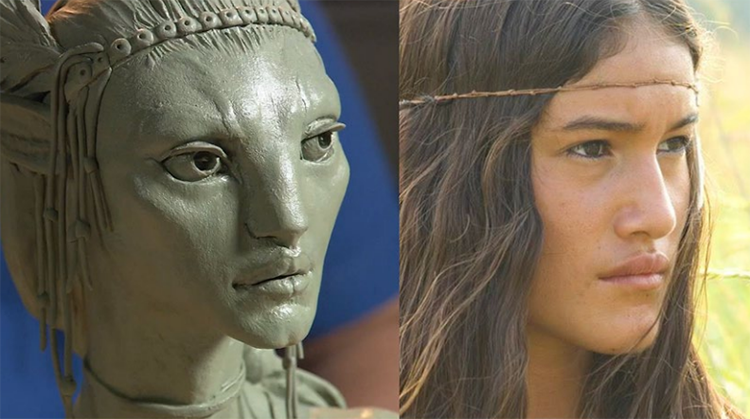
A federal court has rejected a lawsuit brought by actress Qorianka Kilcher, who accused acclaimed director James Cameron of unlawfully using her likeness to create the iconic Neytiri character in his blockbuster "Avatar" film series. U.S. District Judge Wesley Hsu, presiding over the Central District of California, dismissed the complaint, which alleged misappropriation of biometric facial features under the federal Lanham Act. Kilcher's filing included images of an original Neytiri maquette alongside a photograph of herself as Pocahontas in "The New World," suggesting a visual connection.
Kilcher's legal action contended that the public was misled into believing she had endorsed Cameron's use of her image and was officially affiliated with the "Avatar" franchise. Her complaint specifically highlighted that the initial "Avatar" film generated nearly $3 billion globally, yet, she claimed, it was "built in material part on the misappropriation of a minor’s biometric facial features as unpaid commercial source material." This Qorianka Kilcher Avatar Lanham Act dismissal marks a significant development in celebrity likeness intellectual property disputes.
Judicial Scrutiny and Lanham Act Standards
Despite granting Kilcher an opportunity to amend her filing, Judge Hsu expressed considerable doubt regarding her ability to satisfy the stringent requirements of the Lanham Act. The judge's ruling emphasized that the complaint failed to identify any explicit statement within the "Avatar" films indicating that Kilcher sponsored, endorsed, approved, or was otherwise affiliated with the production. Instead, Kilcher's argument hinged on the premise that consumers might infer such an association upon learning her likeness allegedly formed the foundational design for Neytiri.
Cameron's legal team countered Kilcher's claims by noting that while the director had acknowledged her beauty as an "early inspiration" for Neytiri shortly after the original film's 2010 release, the character's design subsequently evolved to be based on actress Zoe Saldaña, who ultimately portrayed the role. Furthermore, Cameron's representatives pointed out the significant delay, with Kilcher waiting 16 years to initiate her lawsuit. Judge Hsu indicated that other pending issues would be addressed in future proceedings.
Implications for Likeness and Intellectual Property Claims
This ruling sets a high bar for Lanham Act claims based on alleged likeness misappropriation, particularly in the entertainment industry. The court's insistence on explicit misrepresentation of sponsorship or affiliation, rather than mere inspiration or inferred association, provides crucial guidance for future cases. For legal professionals advising clients on intellectual property or endorsement disputes, the U.S. District Judge Wesley Hsu ruling underscores that merely alleging a character's design was inspired by a person's features may not be sufficient to establish consumer confusion under the Lanham Act.
The dismissal highlights the distinction between creative inspiration and actionable commercial endorsement. It suggests that without clear evidence of a false or misleading representation of a celebrity's approval or involvement, claims centered on the misappropriation of biometric facial features for character design may struggle to succeed. This decision reinforces the need for plaintiffs to demonstrate a direct link between the alleged use of their likeness and a false impression of endorsement or affiliation among consumers, rather than relying on the subjective interpretation of creative origins.
Practical Implications
This ruling sets a high bar for Lanham Act claims based on alleged likeness misappropriation, emphasizing that plaintiffs must demonstrate explicit misrepresentation of sponsorship or affiliation, not just inspiration. Lawyers advising clients on intellectual property or endorsement disputes should note that merely alleging a character's design was inspired by a person's features may not suffice to establish consumer confusion under the Lanham Act.
Source
How does this affect you?
Get an AI analysis of this article grounded in your jurisdictions, practice areas, and any policy documents you've uploaded to Wansom.
Finish Reading the Full Story and the Expert Analysis.
Get the latest legal & regulatory intelligence in United States
Wansom is AI and can make mistakes.