
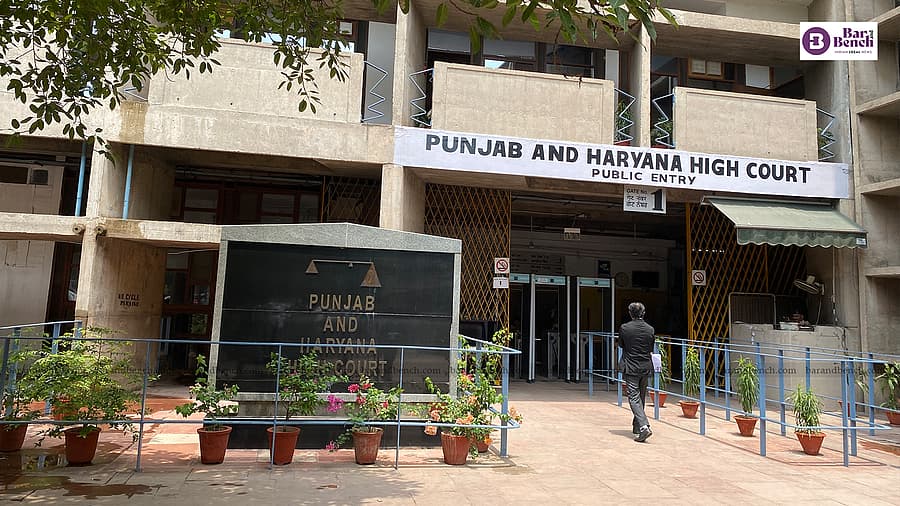
Punjab & Haryana High Court: Orders CBI Probe into Advocate's Assault
The Punjab and Haryana High Court, on Thursday, ordered a Central Bureau of Investigation (CBI) probe into the alleged assault on advocate Shubham by two sons of policemen in Chandigarh, citing a legitimate apprehension that the Chandigarh Police would not conduct a fair investigation.
This ruling carries significant legal weight, reinforcing the judiciary's critical role in safeguarding the integrity of criminal investigations, particularly when there are concerns about potential bias or influence from law enforcement. For legal practitioners, it highlights the availability of judicial intervention to ensure impartial investigations, thereby upholding public confidence in the justice system. The court's emphasis on justice not only being done but also being seen to be done is a fundamental principle reaffirmed by this decision.
The legal context of this case involves the application of criminal law, specifically the Bharatiya Nyaya Sanhita (BNS), 2023, which is set to replace the Indian Penal Code (IPC), 1860. The FIR initially included sections 126(2), 115(2), 118(1), 351(3) & 3(5) of BNS, 2023 (corresponding to Sections 341, 323, 324, 506 & 34 IPC). The High Court's decision to transfer the investigation, particularly to a central agency like the CBI, falls under its extraordinary writ jurisdiction, typically Article 226 of the Constitution of India, exercised to prevent miscarriage of justice and ensure fair play.
Key parties involved are the Punjab and Haryana High Court, specifically Justice Jasjit Singh Bedi, the Central Bureau of Investigation (CBI), Shubham (the victim and petitioner), UT Chandigarh & Others (respondents), and the accused individuals, Hitesh and Nikhil. The Chandigarh Police's initial handling of the case, particularly the deletion of Section 118(1) BNS (corresponding to Section 324 IPC), was a pivotal factor in the High Court's decision to intervene.
Attorneys practicing criminal law should note the High Court's proactive stance in transferring investigations to independent agencies when local police impartiality is questioned. This provides a crucial avenue for redress for victims and a check on potential abuses of power. Practitioners should be well-versed in the grounds for seeking such transfers and the procedural requirements. Furthermore, the case serves as a reminder of the ongoing transition from the IPC to the BNS and the need for practitioners to be updated on the new statutory provisions.
How does this affect you?
Get an AI analysis of this article grounded in your jurisdictions, practice areas, and any policy documents you've uploaded to Wansom.
Finish Reading the Full Story and the Expert Analysis.
Get the latest legal & regulatory intelligence in India
Wansom is AI and can make mistakes.