
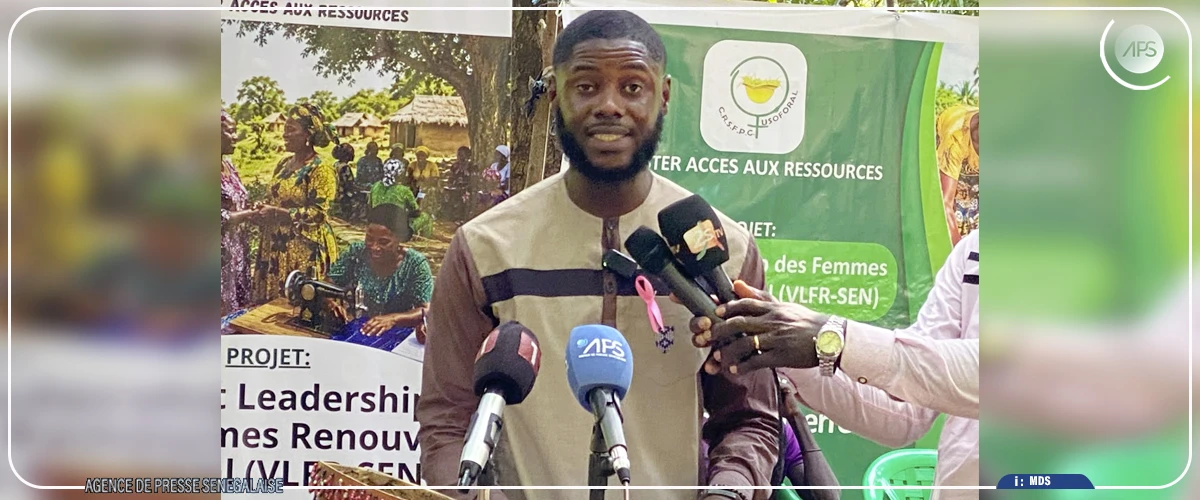
Sénégal: Projet VLFR-SEN Femmes Ressources Naturelles Launched
Summary
- The Projet Voix et leadership des femmes renouvelées Sénégal (VLFR-SEN) was launched in Oulampane, Casamance, on a recent Thursday.
- Spearheaded by the Comité régional de solidarité des femmes pour la paix en Casamance/USOFORAL, the project aims to facilitate women's access to land, forest, and natural resources.
- This initiative addresses long-standing disparities in resource control and ownership for women in rural Senegal.
- The project seeks to empower women economically and enhance their role in sustainable resource management.
- It highlights the ongoing challenges concerning women's land rights in the Casamance region.
New Initiative Launched in Casamance
Secure and equitable access to land and natural resources is not merely an economic concern; it is a cornerstone for ensuring food security, promoting sustainable agricultural practices, and fostering the overall economic independence of women and their households.
A significant new initiative, the Projet Voix et leadership des femmes renouvelées Sénégal (VLFR-SEN), was recently inaugurated in Oulampane, a locality within the Bignona department of southern Casamance. The launch event, which took place on a recent Thursday, was spearheaded by the Comité régional de solidarité des femmes pour la paix en Casamance/USOFORAL. This ambitious project is specifically designed to enhance and facilitate women's access to critical land, forest, and other natural resources.
The primary objective of this Projet VLFR-SEN femmes ressources naturelles Sénégal is to address existing inequalities in resource distribution and control that disproportionately affect women. By focusing on this fundamental aspect of economic empowerment, the Comité régional solidarité femmes Casamance USOFORAL aims to provide women with the necessary tools and opportunities to secure their livelihoods, improve their socio-economic standing, and play a more active role in the sustainable management of their local environment. The project's inception marks a concerted effort to foster greater equity and resilience within the communities it serves.
Legal and Societal Context
The introduction of the Projet VLFR-SEN underscores the persistent challenges faced by women regarding accès femmes ressources foncières Sénégal. In many rural areas, including the Casamance region, women often encounter significant obstacles to acquiring, inheriting, or exercising control over land and other natural assets. These impediments frequently arise from a complex interplay of customary laws, traditional social norms, and a lack of comprehensive awareness or enforcement of legal provisions designed to protect women's property rights.
This initiative directly confronts the critical issue of droits fonciers femmes Oulampane, aiming to strengthen and safeguard these fundamental entitlements. Secure and equitable access to land and natural resources is not merely an economic concern; it is a cornerstone for ensuring food security, promoting sustainable agricultural practices, and fostering the overall economic independence of women and their households. Without such foundational access, women's capacity for self-sufficiency and their ability to contribute fully to community development remain severely constrained, perpetuating cycles of vulnerability and inequality. The project seeks to dismantle these barriers, paving the way for greater empowerment.
Broader Implications for Women's Rights
The Projet Voix et leadership des femmes renouvelées holds substantial promise for advancing gender equality and sustainable development within the Casamance region. By specifically targeting women's access to resources, it has the potential to not only improve individual livelihoods but also to strengthen community resilience. Enhanced control over productive assets can lead to increased agricultural output, better household nutrition, and greater financial autonomy for women, thereby benefiting entire families and local economies.
Furthermore, the project's focus on natural resources in Senegal could influence future policy discussions and the enforcement of existing législation foncière femmes Casamance. Success in Oulampane and surrounding areas might serve as a model for broader interventions, encouraging a more robust legal and administrative environment that supports women's land rights. This initiative is a crucial step towards ensuring that women's voices are heard and their leadership is recognized in decisions concerning the management and utilization of the region's vital natural endowments.
Practical Implications
Lawyers advising on property law, land rights, or community development in Senegal, particularly in the Casamance region, should monitor the progress and legal outcomes of the VLFR-SEN project. This initiative could lead to new policy frameworks, enforcement mechanisms, or legal precedents impacting women's access to and ownership of land and natural resources, requiring updated advice for clients involved in land transactions or resource management.
Source
How does this affect you?
Get an AI analysis of this article grounded in your jurisdictions, practice areas, and any policy documents you've uploaded to Wansom.
Finish Reading the Full Story and the Expert Analysis.
Get the latest legal & regulatory intelligence in Senegal
Wansom is AI and can make mistakes.