
President Ruto: Kenya Pledges Accountability for Human Rights, Dissent
Summary
- President William Ruto declared that no Kenyan should lose their life, liberty, or dignity for criticizing the government or engaging in peaceful protest.
- Speaking at the 16th Katiba Day Symposium, Ruto acknowledged past pain from crackdowns and called for independent investigations into all credible human rights allegations.
- He emphasized that while peaceful assembly is protected, the Constitution does not shield criminal acts like arson or violence during protests.
- The Kenya National Commission on Human Rights reported 63 deaths and 74 forced disappearances during 2024 protests, with 26 individuals still missing.
- The Missing Voices Coalition recorded 131 police killings and enforced disappearances in 2025, a decrease from 159 in 2024, though police killings rose by 20%.
President Ruto's Stance on Dissent
Every credible allegation of a human rights violation must undergo an independent, thorough, and transparent investigation.
President William Ruto recently affirmed that no Kenyan should forfeit their life, freedom, or dignity for expressing critical views of the government, holding an unpopular opinion, or participating in a peaceful demonstration. Speaking at the 16th Katiba Day Symposium on Thursday, August 27, held at the Kenyatta International Convention Centre (KICC) in Nairobi, President Ruto's remarks coincided with the nation commemorating 16 years since the adoption of its Constitution.
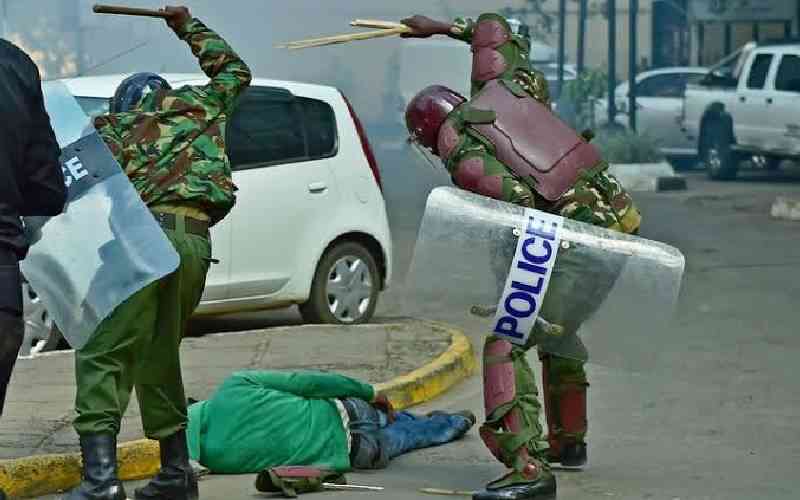
During the event, President Ruto acknowledged the enduring suffering stemming from historical crackdowns on dissent. He specifically referenced the profound pain from past events, noting that some families had lost loved ones and that serious allegations of unlawful arrests, enforced disappearances, and the excessive use of lethal force had been made. The President emphasized that the country cannot uphold its Constitution by ignoring such grave accusations.
In a clear directive regarding human rights accountability in Kenya, President Ruto stressed that every credible allegation of a human rights violation must undergo an independent, thorough, and transparent investigation. He further asserted that if wrongdoing is established, those responsible must be held accountable in accordance with the law, reinforcing the government's commitment to justice.
Distinguishing Protected Protest from Criminality
President Ruto also articulated a crucial distinction between constitutionally protected assembly and criminal acts. He clarified that while the Constitution safeguards the right to peaceful and unarmed assembly, it does not extend protection to actions such as arson, looting, lawlessness, violence, intimidation, attacks on citizens, or the destruction of property. This differentiation is central to understanding the boundaries of freedom of expression in Kenya.
He underscored the necessity of carefully distinguishing between a citizen exercising a constitutional right and an individual committing a criminal offense. President Ruto cautioned against two extremes: neither should an entire protest be criminalized due to the actions of a few individuals, nor should criminal conduct be legitimized simply because it occurs during the course of a protest. This nuanced approach aims to uphold the right to protest while maintaining public order and safety.
Ongoing Human Rights Concerns and Accountability Records
President Ruto's statements arrive amidst reports from various human rights organizations highlighting an inconsistent record of accountability for past violations. The Kenya National Commission on Human Rights (KNCHR) has documented significant casualties and disappearances during the 2024 protests, reporting that at least 63 individuals died and 74 were forcibly disappeared, with 26 people still unaccounted for.
Further data from the Missing Voices Coalition indicates 131 cases of police killings and enforced disappearances in 2025. This figure represents a decrease from the 159 cases recorded in 2024. However, within this period, police killings themselves saw a 20 percent increase, even as the number of enforced disappearances sharply declined. These statistics underscore the persistent challenges in ensuring full human rights accountability and addressing police conduct during public demonstrations in Kenya.
Practical Implications
President Ruto's commitment to investigating human rights violations and holding perpetrators accountable, particularly concerning protests, signals a reinforced legal stance on state accountability in Kenya. Lawyers should be aware of this official directive when advising clients on protest rights, potential litigation against state actors for abuses, and the distinction between protected dissent and criminal acts.
Source
How does this affect you?
Get an AI analysis of this article grounded in your jurisdictions, practice areas, and any policy documents you've uploaded to Wansom.
Finish this article free. Just your email for instant unlock.
Wansom is AI and can make mistakes.