
President Murmu: NGT Environmental Governance in India Lauded
Summary
- President Droupadi Murmu addressed the National Green Tribunal's international conference, advocating for community-based climate resilience and stronger environmental governance in India.
- Supreme Court Justice B.V. Nagarathna highlighted the judiciary's shift towards an ecocentric approach, emphasizing balance between development and conservation for future generations.
- NGT Chairperson Justice Prakash Shrivastava called for responsive laws and inclusive climate action, integrating technology and sustainable finance.
- Union Minister Manohar Lal reported India achieved its 50% non-fossil fuel capacity target five years early, now at nearly 55% of installed generation.
- The conference concluded with calls for stronger institutions, climate justice, and international cooperation to effectively implement environmental commitments.
The Call for Community-Driven Environmental Action
Environmental protection is not an impediment to human advancement but rather a prerequisite for sustained progress, reinforcing the call for stronger institutions, diligent implementation, and responsible governance.
President Droupadi Murmu recently addressed the valedictory session of a significant two-day international conference hosted by the National Green Tribunal (NGT) in New Delhi. The event, titled “The Future of Environment and Climate Dynamics,” concluded with a strong emphasis on translating environmental commitments into tangible actions and fostering greater international collaboration. During her keynote address, President Murmu lauded the NGT's contributions to strengthening environmental governance across India.
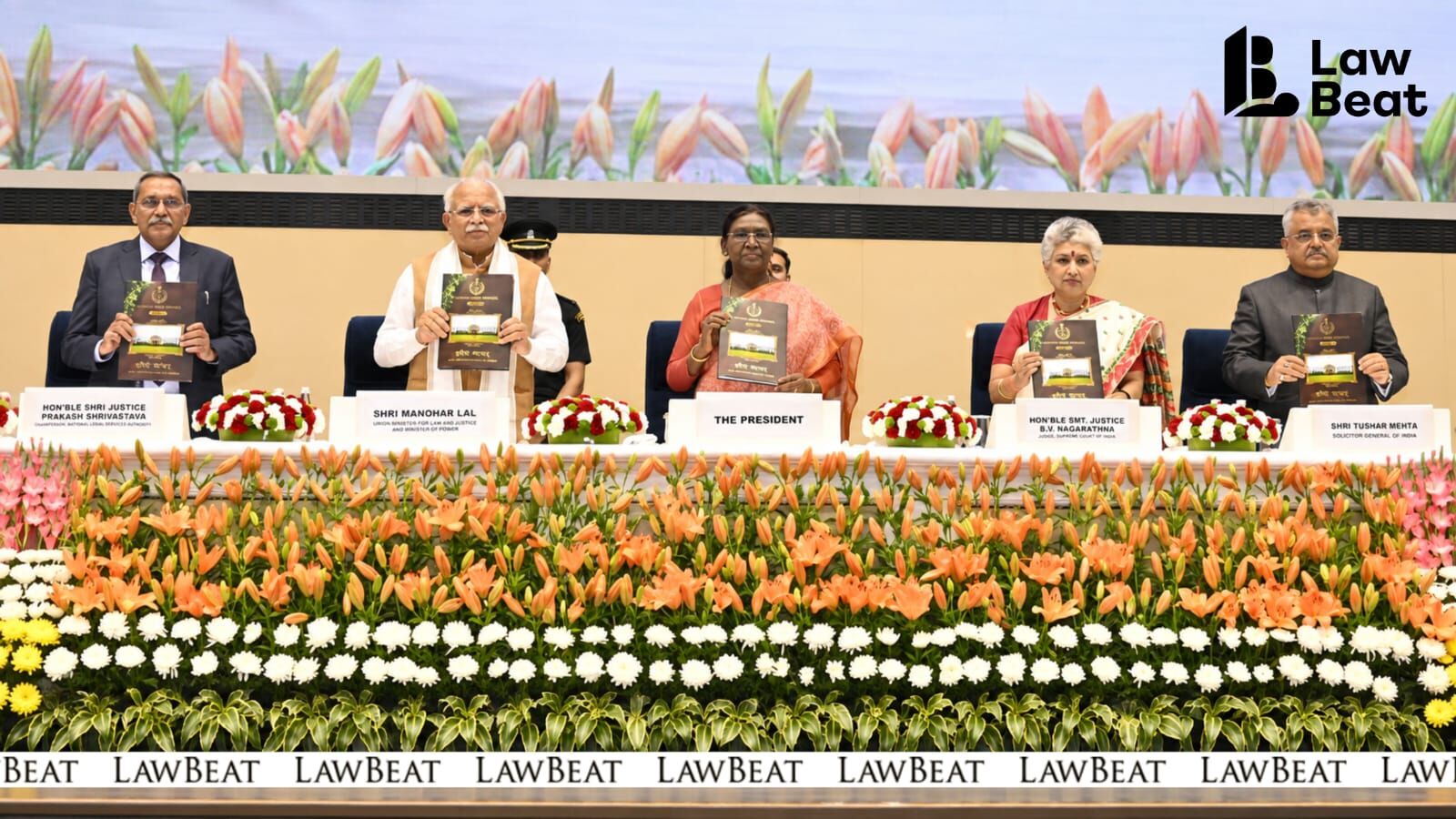
A central theme of President Murmu's remarks was the imperative to cultivate climate resilience through approaches that are both people-centric and community-based. She specifically advocated for integrating traditional knowledge into adaptation strategies. The President also participated in a ceremonial moment, receiving the inaugural copy of "Harit Nyayam," a souvenir from the NGT commemorating its journey in environmental governance, on September 21, 2026.
The concluding session brought together several prominent figures, including Union Minister for Housing and Urban Affairs and Power, Manohar Lal; Supreme Court Judge Justice B.V. Nagarathna; NGT Chairperson Justice Prakash Shrivastava; and Solicitor General Tushar Mehta. Their collective presence underscored the high-level commitment to addressing pressing environmental challenges in India.
Shifting Paradigms in India's Environmental Law
The conference provided a platform for key legal minds to articulate evolving perspectives on environmental protection. Justice B.V. Nagarathna of the Supreme Court articulated the necessity for environmental governance to achieve a delicate balance between developmental aspirations and conservation imperatives, ensuring that present needs do not compromise the interests of future generations. She further underscored the disproportionate impact of environmental issues on various communities and age groups, noting the Supreme Court's discernible move towards an ecocentric approach in its jurisprudence. Justice Nagarathna stressed the foundational role of robust institutions, effective enforcement mechanisms, transparency, accountability, and accessible justice in upholding environmental standards.
NGT Chairperson Justice Prakash Shrivastava echoed these sentiments, highlighting that the conference deliberations pointed towards a need to transcend mere identification of environmental problems. Instead, the focus must shift to developing responsive laws, resilient institutions, and collaborative partnerships capable of effectively addressing these challenges. He emphasized that climate action must be inherently inclusive and equitable, particularly safeguarding vulnerable communities and future generations. Justice Shrivastava also advocated for environmental law to remain dynamic and forward-looking, integrating technological advancements, innovative solutions, sustainable finance models, and principles of a just transition.
Solicitor General Tushar Mehta contributed to this discourse by asserting that environmental challenges demand a multidisciplinary approach, drawing expertise from law, governance, science, economics, and society. He underscored the critical need to reconcile biodiversity protection with climate action and economic development, advocating for solutions grounded in scientific assessment, innovation, and sustainable practices. Mehta articulated that environmental protection is not an impediment to human advancement but rather a prerequisite for sustained progress, reinforcing the call for stronger institutions, diligent implementation, and responsible governance.
India's Proactive Stance on Climate Resilience
Union Minister Manohar Lal provided insights into India's strategic efforts to harmonize economic development with environmental sustainability. He reported that non-fossil fuel sources now constitute nearly 55 percent of the nation’s total installed generation capacity, a significant achievement that saw India meet its target of 50 percent non-fossil capacity five years ahead of schedule. The Minister also detailed various governmental initiatives aimed at fostering sustainable urban development, ensuring water security, enhancing public transportation, and promoting green mobility, including electric vehicles. He concluded by emphasizing the collective responsibility required to tackle climate change effectively.
The overarching consensus from the National Green Tribunal conference reinforced the urgency for a comprehensive and integrated approach to environmental challenges. The calls for stronger institutions, climate justice, and enhanced international cooperation reflect a growing recognition within India's legal and policy circles of the interconnected nature of global environmental issues. This forward-looking perspective signals a future where India's climate resilience policy will increasingly prioritize community engagement and an ecocentric approach, shaping the trajectory of environmental law and its enforcement across the nation.
Practical Implications
This article signals the evolving direction of environmental law and policy in India, emphasizing community-based climate resilience and an ecocentric approach. Lawyers and compliance officers should anticipate future regulatory changes, stricter enforcement, and a greater focus on integrated, interdisciplinary solutions for environmental compliance and litigation.
Source
How does this affect you?
Get an AI analysis of this article grounded in your jurisdictions, practice areas, and any policy documents you've uploaded to Wansom.
Finish Reading the Full Story and the Expert Analysis.
Get the latest legal & regulatory intelligence in India
Wansom is AI and can make mistakes.