
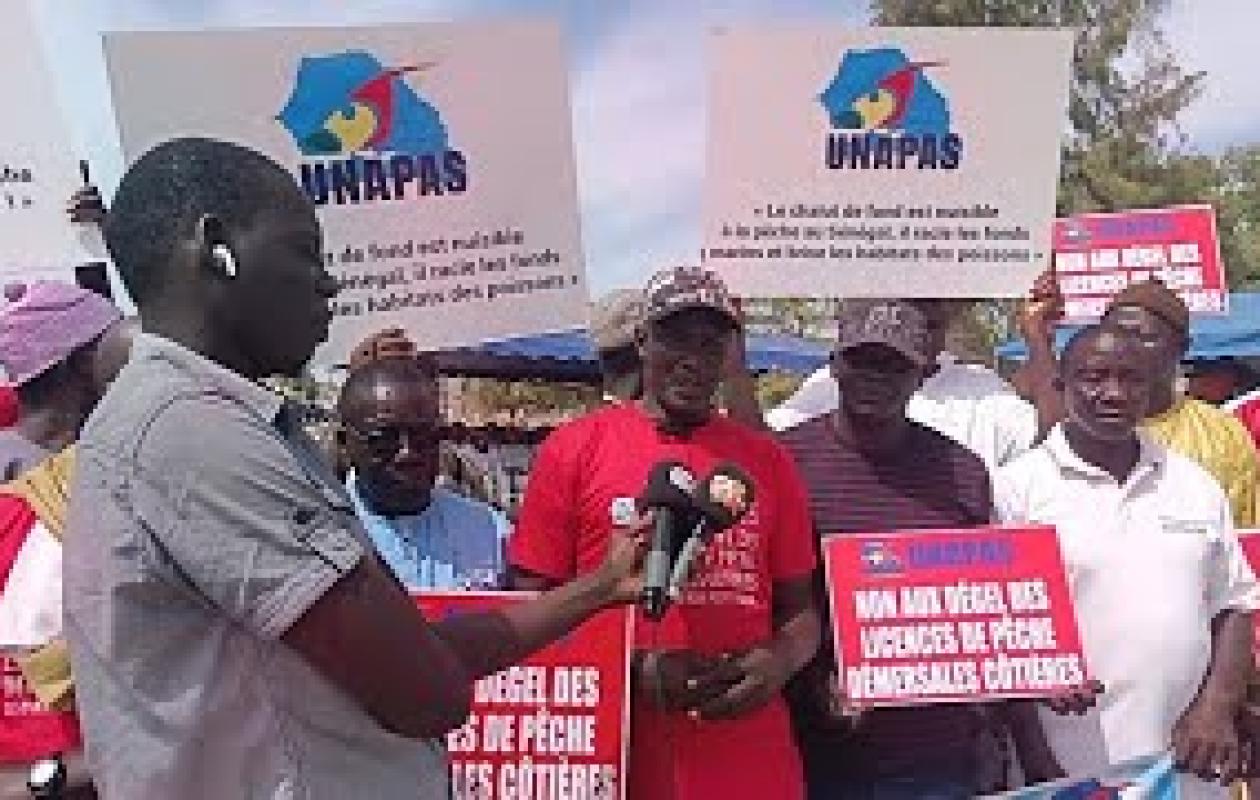
Pointe-Sarène Pêcheurs: UNAPAS Demands Abrogation of Arrêté 009965
Summary
- Artisanal fishermen in Pointe-Sarène, represented by UNAPAS, protested against arrêté n°009965 du 30 avril 2026.
- The arrêté, concerning coastal demersal fishing licenses, was suspended but UNAPAS demands its definitive abrogation due to concerns over potential reactivation.
- Fishermen express worries about industrial fishing's impact on marine resources and call for greater transparency in licensing.
- UNAPAS advocates for an exhaustive audit of the national fishing flag to identify fraudulently integrated vessels.
- The protests highlight ongoing regulatory instability and the broader conflict between artisanal and industrial fishing interests in Senegal.
Fishermen Mobilize Against Licensing Decree
The Union Nationale des Pêcheurs Artisanaux du Sénégal (UNAPAS) insists on the definitive abrogation of arrêté n°009965 du 30 avril 2026, arguing that its mere suspension fails to alleviate concerns over potential future reactivation and continued pressure on vital marine resources.
Artisanal fishermen in Pointe-Sarène recently mobilized on the water, conducting a peaceful march in their pirogues while clad in red. This demonstration, organized by the Union Nationale des Pêcheurs Artisanaux du Sénégal (UNAPAS), primarily targeted the abrogation of arrêté n°009965 du 30 avril 2026, a decree that pertains to the partial lifting of restrictions on coastal demersal fishing licenses. Although the measure, initially introduced by former Fisheries Minister Dr. Fatou Diouf, has been suspended following widespread protests, UNAPAS leaders are demanding its definitive repeal, expressing persistent concerns that a mere suspension could lead to its future reactivation.
This specific grievance is part of a broader, ongoing conflict concerning the role and impact of industrial fishing within Senegalese waters. Earlier incidents, such as the allocation of four licenses to industrial vessels in Joal-Fadiouth, had already sparked considerable anger among artisanal fishermen, who perceived these actions as a significant retreat from commitments made to their sector. Similarly, in Saint-Louis, UNAPAS has consistently highlighted the increasing number of infractions committed by industrial vessels, advocating for these larger ships to be restricted to a minimum distance of 24 nautical miles from the coastline.
The Contested Regulatory Framework
The central point of contention for the protesting fishermen is arrêté n°009965 du 30 avril 2026, which governs the issuance of licences de pêche démersale côtière. This decree, enacted by the previous ministerial administration, aimed to partially unfreeze these specific fishing permits. However, the Union Nationale des Pêcheurs Artisanaux du Sénégal (UNAPAS) argues that even a temporary halt to its implementation is insufficient, emphasizing the need for its complete abrogation to prevent any future reinstatement that could further jeopardize their livelihoods and marine ecosystems.
Macoumba Dièye, the national president of UNAPAS, has underscored the inherent risks associated with increased pressure on coastal demersal stocks. He pointed out that two decades after the initial unfreezing of fishing licenses, numerous fish stocks remain in a precarious state. Consequently, UNAPAS advocates for maintaining existing restrictions and firmly supports the definitive abrogation of the arrêté n°009965 du 30 avril 2026, viewing it as a critical step towards sustainable management and protection of marine resources.
Demands for Transparency and Accountability
Beyond the immediate issue of the arrêté n°009965 du 30 avril 2026, the fishermen's protests reflect deeper concerns about the sustainability of marine resources and the fairness of licensing practices. Ibrahima Kane, an UNAPAS member, articulated how the current situation, marked by the pressure from industrial vessels, severely impacts artisanal fishermen and other stakeholders dependent on the marine ecosystem. He urged authorities to implement robust measures to safeguard these vital resources.
To address these systemic issues, UNAPAS Sénégal is also calling for enhanced transparency in the process of issuing fishing licenses. A key demand is an exhaustive audit of the national fishing flag (audit pavillon de pêche national). Pape Ndiol Ngom, the Secretary General of UNAPAS, clarified that the primary objective of this audit is to identify and expose any vessels that may have fraudulently integrated into the Senegalese fleet, thereby operating outside legal frameworks. Additionally, fishermen in Saint-Louis have specifically requested the securing of the 'brèche,' another measure they deem essential for protecting artisanal fishing activities and ensuring their long-term viability.
Practical Implications
Lawyers advising clients in Senegal's fishing sector should note the ongoing regulatory instability surrounding fishing licenses, specifically the contested arrêté n°009965 du 30 avril 2026. The demand for its abrogation and a national fleet audit signals potential future policy shifts and increased scrutiny, necessitating vigilance for compliance risks and changes in licensing requirements for both artisanal and industrial operations.
Source
Source: Original reporting via Seneweb.
How does this affect you?
Get an AI analysis of this article grounded in your jurisdictions, practice areas, and any policy documents you've uploaded to Wansom.
Finish Reading the Full Story and the Expert Analysis.
Wansom is AI and can make mistakes.