
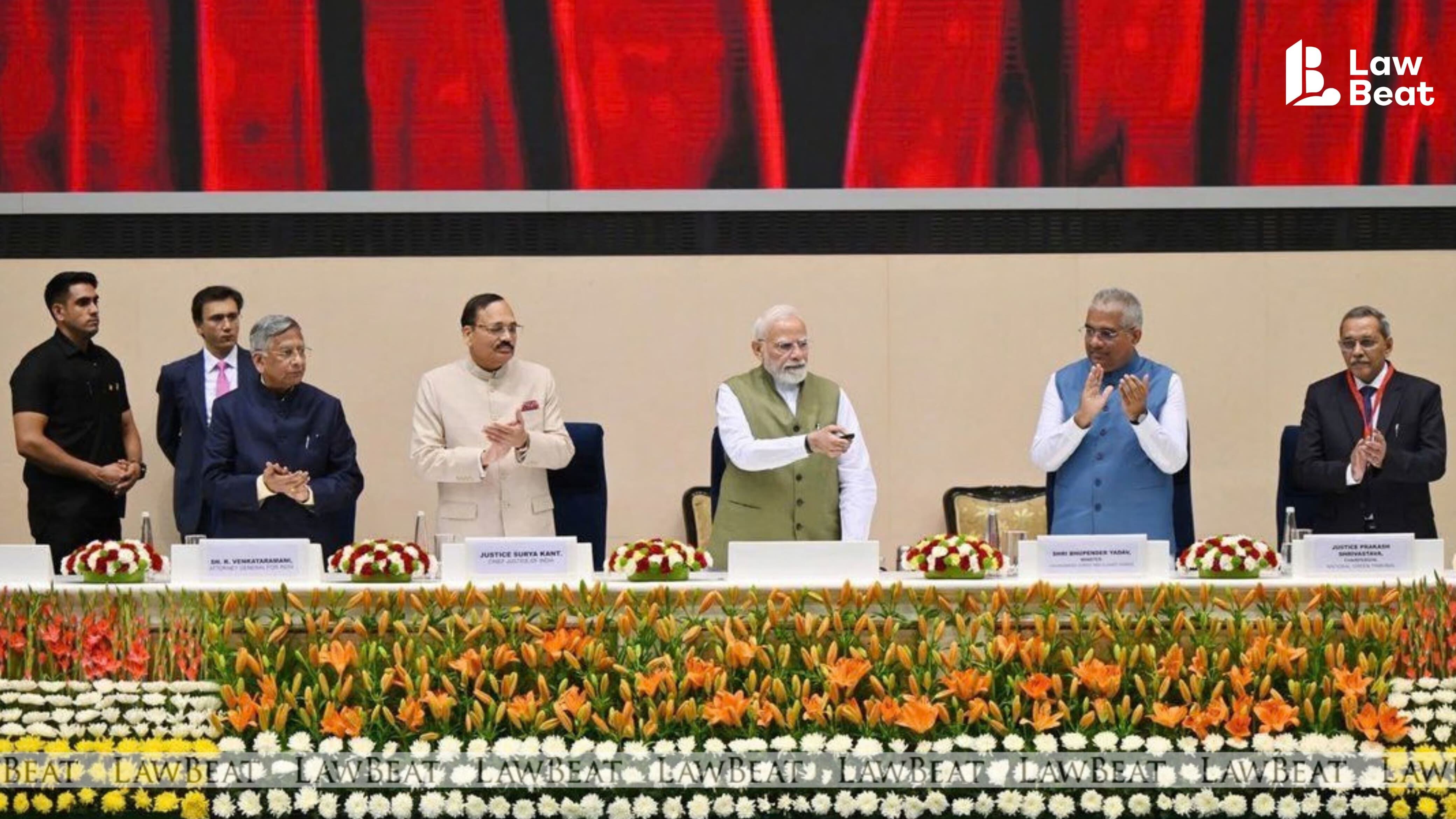
PM Modi NGT Mobile App Launch: India Advances Environmental Justice
Summary
- Prime Minister Narendra Modi launched the National Green Tribunal (NGT) Mobile App at an international conference in New Delhi.
- The conference, organized by the NGT, focused on environmental and climate challenges, drawing participants from 17 countries.
- PM Modi highlighted India's early fulfillment of Paris Agreement commitments and its per capita carbon emissions being less than half the global average.
- India is the only G20 country to have met its Paris Agreement targets ahead of schedule, showcasing progress in renewable energy.
- The new India environmental law app is expected to enhance accessibility to NGT information and proceedings, benefiting legal professionals and environmental compliance.
PM Modi Unveils NGT Mobile App
The introduction of the NGT Mobile App represents a significant step in the National Green Tribunal's ongoing efforts to leverage technology for improved environmental governance.
Prime Minister Narendra Modi officially launched the National Green Tribunal (NGT) Mobile App during an international conference held in New Delhi. The significant PM Modi NGT Mobile App launch took place on a Saturday, coinciding with the inaugural session of the two-day international conference titled “The Future of Environment and Climate Dynamics.” The event was hosted at Vigyan Bhawan and brought together a diverse group of stakeholders.
The inaugural session saw the attendance of several prominent figures, underscoring the importance of the occasion. Among those present were Chief Justice of India Justice Surya Kant, Union Minister for Environment, Forest and Climate Change Bhupender Yadav, Attorney General R Venkataramani, and NGT Chairperson Justice Prakash Shrivastava. Their presence highlighted the collaborative effort across judicial, governmental, and environmental sectors in addressing contemporary climate challenges.
Organized by the NGT, the conference, which ran from September 19 to 20, was designed to facilitate discussions on pressing environmental and climate issues, exploring their intricate connections with development, governance, and justice. The launch of the National Green Tribunal mobile app during this high-profile gathering signals a strategic move towards integrating technology into environmental governance and justice mechanisms.
India's Stance on Climate Challenges
During his address at the conference, Prime Minister Modi articulated India's historical leadership in environmental matters, emphasizing the nation's reliance on its rich cultural and environmental traditions to formulate effective India climate change solutions. He asserted that India has, for centuries, provided guidance to the world on issues concerning nature and the environment, a commitment that continues to inform its current strategies.
Modi also critically addressed the global distribution of responsibility for carbon emissions, noting that developing nations are often unfairly burdened with accountability. He highlighted that India's per capita carbon emissions remain less than half the global average, while developed countries exhibit per capita emissions six times higher than India's. This disparity, he stated, is an issue India consistently raises on international platforms.
Furthermore, the Prime Minister underscored India's substantial environmental progress over the past 12 years, particularly its robust focus on renewable energy. He proudly announced that India has fulfilled its Paris Agreement commitments, made at COP21, ahead of schedule. Notably, India stands as the sole G20 country to have achieved its Paris Agreement India commitments within this accelerated timeframe, demonstrating significant advancements in non-fossil fuel capacity and solar energy, which are garnering global recognition.
International Dialogue on Environmental Governance
The international conference, spanning two days, served as a critical forum for dialogue on environmental and climate challenges, examining their interplay with development, governance, and justice. The event attracted a wide array of participants, including Supreme Court and High Court Judges, District Court Judges, leading environmental experts, senior government officials, and representatives from various judicial, legal, and environmental institutions.
Significantly, the conference also welcomed eminent judicial representatives from 17 different countries, fostering an international exchange of ideas and best practices. The NGT outlined the conference's core objectives: to provide a robust platform for discussions on major environmental and climate challenges, identify existing gaps in policymaking and implementation, facilitate the sharing of successful strategies, and strengthen institutional cooperation across borders.
Structured around four technical sessions, the discussions delved into key environmental issues with the overarching goal of developing a clear roadmap for addressing these complex challenges. This collaborative approach, bringing together diverse expertise from both national and international spheres, is crucial for advancing environmental protection and justice globally.
Digital Initiatives for Enhanced Environmental Justice
The introduction of the NGT Mobile App represents a significant step in the National Green Tribunal's ongoing efforts to leverage technology for improved environmental governance. This new India environmental law app is poised to significantly enhance accessibility to NGT information and proceedings, offering a streamlined interface for various stakeholders.
For legal professionals, the NGT digital initiatives, exemplified by this mobile application, are anticipated to streamline case tracking, facilitate compliance monitoring, and deepen engagement with environmental litigation across India. By making critical information more readily available, the app aims to foster greater transparency and efficiency within the environmental justice system. This digital tool is expected to play a crucial role in empowering individuals and organizations to better understand and participate in environmental protection efforts, ultimately contributing to more effective enforcement of environmental laws.
Practical Implications
The introduction of the NGT Mobile App could significantly enhance accessibility to National Green Tribunal information and proceedings for legal professionals, potentially streamlining case tracking, compliance monitoring, and engagement with environmental litigation in India.
Source
How does this affect you?
Get an AI analysis of this article grounded in your jurisdictions, practice areas, and any policy documents you've uploaded to Wansom.
Finish Reading the Full Story and the Expert Analysis.
Get the latest legal & regulatory intelligence in India
Wansom is AI and can make mistakes.