
US Forest Service: Pinto Valley Mine ESA Analysis Insufficient, Judge Finds
Summary
- A federal judge ruled the U.S. Forest Service violated the Endangered Species Act by inadequately analyzing the impacts of the Pinto Valley copper mine expansion.
- The agency's environmental review for the Arizona mine failed to include over 90% of Pinto Creek, a habitat for endangered yellow-billed cuckoos.
- U.S. District Judge Dominic Lanza found the Forest Service's decision arbitrary and capricious for limiting its 'action area' analysis to only areas with a five-foot or greater groundwater drawdown.
- The ruling mandates that the 'action area' for federal projects must encompass all directly or indirectly affected areas, including downstream impacts from groundwater reduction.
- The court rejected a separate claim by the Sierra Club regarding the lack of specific mitigation measures in the environmental impact statement.
Court Finds Flaws in Mine Expansion Review
The court determined that the agency's chosen 'action area' for environmental assessment must encompass all regions directly or indirectly impacted by the federal undertaking, a standard not met in this case.
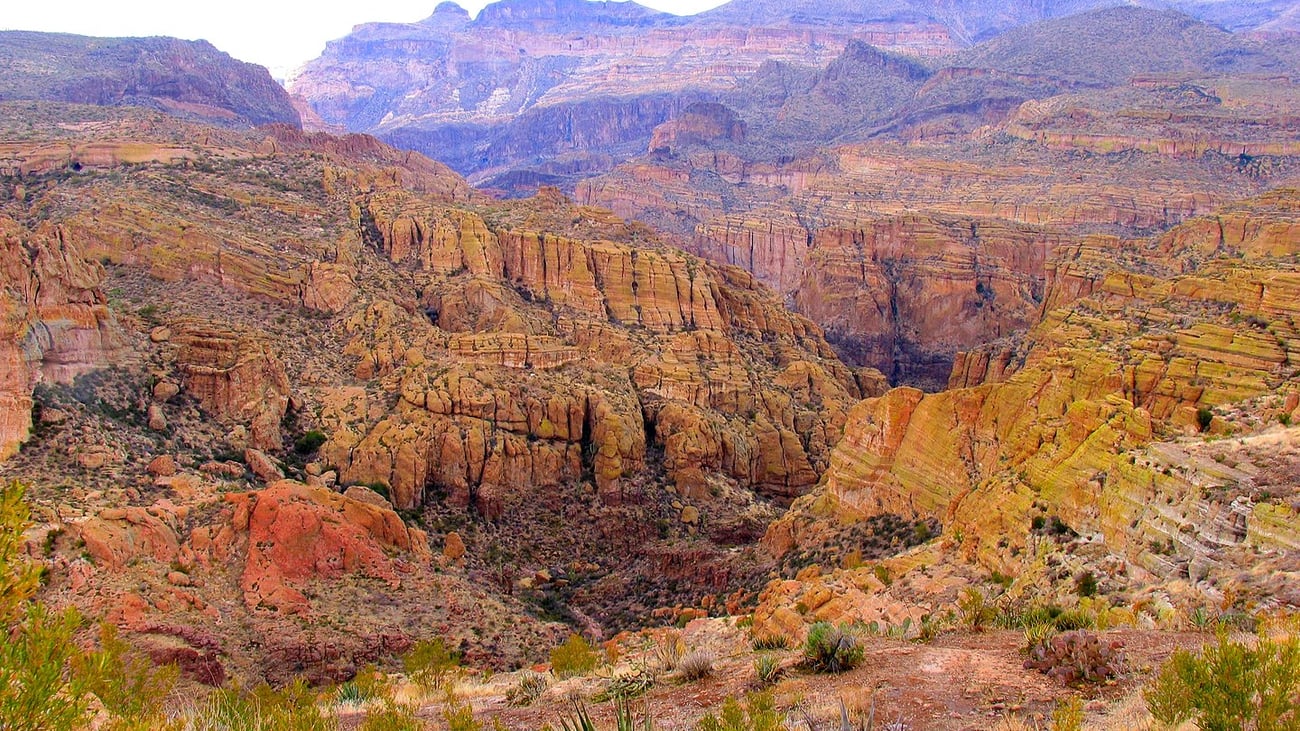
A federal judge recently determined that the U.S. Forest Service failed to adequately assess the environmental impact of an Arizona mine expansion, violating the Endangered Species Act (ESA). U.S. District Judge Dominic Lanza issued a split ruling in a challenge brought by the Sierra Club, a nonprofit conservation organization, against the agency's approval for the expansion of the Pinto Valley copper mine. The court's decision highlighted significant deficiencies in the environmental review for the project, which is located in the Tonto National Forest, east of Miami, Arizona.
The core of the court's finding was that the Forest Service erroneously excluded substantial portions of critical habitat for the endangered yellow-billed cuckoo, which are likely to be adversely affected by the mine's operations. The Pinto Valley Mine utilizes over 5 trillion gallons of water annually, leading to a reduction in the subflow of Pinto Creek. This creek is a vital habitat supporting at least two endangered bird species, including the yellow-billed cuckoo.
The agency's environmental analysis, conducted by third-party consultant SRK, was found to be severely limited in scope. It excluded more than 90% of Pinto Creek, focusing only on areas where the underground water table was projected to drop by at least five feet. Judge Lanza, in a comprehensive 113-page opinion, characterized this approach as arbitrary and capricious, directly contravening the requirements of the Endangered Species Act. This ruling underscores that the Pinto Valley Mine ESA analysis insufficient to meet federal environmental standards.
Defining the 'Action Area' Under ESA
Judge Lanza's ruling specifically addressed the Forest Service's narrow interpretation of the ESA's 'action area' requirement. The court emphasized that the agency's chosen five-foot groundwater drawdown contour could not possibly encompass the full scope of the 'action area,' especially given the consultant's own acknowledgment that baseflow effects would extend to the Magma Weir, a streamflow gauge located outside this limited contour. The judge clarified that the 'action area' for any federal action must include all areas, whether directly or indirectly, that are likely to be affected.
The Forest Service and the mining company had argued that observed reductions in streamflow were attributable to natural causes, such as drought, rather than changes in mining activity. They contended that groundwater level changes of less than five feet were difficult to distinguish from natural, seasonal fluctuations, thus justifying their limited analysis. However, Judge Lanza countered that while this reasoning might explain why smaller drawdowns couldn't be definitively attributed to pumping at the Peak Well field, it did not explain why downstream areas would not experience baseflow reduction caused by that pumping-induced groundwater drawdown. This distinction was crucial in determining the inadequacy of the US Forest Service ESA action area assessment.
This aspect of the ruling provides critical guidance on the scope of environmental reviews, particularly for projects with complex hydrological impacts. It reinforces that federal agencies cannot arbitrarily limit their analysis based on measurement difficulty or direct causation, but must consider all potential indirect effects. The finding of an arbitrary capricious ESA analysis highlights the need for a comprehensive approach to environmental impact assessments.
Broader Implications for Environmental Assessments
While the court sided with the Sierra Club on the insufficient scope of the environmental analysis, Judge Lanza rejected another claim concerning the lack of specific mitigation measures in the 2021 final environmental impact statement (EIS). The Sierra Club had argued that the EIS was inadequate because it failed to include such measures. However, the court found that since the U.S. Fish and Wildlife Service (USFWS) did not rely on potential mitigation measures when concluding that the project was unlikely to negatively affect the yellow-billed cuckoo, the Forest Service was not required to include them in the impact statement for that specific determination.
This split ruling provides important clarity for future Tonto National Forest environmental review processes and other large-scale projects. It affirms that adverse effects on listed species do not automatically violate the Endangered Species Act unless they specifically diminish a species' survival and recovery prospects or reduce the value of its critical habitat. The agencies had noted that the proposed action would affect less than 5% of the protected yellow-billed cuckoo habitat in the Tonto Basin and less than 0.06% of the total protected habitat across the United States.
Ultimately, the ruling by Judge Dominic Lanza Pinto Valley mine case emphasizes the broad scope required for 'action area' analysis under the Endangered Species Act Arizona mine projects, particularly concerning indirect and downstream impacts like groundwater drawdown. It serves as a reminder that federal agencies must conduct thorough and expansive environmental reviews that account for all potential effects, even those that are not immediately obvious or easily quantifiable.
Practical Implications
This ruling clarifies the broad scope required for 'action area' analysis under the Endangered Species Act, particularly concerning indirect and downstream impacts like groundwater drawdown. Lawyers advising clients on large development projects, especially those involving natural resources, should review their environmental impact assessment methodologies to ensure they encompass all potentially affected areas, not just direct impact zones, to avoid similar legal challenges.
Source
How does this affect you?
Get an AI analysis of this article grounded in your jurisdictions, practice areas, and any policy documents you've uploaded to Wansom.
Finish Reading the Full Story and the Expert Analysis.
Get the latest legal & regulatory intelligence in United States
Wansom is AI and can make mistakes.