
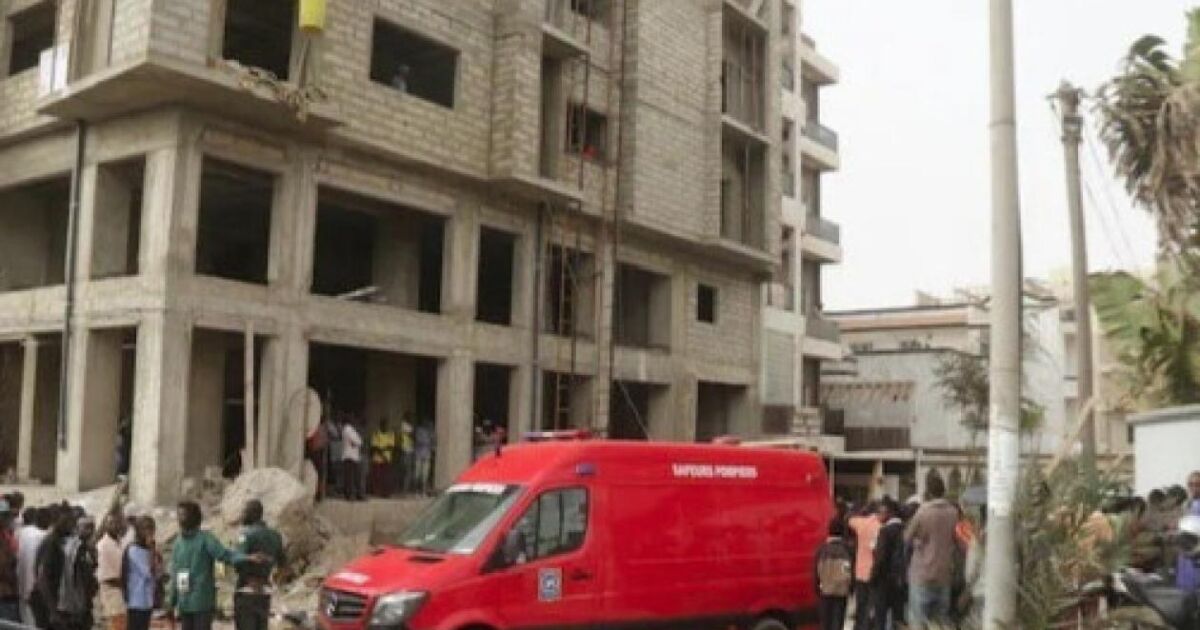
Senegal: Pikine Construction Worker Death Spurs Safety Investigation
Summary
- A 22-year-old mason, A. Diallo, died on October 10, 2026, after falling from the third floor of a construction site in Pikine, Senegal.
- Initial reports suggest a rope used for lifting mortar broke, causing the fatal fall.
- Investigators observed a complete absence of personal protective equipment and fall protection devices at the site.
- Police are investigating the incident, having taken testimony from a colleague and summoned the construction entrepreneur.
- The body was transported for an autopsy as part of the ongoing inquiry into responsibilities.
The Tragic Incident in Pikine
The absence of basic worker protection equipment, such as personal protective gear and fall arrest systems, points to potential non-compliance with established safety standards.
On Saturday, October 10, 2026, a fatal accident occurred at a construction site in Pikine, Senegal, resulting in the death of a young mason. A. Diallo, who was approximately 22 years old, suffered a fatal fall from the third floor of a building under construction. The incident took place on Rue 10, a specific location within Pikine.
Initial reports suggest that the tragedy unfolded when a rope, which was being utilized to hoist mortar, reportedly failed. This equipment malfunction is believed to have directly contributed to the worker's fall. Authorities arriving at the scene made critical observations regarding the safety measures in place at the time of the accident.
Safety Lapses and Ongoing Investigation
The preliminary findings from the site inspection highlighted significant deficiencies in occupational safety provisions. Investigators noted the complete absence of personal protective equipment (PPE) for the worker involved. Furthermore, no fall protection devices were found to be in use or available at the construction site, indicating a severe lapse in adherence to fundamental safety protocols. These observations are central to the ongoing inquiry into the circumstances surrounding A. Diallo's death.
Following the incident, law enforcement initiated a formal investigation to ascertain responsibilities. As part of this process, police officials gathered testimony from a colleague of the deceased worker. Additionally, the entrepreneur overseeing the construction project has been summoned for questioning. The body of A. Diallo was subsequently transported to the morgue, where an autopsy is scheduled to provide further details regarding the cause of death. This comprehensive procedure aims to shed light on all contributing factors and assign accountability.
Occupational Safety Regulations and Employer Responsibility in Senegal
This tragic event underscores the critical importance of robust occupational safety regulations in Senegal, particularly within the construction sector. The absence of basic worker protection equipment, such as personal protective gear and fall arrest systems, points to potential non-compliance with established safety standards. Under Senegalese law, employers bear a significant responsibility for ensuring a safe working environment for their employees, a principle that extends to providing and enforcing the use of appropriate safety equipment on construction sites.
The ongoing investigation will likely scrutinize the extent to which the construction site entrepreneur fulfilled these obligations. Failure to provide adequate safety measures can lead to severe consequences, including criminal charges and civil liability for negligence. This incident in Pikine highlights the need for stringent enforcement of existing safety protocols and potentially a review of current practices to prevent similar fatalities. The concept of `responsabilité employeur Sénégal` is paramount in such cases, emphasizing the legal and ethical duties of those managing construction projects.
Broader Implications for Construction Safety in Senegal
The death of A. Diallo serves as a stark reminder of the inherent dangers in construction work and the absolute necessity of prioritizing worker safety. This incident, occurring at a `Pikine chantier décès sécurité` context, should prompt all construction companies operating in Senegal to immediately re-evaluate their safety protocols. The lack of `worker protection equipment Senegal` and fall prevention measures, as observed in this case, represents a critical failure that could have been avoided.
Beyond the immediate legal proceedings, this event carries broader implications for the entire construction industry in the region. It reinforces the urgent need for comprehensive safety training, regular site inspections, and the mandatory provision and use of personal protective equipment. Adherence to `Senegal occupational safety regulations` is not merely a bureaucratic requirement but a fundamental commitment to safeguarding human lives. The outcome of the ongoing investigation will undoubtedly influence future enforcement and serve as a precedent for `construction site liability Senegal`, urging all stakeholders to enhance their commitment to worker protection.
Practical Implications
Lawyers and compliance officers should advise construction companies in Senegal to immediately review and reinforce their occupational safety protocols, particularly regarding personal protective equipment (PPE) and fall protection, to mitigate potential criminal and civil liability following this incident and the ongoing investigation into responsibilities.
Source
Source: Original reporting via Kawtef.
How does this affect you?
Get an AI analysis of this article grounded in your jurisdictions, practice areas, and any policy documents you've uploaded to Wansom.
Finish Reading the Full Story and the Expert Analysis.
Get the latest legal & regulatory intelligence in Senegal
Wansom is AI and can make mistakes.