
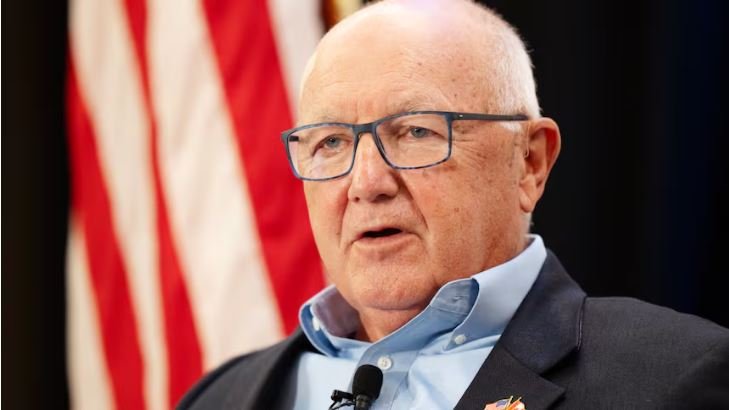
Petition Calling for US Ambassador Pete Hoekstra's Removal From Canada Tops 29,000 Signatures
Summary
What: E-petition e-7531 calls on Ottawa to expel U.S. Ambassador Pete Hoekstra and review U.S. diplomatic interference in Canadian affairs
Who started it: Leanne Walker, a resident of Calgary, Alberta
Who will present it: Green Party Leader Elizabeth May, in the House of Commons this fall
Signature window: Open July 21, 2026 to November 18, 2026
Where signatures stand: Over 29,000 as of mid-August 2026, with Ontario (16,152) and British Columbia (7,440) contributing the most
What it asks Ottawa to do: Formally expel Hoekstra, raise his conduct with Washington, and direct a parliamentary committee to review U.S. interference in Canadian domestic affairs
What the petition alleges
According to the official text of petition e-7531, filed with the House of Commons, the case against Ambassador Hoekstra rests on five claims:
He has repeatedly made public statements the petition says undermine the Canada-U.S. diplomatic relationship, including calling the 2025 Canadian federal election "anti-American."
He has normalized the Trump administration's rhetoric about annexing Canada as the "51st state," reportedly describing the phrase as a "term of endearment."
He has accused Canada of interfering in U.S. domestic politics while, the petition says, making his own repeated interventions in Canadian political discourse.
He has been linked to a Michigan-based voter identification app used by the Alberta separatist Centurion Project, despite saying he had no knowledge of its use.
The Alberta Prosperity Project met with U.S. State Department officials three times between April 2025 and January 2026 — meetings Hoekstra says he knew nothing about, which the petition says raises questions about U.S. interference in Canadian unity debates.
Based on those claims, the petition asks the federal government to take three specific actions: formally declare Hoekstra persona non grata and request his removal, raise his conduct with the United States as inconsistent with the Vienna Convention on Diplomatic Relations, and direct a parliamentary committee to review U.S. diplomatic interference in Canadian domestic affairs.
What "persona non grata" actually means
Persona non grata is a formal status under the Vienna Convention on Diplomatic Relations that lets a host government strip a diplomat of their immunity and compel them to leave the country. It's a real and available diplomatic tool — Canada has used it before, most recently expelling Chinese and Indian officials over allegations of foreign interference. But it's typically reserved for serious breaches, and applying it to a sitting ambassador from Canada's largest trading partner and closest ally would be an unusually sharp diplomatic step.
Where the petition stands, and who's behind it
The petition was launched by Leanne Walker of Calgary and opened for signatures on July 21, 2026. It will be tabled in the House of Commons by Green Party Leader Elizabeth May, whose office confirmed she will present it this fall. As of mid-August, it had drawn more than 29,000 verified signatures, with the heaviest support coming from Ontario and British Columbia.
Tabling a petition in the House of Commons is a procedural act, not an endorsement — under House rules, neither Parliament nor the presenting MP is taken to agree with a petition's contents simply by presenting it. The government is required to respond, but a formal reply doesn't guarantee any of the requested actions will actually be taken.
How Hoekstra and Washington have responded
Responding to Canadian reporters who've pressed him on his remarks, Hoekstra has said his job is to "present the president's views." A spokesperson for the U.S. Embassy in Ottawa said only that the embassy is aware of the petition, declining to comment further.
Hoekstra drew particular attention over the summer for remarks in Halifax, where he said Canada's potential annexation by the United States would be a "great discussion" for Prime Minister Mark Carney and President Trump to have — comments that came the same day Trump announced a new 50% tariff on a range of Canadian goods. He has also criticized Canadian politicians for describing U.S. tariff policy as a trade war and for discouraging travel to the United States.
Why it matters
Even if Parliament never acts on the petition's request, its scale signals a level of public frustration with U.S.-Canada relations rarely directed at a sitting ambassador. The underlying tensions — annexation rhetoric, tariffs, and now allegations of covert contact with Alberta separatist groups — go well beyond a single official's comments, and the petition is likely to keep those issues in front of Parliament regardless of whether Hoekstra himself is ever formally challenged.
What happens next
The petition remains open for signatures until November 18, 2026, and will be formally presented in the House of Commons by Elizabeth May sometime this fall. Once tabled, the federal government has a set period to issue a formal response, though that response is not required to adopt any of the petition's recommendations.
Citations
- 1.This article draws on the official House of Commons petition record (e-7531) and reporting from CBC News, The Globe and Mail, and CP24. It will be updated as the petition and government response develop.
Finish Reading the Full Story and the Expert Analysis.
Get the latest legal & regulatory intelligence in Canada
Wansom is AI and can make mistakes.