
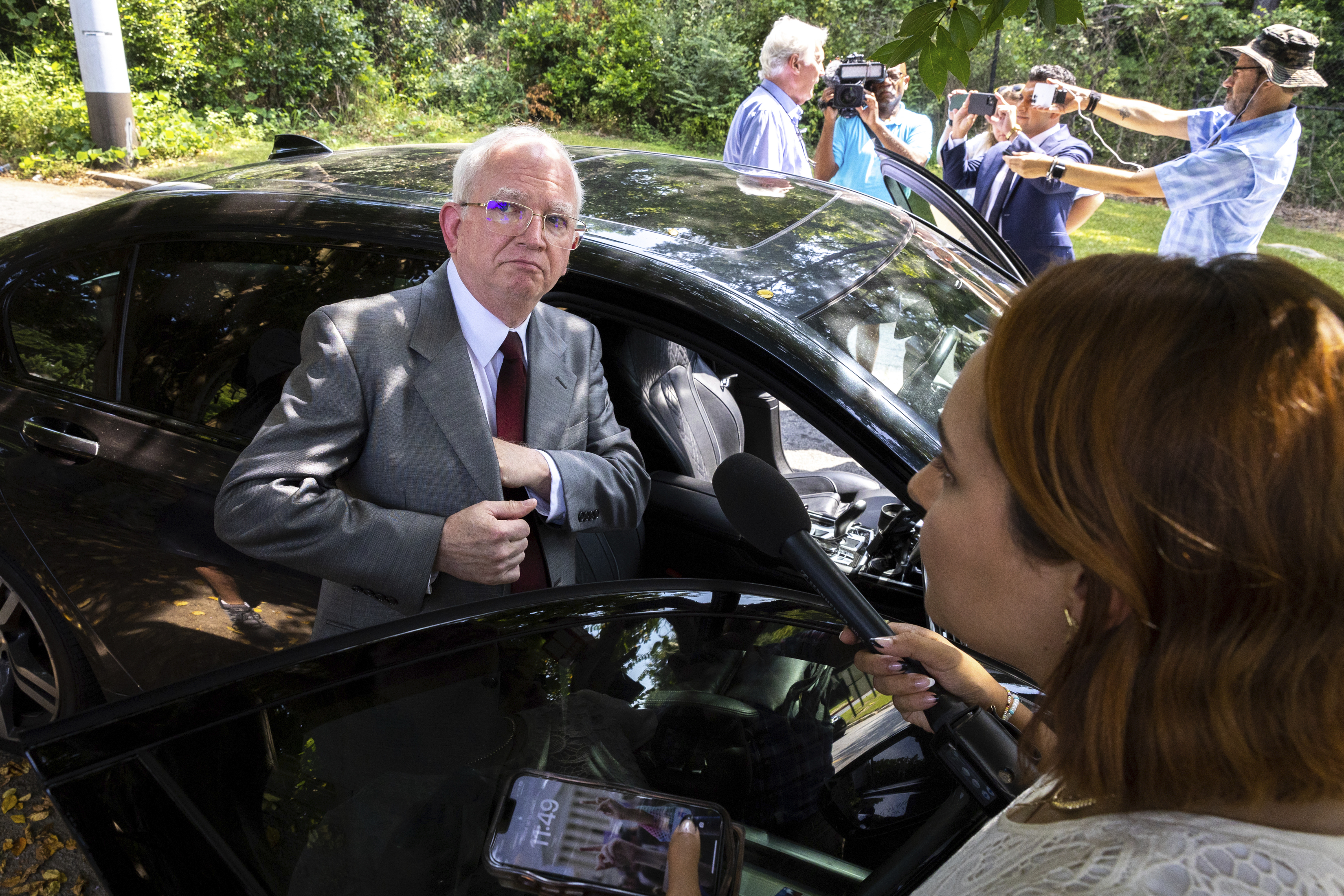
John Eastman: Joins Amy Wax Penn Law Team For 3rd Circuit Appeal
Summary
- John Eastman has joined the legal team representing University of Pennsylvania professor Amy Wax in her discrimination lawsuit.
- Eastman's California law license was revoked five months prior due to his actions related to the 2020 presidential election.
- He is confirmed to argue before the 3rd U.S. Circuit Court of Appeals bar in November, where Wax's case is expected.
- Amy Wax sued the University of Pennsylvania in January 2025, alleging tenure rights violations after a one-year teaching suspension for public statements about minority groups.
- A federal judge dismissed Wax's lawsuit in August 2025, finding her racial bias claims 'implausible'.
Eastman Joins Amy Wax's Legal Team
The engagement of John Eastman in the Amy Wax Penn Law team highlights the complex legal landscape surrounding academic freedom and professional conduct.
Conservative attorney and ally of former President Donald Trump, John Eastman, has become part of the legal defense team for Amy Wax, a professor at the University of Pennsylvania Carey Law School. This development comes five months after Eastman's law license was revoked in California due to his involvement in efforts to challenge the 2020 presidential election results. Professor Wax is currently engaged in a high-profile discrimination lawsuit against the University of Pennsylvania, a case that is anticipated to proceed to the 3rd U.S. Circuit Court of Appeals in Philadelphia this November.
Eastman, known for his past role as a professor and former dean at Chapman University Fowler School of Law in California, confirmed his new role in the ongoing litigation. His addition to the legal team representing Professor Wax brings a significant, albeit controversial, figure into a case already drawing considerable attention. The engagement of John Eastman in the Amy Wax Penn Law team highlights the complex legal landscape surrounding academic freedom and professional conduct.
Legal Challenges and Bar Admission Context
Despite the recent revocation of his California law license, John Eastman is confirmed to argue before the 3rd U.S. Circuit Court of Appeals in November. In a statement provided to Reuters on Monday, Eastman characterized his California disbarment as overtly political, indicating he foresees no obstacles to his admission to the appeals court's bar. It is important to note that the 3rd U.S. Circuit Court of Appeals maintains its own independent bar for approved lawyers, separate from state bar admissions.
Professor Wax, a scholar specializing in social welfare law and policy, initiated her lawsuit against the University of Pennsylvania in January 2025. She alleged that the university infringed upon her tenure rights in October 2024 when it imposed a one-year teaching suspension. This disciplinary action followed an internal investigation into various public statements she had made concerning minority groups. However, her case encountered a significant setback in August 2025 when a federal judge in Philadelphia dismissed it, deeming her claims of racial bias to be “implausible.”
Implications for Federal Court Practice
The situation involving John Eastman's confirmed participation in the 3rd Circuit argument, despite his California disbarment, underscores a critical aspect of legal practice: the distinct requirements for admission to federal courts versus state bar licensure. While a state disbarment typically prevents an attorney from practicing within that state, federal courts often have their own criteria for admitting lawyers to their respective bars. Eastman's confirmed participation will be closely watched, particularly as the Amy Wax University of Pennsylvania lawsuit progresses.
Eastman's prior legal engagements include representing President Donald Trump before the U.S. Supreme Court in a lawsuit that sought to invalidate votes in four states where Trump had alleged widespread 2020 voter fraud. This history, combined with his recent disbarment, places his potential admission to the 3rd Circuit bar under intense scrutiny. The outcome of his application could set a precedent or at least provide further clarity on how federal appellate courts weigh state disciplinary actions, especially those perceived by the disciplined attorney as politically motivated, against their own independent admission standards.
Practical Implications
This development underscores the complex interplay of state bar disciplinary actions and federal court admissions, particularly for attorneys disbarred in one jurisdiction seeking to practice in another. Lawyers should observe how the 3rd Circuit addresses Eastman's eligibility, as it could inform strategies for multi-jurisdictional practice and the implications of disciplinary findings on federal court appearances.
Source
Source: Original reporting via Reuters
How does this affect you?
Get an AI analysis of this article grounded in your jurisdictions, practice areas, and any policy documents you've uploaded to Wansom.
Finish Reading the Full Story and the Expert Analysis.
Get the latest legal & regulatory intelligence in United States
Wansom is AI and can make mistakes.