
Patrice Brehmer, Sénégal: Pêche Capacité Navires Clé Pression Marine
Summary
- Patrice Brehmer, an oceanographer and scientific advisor to the Commission sous-régionale des pêches, argues that fishing pressure in Senegal is driven more by vessel capacity and operations than by joint venture structures.
- He advocates for increased transparency regarding the real owners of fishing vessels and stricter regulation of their capture capacities.
- Brehmer stresses that new investments in the fishing sector should not increase the fishing effort on already overexploited marine resources.
- He proposes implementing an ecological threshold as a prerequisite for any new investment in the fishing industry.
Understanding Fishing Pressure in Senegal
He argues against any investment that would lead to an increase in the overall fishing effort, advocating instead for a precautionary approach where ecological limits dictate the scope and nature of new ventures.
Patrice Brehmer, a distinguished oceanographer whose research focuses on oceanic ecosystems and fisheries, serves as a scientific advisor to the permanent secretary of the Commission sous-régionale des pêches. He recently highlighted critical factors contributing to the intense fishing pressure in Senegal, challenging the common perception that the legal structure of joint ventures, or `sociétés mixtes`, is solely responsible for the strain on marine resources. Brehmer's analysis, as reported by Le Soleil, redirects attention to the operational realities of fishing activities.
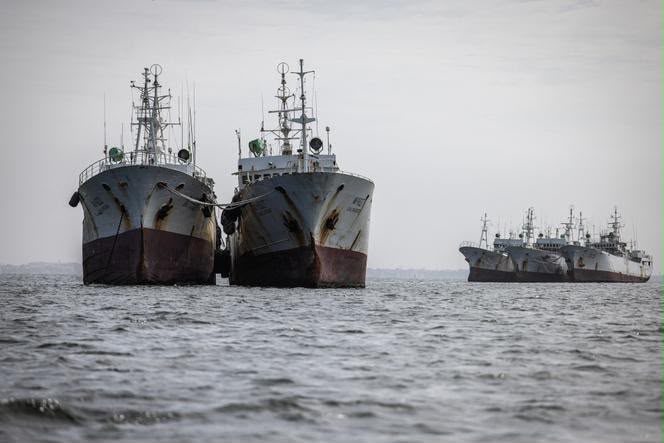
Instead of focusing exclusively on corporate structures, Brehmer emphasizes the direct impact of individual fishing vessels. His work underscores the importance of scrutinizing the specific characteristics of controlled fishing boats, including their actual capture capacity, the particular species they target, and the geographical zones they frequent. This perspective suggests that a deeper understanding of how fishing operations are conducted on a day-to-day basis is crucial for addressing the challenges faced by Senegal's marine environment. The researcher's insights are particularly relevant for understanding the dynamics of `pêche` and `capacité navires` in `Sénégal`.
Calls for Transparency and Capacity Regulation
A central tenet of Patrice Brehmer's argument is the urgent need for enhanced transparency regarding the true ownership of fishing vessels operating in Senegalese waters. He advocates for greater clarity on the `propriétaires réels navires pêche`, asserting that this information is vital for effective management and accountability within the sector. Beyond ownership, Brehmer also calls for stringent regulation of the `capacité navires`, arguing that uncontrolled expansion of fishing power directly contributes to the `pression pêche Sénégal`.
His recommendations imply that while `sociétés mixtes pêche Sénégal` might be part of the operational landscape, the actual impact on `ressources marines surexploitées Sénégal` stems more directly from the aggregate capacity and operational methods of the fleet. Implementing robust frameworks for disclosing beneficial ownership and setting clear limits on vessel capacity would provide authorities with better tools to manage the fishing effort and prevent further degradation of marine ecosystems.
The Ecological Imperative for Investment
Patrice Brehmer firmly believes that any new investment in the Senegalese fishing sector must be preceded by the establishment of a clear `seuil écologique`. This ecological threshold would serve as a critical benchmark, ensuring that further capital injection does not inadvertently intensify fishing efforts on already vulnerable stocks. He points out that many of the region's marine resources are already `surexploitées`, making any increase in fishing pressure unsustainable and potentially catastrophic for the long-term health of the ecosystem.
Therefore, Brehmer's position is that economic development in the fishing industry should be carefully balanced with environmental sustainability. He argues against any investment that would lead to an increase in the overall fishing effort, advocating instead for a precautionary approach where ecological limits dictate the scope and nature of new ventures. This perspective highlights the critical need for a holistic approach to `pêche` management in `Sénégal`, integrating scientific ecological data directly into investment decisions.
Practical Implications
Lawyers advising clients in the Senegalese fishing sector, particularly those involved in joint ventures or new investments, should monitor calls for increased transparency on vessel ownership and capacity limits. New regulations based on ecological thresholds could impact licensing, compliance, and investment viability.
Source
How does this affect you?
Get an AI analysis of this article grounded in your jurisdictions, practice areas, and any policy documents you've uploaded to Wansom.
Finish Reading the Full Story and the Expert Analysis.
Get the latest legal & regulatory intelligence in Senegal
Wansom is AI and can make mistakes.