
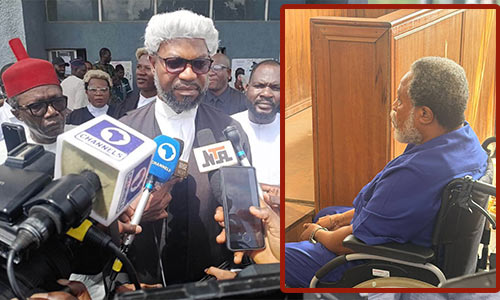
Anambra High Court: Pastor Harrison Anazodo Bail Refused in Murder Case
Summary
- The Anambra State High Court denied bail to Pastor Harrison Anazodo, General Overseer of Dayspring Assembly.
- Pastor Anazodo faces charges of murder, abduction, and trafficking.
- Justice Jude Obiora cited the absence of a life-threatening medical condition and concerns about witness interference as reasons for the refusal.
- The case has been adjourned until October 16, 2026.
- Pastor Anazodo is reportedly married to over 75 women.
Anambra Court Denies Bail to Pastor Facing Grave Charges
The court's decision, delivered by Justice Jude Obiora on Tuesday, means Pastor Anazodo will remain in custody while he faces serious allegations of murder, abduction, and trafficking.
The Anambra State High Court has rejected a bail application filed by Pastor Harrison Anazodo, the General Overseer of Dayspring Assembly, located in Awada-Obosi. The court's decision, delivered by Justice Jude Obiora on Tuesday, means Pastor Anazodo will remain in custody while he faces serious allegations of murder, abduction, and trafficking. The ruling underscores the stringent conditions under which bail may be refused in Nigeria, particularly when dealing with offenses of such gravity.
Central to the court's refusal was the determination that no life-threatening medical condition had been adequately established that could not be managed while the pastor remains incarcerated. This finding directly addressed a common ground for seeking bail, often referred to as medical bail, which requires proof of a severe health crisis. Furthermore, concerns regarding the potential for the accused to interfere with witnesses were also a significant factor in the court's decision to deny the bail request. The case has been adjourned, with proceedings set to resume on October 16, 2026. Pastor Anazodo is also notably reported to have over 75 wives.
Legal Framework for Bail Refusal in Nigeria
The ruling by Justice Obiora in the Anambra State High Court bail application highlights critical aspects of Nigeria's criminal justice system concerning bail. Under Nigerian law, while bail is generally a constitutional right, it is not absolute, especially for capital offenses or crimes carrying severe penalties like murder, abduction, and trafficking. Courts often weigh several factors, including the nature and gravity of the offense, the likelihood of the accused absconding, and the potential for witness interference, before granting or denying bail.
The court's emphasis on the absence of a life-threatening medical condition as a basis for refusing bail is particularly instructive. For medical bail to be granted, applicants typically need to demonstrate that their health condition is so severe that it cannot be adequately treated within the correctional facility, posing an immediate danger to their life. The court's finding implies that the medical evidence presented did not meet this high threshold, suggesting that the existing custodial medical services are deemed sufficient for the pastor's condition. This aspect of the `Justice Jude Obiora bail ruling` reinforces the judiciary's cautious approach to medical bail, ensuring it is not used as a pretext to evade justice.
Moreover, the concern about witness interference is a fundamental consideration in bail applications. Courts are tasked with ensuring the integrity of the judicial process, and any credible risk that an accused person might intimidate, influence, or obstruct witnesses can be a decisive factor in denying bail. This principle is crucial for safeguarding the fairness of the trial and protecting those who come forward to provide evidence in cases involving `murder abduction trafficking charges Nigeria`.
Implications for Serious Criminal Cases
This decision from the Anambra State High Court sends a clear message about the judiciary's stance on serious criminal allegations. It underscores that individuals facing grave charges, such as those leveled against the Dayspring Assembly General Overseer, will face significant hurdles in securing bail, particularly when there are concerns about their conduct outside of custody. The court's firm position reflects a commitment to upholding justice and preventing any actions that could compromise the trial process.
The protracted adjournment until October 2026 also highlights the often-lengthy timelines associated with criminal proceedings in Nigeria, especially for complex cases involving multiple serious charges. This extended period before the next hearing further emphasizes the immediate impact of the bail refusal on the accused, who will remain in custody for a considerable duration. The ruling serves as a critical reference point for legal practitioners advising clients on bail applications, particularly those involving serious offenses where the potential for witness interference or the lack of a life-threatening medical condition can be decisive factors.
Practical Implications
This ruling highlights the stringent conditions under which bail may be refused in Nigeria, particularly in cases involving serious charges and concerns about witness interference. Criminal defense lawyers should note the court's emphasis on the lack of a life-threatening medical condition as a prerequisite for medical bail, and the weight given to potential obstruction of justice when advising clients on bail applications.
Source
How does this affect you?
Get an AI analysis of this article grounded in your jurisdictions, practice areas, and any policy documents you've uploaded to Wansom.
Finish Reading the Full Story and the Expert Analysis.
Get the latest legal & regulatory intelligence in Nigeria
Wansom is AI and can make mistakes.