
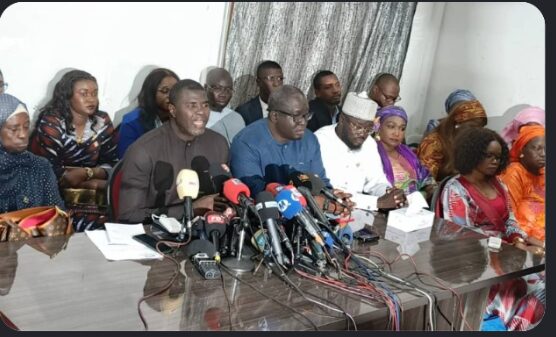
Pastef: Senegal Amended Finance Law Rejection Sparks Press Conference
Summary
- Pastef deputies announced a press conference following the rejection of Senegal's amended finance law, the loi de finances rectificative.
- This legislative setback occurred on Sunday, November 8, 2026, amidst broader calls for action addressed to Diomaye Faye.
- The rejection of the amended finance law signals potential legislative instability and significant opposition to the government's fiscal policy.
- Businesses and individuals in Senegal may face uncertainty regarding tax obligations and public procurement due to the unadjusted financial framework.
- The situation necessitates a review of financial forecasts and compliance strategies for entities operating within the country.
What Happened
The rejection of the amended finance law by the Senegalese legislature, followed by Pastef's announcement of a press conference, signals a period of potential legislative instability and significant opposition to the government's fiscal policy.
Deputies representing the Pastef political party have scheduled a press conference, an announcement made following the rejection of Senegal's amended finance law, known as the loi de finances rectificative. This development was highlighted on Sunday, November 8, 2026, as a significant item on the national agenda. The decision by Pastef to convene the press underscores the political weight attributed to the legislative outcome concerning the nation's fiscal framework.
The rejection of this crucial financial legislation marks a notable moment in Senegal's legislative landscape. While the precise details of the rejection and the parties involved are not elaborated, Pastef's subsequent action indicates a direct response to this parliamentary decision. The party's intention to address the media suggests a forthcoming public statement regarding the implications of the amended finance law's failure to pass.
Separately, the same news rundown also noted the achievement of Senegalese athletes, who secured medals at the Dakar 2026 Youth Olympic Games.
Legislative Context
An amended finance law, or 'loi de finances rectificative,' typically serves to adjust the national budget and fiscal policies mid-year or in response to unforeseen economic circumstances. Its rejection, therefore, can have substantial ramifications for government spending, revenue collection, and the implementation of public programs. Such a legislative setback often signals significant disagreement within the political sphere regarding the nation's economic direction or specific budgetary allocations.
In the context of Senegal, the failure of the loi de finances rectificative to pass through the legislative process suggests potential challenges for the government in executing its financial agenda. This type of legislative action can influence various sectors, from public procurement to social welfare initiatives, as the framework for national expenditures and revenues remains unadjusted. The political implications extend beyond mere budgetary concerns, touching upon the stability and effectiveness of the governing administration.
Political Reactions and Calls to Action
The planned press conference by Pastef deputies is anticipated to shed further light on the party's stance regarding the rejected amended finance law. This public address is expected to articulate their perspective on the legislative outcome and potentially outline their proposed next steps or demands. Such a move by a prominent political party often aims to mobilize public opinion or exert pressure on the government to reconsider its approach or address specific concerns.
Concurrently, there have been various calls to action directed at Diomaye Faye, indicating a period of heightened political engagement and demands for leadership. While the specific nature of these calls is not detailed, their emergence alongside the legislative developments suggests a broader environment of political scrutiny and expectation. These appeals to the head of state often arise during moments of significant policy debate or legislative deadlock, reflecting a desire for decisive intervention or clarification on critical national issues.
Why It Matters
The rejection of the amended finance law by the Senegalese legislature, followed by Pastef's announcement of a press conference, signals a period of potential legislative instability and significant opposition to the government's fiscal policy. This situation could have various implications for stakeholders across the country. Businesses and individuals may need to assess how the absence of updated financial legislation impacts their current and future tax obligations, as well as any public procurement processes that might have been affected by the proposed amendments.
Furthermore, any business operations reliant on government spending or specific legislative frameworks that would have been altered by the amended finance law could face uncertainty. This necessitates a careful review of financial forecasts and compliance strategies for entities operating within Senegal. The political dynamics surrounding this legislative setback could also influence investor confidence and the broader economic outlook, making it crucial for all parties to monitor subsequent developments closely.
Practical Implications
The rejection of the amended finance law by Pastef signals potential legislative instability or significant opposition to government fiscal policy in Senegal. Lawyers should advise clients on the implications for current and future tax obligations, public procurement, and any business operations reliant on government spending or specific legislative frameworks that would have been impacted by the proposed amendments, necessitating a review of financial forecasts and compliance strategies.
Source
Source: Original reporting via Senego
How does this affect you?
Get an AI analysis of this article grounded in your jurisdictions, practice areas, and any policy documents you've uploaded to Wansom.
Finish Reading the Full Story and the Expert Analysis.
Get the latest legal & regulatory intelligence in Senegal
Wansom is AI and can make mistakes.