
Paris Trial: Deadliest Channel Crossing Defendants on Trial
Summary
- A Paris trial is underway for 14 defendants implicated in the deadliest English Channel migrant crossing on record, which killed 31 people in November 2021.
- Survivors reported that passengers on the ill-fated 20-by-7-foot dinghy, which had a faulty motor, made multiple unsuccessful attempts to contact French and U.K. authorities for rescue.
- One defendant, arrested in Germany while trying to fly to Iraq, expressed condolences to victims' families, citing his own experience of losing relatives in 2015.
- The incident underscores a major political dispute between France and the U.K. over cross-Channel migration, with nearly 200,000 small-boat arrivals recorded by the U.K. Home Office between 2020 and 2025.
- A "one in, one out" pilot scheme, implemented in August 2025, allows the U.K. to return illegal small-boat arrivals to France, having so far resulted in approximately 1,400 deportations and 1,000 legal entries into the U.K.
The 2021 Tragedy: A Deadly Crossing
The ongoing trial in Paris highlights the severe human cost of illicit cross-Channel journeys and the complex legal and political challenges confronting both nations in managing irregular migration.
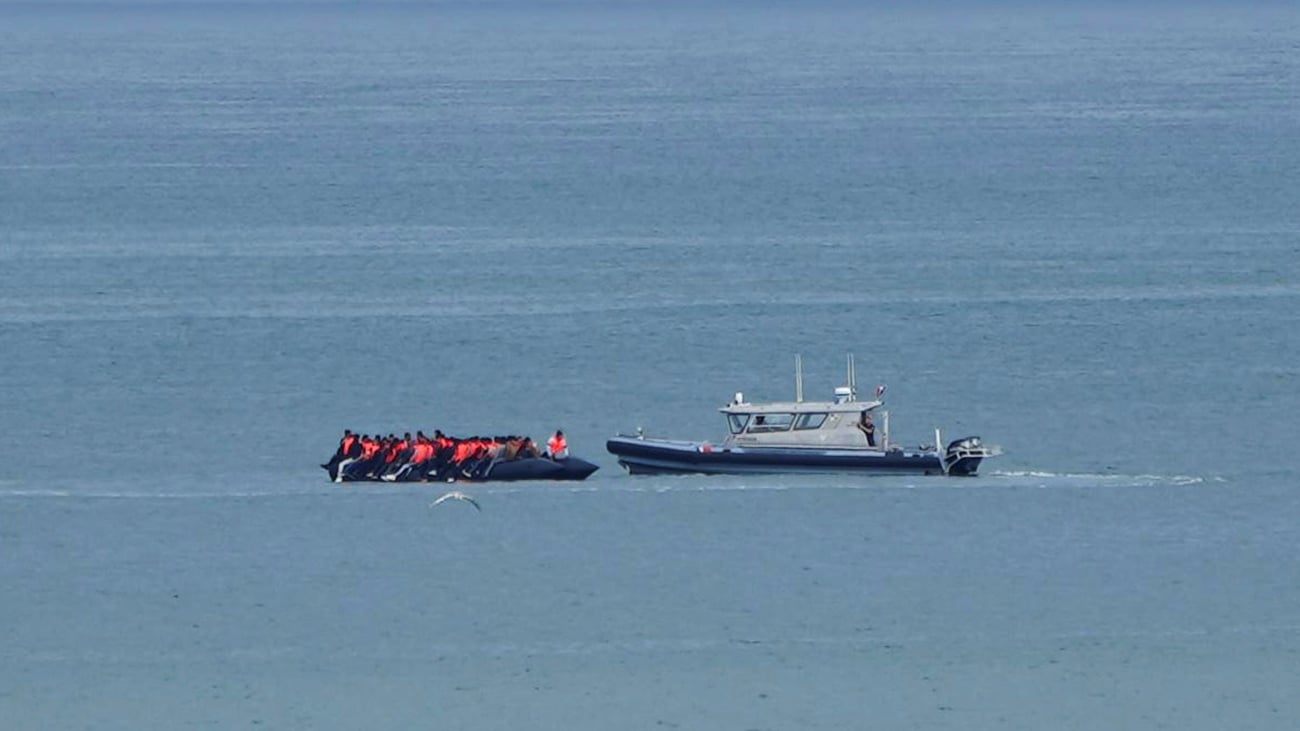
A Paris trial is currently underway, focusing on the deadliest migrant Channel crossing ever recorded, an incident that claimed the lives of 31 individuals in November 2021. The victims had embarked on a perilous journey across the English Channel aboard a roughly 20-by-7-foot dinghy, which was equipped with a faulty motor. Migrants reportedly paid thousands of dollars for a spot on the overcrowded vessel, setting off into the cold, rough sea at approximately 10 p.m.
The following day, the grim reality of the disaster unfolded when a fishing vessel discovered orange lifejackets carrying lifeless bodies through the water. Only two individuals survived the catastrophic event. These survivors recounted that the boat began taking on water around 2 a.m., prompting passengers to make multiple desperate attempts to contact both French and U.K. authorities for rescue. Tragically, all these pleas for help went unanswered.
This devastating incident underscores the extreme risks associated with irregular migration across the English Channel and forms the central focus of the ongoing legal proceedings in France.
The Paris Trial: Accountability and Testimony
Fourteen defendants are currently standing trial in Paris in connection with the November 2021 tragedy. During recent proceedings, one defendant, appearing behind the glass of a prisoner’s dock, addressed the Paris Criminal Court through a Kurdish translator. He expressed his condolences to the families of the victims, drawing a parallel to his own personal loss, stating that he had family members who disappeared in 2015 and were never found, allowing him to understand their pain.
This particular defendant was apprehended in Germany on November 30, 2021, having been in the process of attempting to fly back to Iraq, where flights were reportedly more affordable than from France. He revealed his own intention to make the Channel crossing, for which his father had sent a smuggler approximately $1,700. However, he claimed that after news of the accident spread through the Calais “Jungle,” the “good” smugglers departed, leaving only a few behind who, in his words, “did good work.”
The court proceedings also saw a judge initially assert that another defendant’s role in the network was to arrange housing for migrants awaiting their crossing. However, the judge later retracted this statement, clarifying that the justice system would ultimately determine whether the defendant’s actions were punishable by law, emphasizing the ongoing nature of the legal process.
Broader Implications: Cross-Channel Migration and Policy
The ongoing trial in Paris highlights the severe human cost of illicit cross-Channel journeys and the complex legal and political challenges confronting both nations in managing irregular migration. This incident is part of a larger, contentious issue that has become a significant political flashpoint between France and the United Kingdom. Between 2020 and 2025, the U.K. Home Office documented nearly 200,000 arrivals via small-boat crossings, with many individuals drawn to the U.K. due to existing family ties or greater familiarity with the English language.
In an effort to address these crossings, a “one in, one out” pilot scheme was introduced in August 2025. This initiative permits the U.K. to return individuals who arrive illegally on small boats to France, while in exchange, it can accept individuals from France who have completed the legal process to gain residency. To date, approximately 1,400 people have been deported back to France under this scheme, with at least 1,000 individuals brought into the U.K. in return.
Meghan Benton, director of the global program at Migration Policy International, characterized the scheme as a “mixed picture” after roughly one year of operation. She noted that the pilot has been instrumental in testing operational challenges, including legal hurdles and resistance from the French side. While the time required to return individuals has decreased from an initial 50 days, Benton identified a significant ongoing issue: a disconnect between political rhetoric and the realities of communication on the ground. Despite this, French President Emmanuel Macron, former British Prime Minister Keir Starmer, and current Prime Minister Andy Burnham have all emphasized their dedication to the pilot program and its potential to save lives.
Unresolved Questions: Rescue Efforts and State Responsibility
Beyond the criminal proceedings against the alleged smugglers, the tragic November 2021 incident has also prompted an investigation into the actions of state authorities. France is currently examining the conduct of military personnel who were on duty the night of the disaster, specifically investigating their alleged failure to provide assistance to people in danger. This inquiry directly relates to the accounts provided by the two survivors, who stated that passengers on the sinking dinghy made multiple attempts to contact both French and U.K. authorities for rescue, none of which were successful.
This aspect of the case raises critical questions about state responsibility in maritime emergencies and the protocols governing international rescue operations in the English Channel. The outcome of this investigation could have significant implications for how future migrant crossings are managed and the legal obligations of nations involved in search and rescue efforts.
Practical Implications
This trial highlights the severe criminal liabilities for individuals involved in human smuggling operations and the complex legal challenges surrounding international migration policies, including state responsibility for rescue failures. Lawyers advising clients in immigration, maritime law, or human rights should monitor the trial's outcome and the evolving legal frameworks governing cross-border migrant movements and state accountability.
Source
Source: Reporting based on CN coverage.
How does this affect you?
Get an AI analysis of this article grounded in your jurisdictions, practice areas, and any policy documents you've uploaded to Wansom.
Finish Reading the Full Story and the Expert Analysis.
Get the latest legal & regulatory intelligence in United States
Wansom is AI and can make mistakes.