
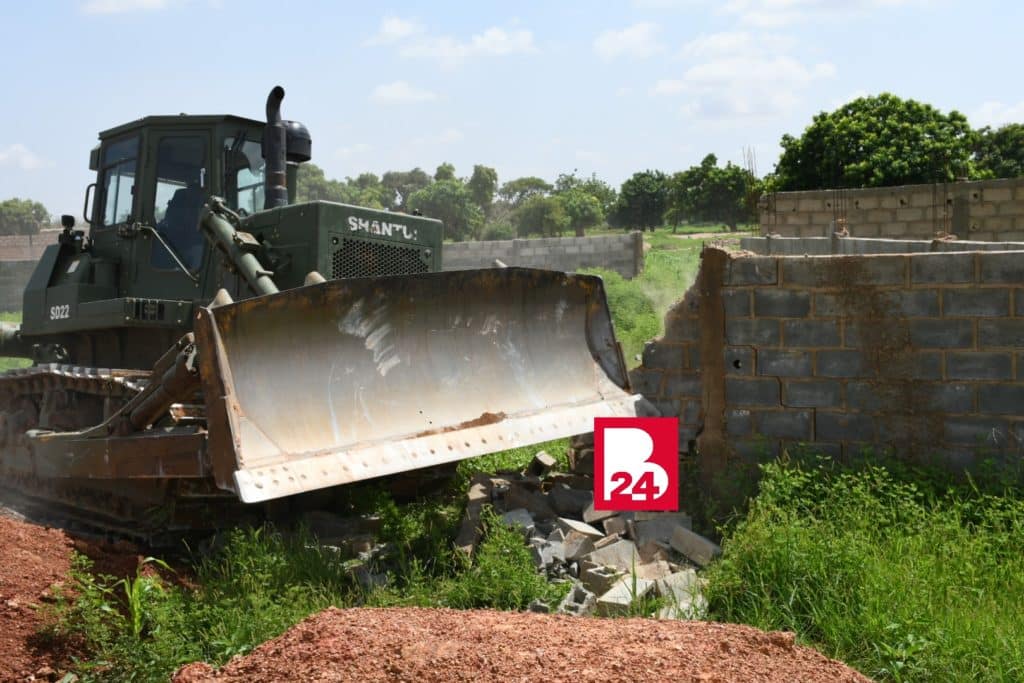
ONC-AC Ouagadougou: Démolition Installations Illégales Contournement Débute
Summary
- On August 10, 2026, the ONC-AC launched a demolition operation in Ouagadougou.
- The operation targets illegal installations situated on the right-of-way of the city's 125-kilometer bypass road.
- The primary goal is to restore the integrity of this vital public infrastructure.
- This action signals a heightened enforcement of urban planning and land use regulations in Burkina Faso.
- Businesses and individuals must conduct thorough due diligence to mitigate risks associated with property acquisition on public land.
Enforcement Action Targets Ouagadougou Bypass
Lawyers and compliance officers should therefore advise clients on the heightened risk of property acquisition or development on public land in Ouagadougou, especially near infrastructure projects.
On Monday, August 10, 2026, the Office National du Contrôle des Aménagements et des Constructions (ONC-AC) commenced a significant enforcement action in Ouagadougou. This operation specifically targeted the demolition of illegal installations that had encroached upon the designated right-of-way for the city's bypass road. The ONC-AC Ouagadougou démolition initiative represents a decisive step by authorities to address unauthorized constructions impeding public infrastructure.
The scope of this intervention is considerable, extending across a global route length of 125 kilometers. The central aim of this demolition installations illégales Ouagadougou contournement is to fully restore the structural and functional integrity of this crucial road axis. Such actions are typically undertaken to ensure unhindered development and safe operation of public works, preventing potential hazards and maintaining the planned capacity of the infrastructure. The libération emprise voie contournement Ouagadougou is paramount for the efficient flow of traffic and the long-term viability of the urban development plan.
Legal Framework for Public Land Use
The legal basis for such demolition operations in Burkina Faso, particularly in urban centers like Ouagadougou, stems from the principles governing public domain and urban planning regulations. Land designated as the "emprise" or right-of-way for public infrastructure, such as roads, is typically considered part of the public domain. This status renders it inalienable and imprescriptible, meaning it cannot be privately owned, sold, or acquired through adverse possession.
Constructions illégales Burkina Faso, especially those on public land, are in direct violation of these established legal frameworks. The droit foncier Ouagadougou, alongside broader national land laws, strictly regulates land use and development, requiring permits and adherence to zoning plans. Any structure erected without proper authorization on public property, or in contravention of urban planning schemes, is subject to removal by state authorities. This ensures that public resources are preserved for their intended collective use and that the integrity of urban development plans is maintained. The réglementation urbanisme Burkina Faso provides the necessary legal instruments for such enforcement.
Implications for Property Development and Due Diligence
This recent enforcement action by the ONC-AC carries significant implications for individuals, businesses, and investors involved in property acquisition and development within Ouagadougou. The active demolition of structures on the bypass road's right-of-way serves as a strong signal of heightened regulatory scrutiny and a renewed commitment to enforcing urban planning and land use regulations. This operation underscores the inherent risks associated with acquiring or developing property on land that may be, or become, part of the public domain, particularly near major infrastructure projects.
Lawyers and compliance officers should therefore advise clients on the heightened risk of property acquisition or development on public land in Ouagadougou, especially near infrastructure projects. This operation by ONC-AC signals active enforcement of urban planning and land use regulations, necessitating thorough due diligence to avoid demolition and potential losses. Verifying land titles, checking against urban master plans, and confirming the public or private status of land parcels are critical steps to mitigate risks. Failure to adhere to these stringent requirements, especially concerning the emprise of public works, can lead to substantial financial losses, including the cost of demolition and the forfeiture of investments in illegally constructed properties, directly impacting droit foncier Ouagadougou.
Practical Implications
Lawyers and compliance officers should advise clients on the heightened risk of property acquisition or development on public land in Ouagadougou, especially near infrastructure projects. This operation by ONC-AC signals active enforcement of urban planning and land use regulations, necessitating thorough due diligence to avoid demolition and potential losses.
Source
How does this affect you?
Get an AI analysis of this article grounded in your jurisdictions, practice areas, and any policy documents you've uploaded to Wansom.
Wansom is AI and can make mistakes.