
Oregon Appeals Court: PacifiCorp Wildfire Jury Instruction Error
Summary
- Thousands of Oregon residents were displaced by wildfires in September 2020, leading to a class action lawsuit against PacifiCorp.
- A jury found PacifiCorp liable, resulting in over $1 billion in verdicts and judgments for the victims.
- PacifiCorp appealed, challenging a jury instruction that allowed jurors to assume evidence applied to all class members.
- The Oregon Court of Appeals sided with PacifiCorp, but the wildfire survivors are now appealing to the Oregon Supreme Court.
- The case highlights the critical role of jury instructions and common evidence in large-scale class action litigation.
Background to the Dispute
The ongoing legal battle underscores the critical importance of jury instructions and the commonality of evidence in large-scale class action litigation, particularly in mass torts where liability must be established across a diverse group of plaintiffs.
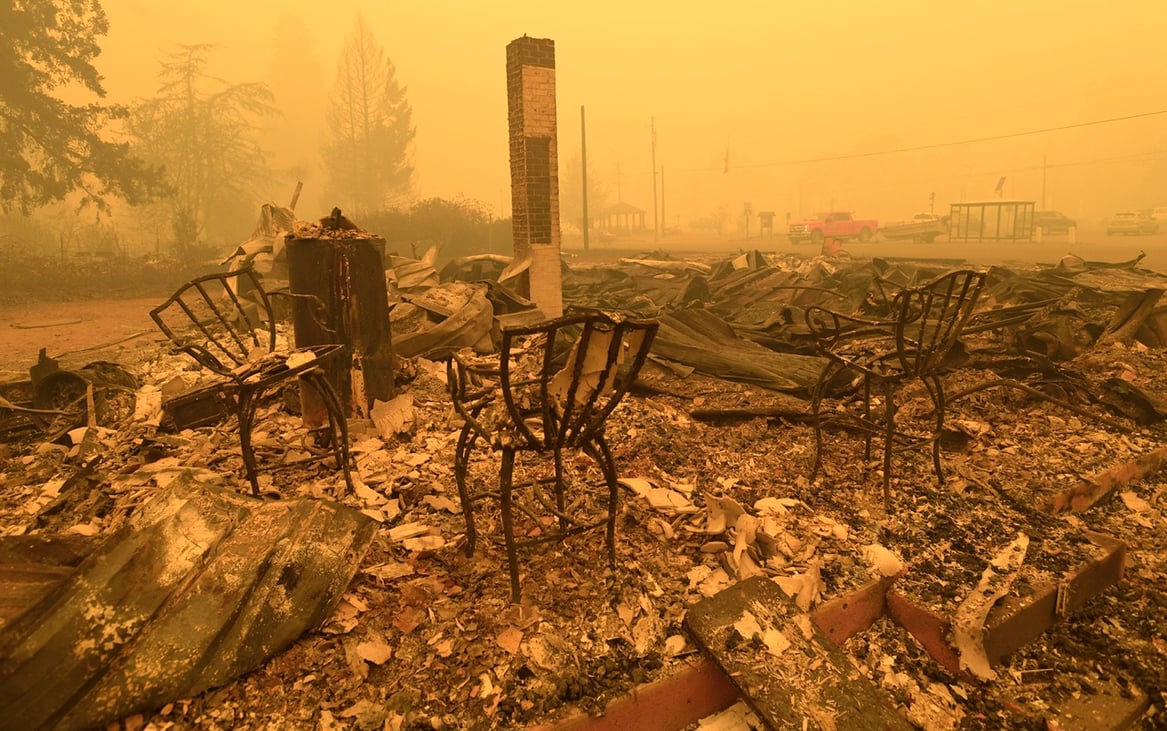
Thousands of Oregon residents were displaced by a series of devastating wildfires that swept across the state during the Labor Day weekend in 2020. These blazes, which included the 242 Fire, the Echo Mountain Complex Fire, the South Obenchain Fire, and the Santiam Canyon Fire, constituted one of Oregon's most significant disasters. The fires ignited amidst a historic windstorm in September 2020, with allegations pointing to PacifiCorp and Pacific Power for leaving their power lines energized, which subsequently sparked the conflagrations.
Survivors of these fires initiated a class action lawsuit, accusing the power companies of negligence. The core of their claims centered on the companies' alleged failure to adequately maintain power lines, clear surrounding vegetation, implement fire prevention measures, and, crucially, to de-energize lines despite receiving warnings about the impending conditions. A trial court certified a class of fire survivors, structuring the proceedings to allow the jury to determine liability and causation for each specific fire area. Following an eight-week trial, the jury concluded that PacifiCorp was responsible for causing the fires and harming class members, leading to nineteen subsequent damages-only trials that resulted in verdicts and judgments exceeding $1 billion.
The Contested Jury Instruction
PacifiCorp subsequently appealed the verdict, specifically challenging a pivotal jury instruction. This instruction had informed the jury that class representatives presented evidence on behalf of absent class members and that jurors could "assume that the evidence at trial applies to all class members." The Oregon Court of Appeals sided with PacifiCorp, determining that the common evidence presented did not sufficiently prove causation across the entire class and that the jury might have erroneously inferred liability for all fires based on evidence related to just one.
Before the Oregon Supreme Court, the class of over 2,400 wildfire survivors argued that the appeals court's decision was flawed. Nicholas Rosinia, an attorney representing the class, contended that PacifiCorp's appeal was driven by dissatisfaction with the verdict, stating, "At the end of the day, what they really don’t like is the jury verdict in this case. They bet the company on a class action wildfire trial, and they lost." Rosinia further clarified that the jury's decision was made "on a fire area by fire area basis," allowing PacifiCorp to present fire-specific defenses while still relying on common evidence across the class. The survivors maintained that the jury's primary task was to ascertain if PacifiCorp's fires were a substantial factor in the resulting harm, asserting that the utility's "conflagration of fires" served as the common evidence proving ultimate harm, which all class members relied upon.
Broader Implications for Class Actions
PacifiCorp, however, countered that the class action was unprecedented and should not have been certified. The utility argued that the contested jury instruction improperly invited the jury to assume that all evidence presented applied uniformly to every single class member, regardless of individual circumstances or specific fire areas. According to PacifiCorp's counsel, Theodore J. Boutrous Jr., the instruction complicated an already challenging task for the jury in a class action, especially when dealing with a single, large class comprising 17 diverse class representatives, rather than distinct subclasses for each fire area.
The ongoing legal battle underscores the critical importance of jury instructions and the commonality of evidence in large-scale class action litigation, particularly in mass torts where liability must be established across a diverse group of plaintiffs. The Oregon Supreme Court's ultimate decision on this PacifiCorp Oregon class action appeal will set a significant precedent for how evidence is presented and applied in complex cases, potentially influencing future strategies for class certification and trial conduct in similar high-stakes lawsuits involving wildfire liability and other mass torts.
Practical Implications
This case highlights the critical importance of jury instructions and the commonality of evidence in large-scale class action litigation, particularly mass torts. Lawyers advising on or litigating class actions should closely monitor the Oregon Supreme Court's decision, as it could establish a significant precedent for how evidence is presented and applied across diverse class members, impacting future certification and trial strategies in similar complex cases.
Source
How does this affect you?
Get an AI analysis of this article grounded in your jurisdictions, practice areas, and any policy documents you've uploaded to Wansom.
Wansom is AI and can make mistakes.