
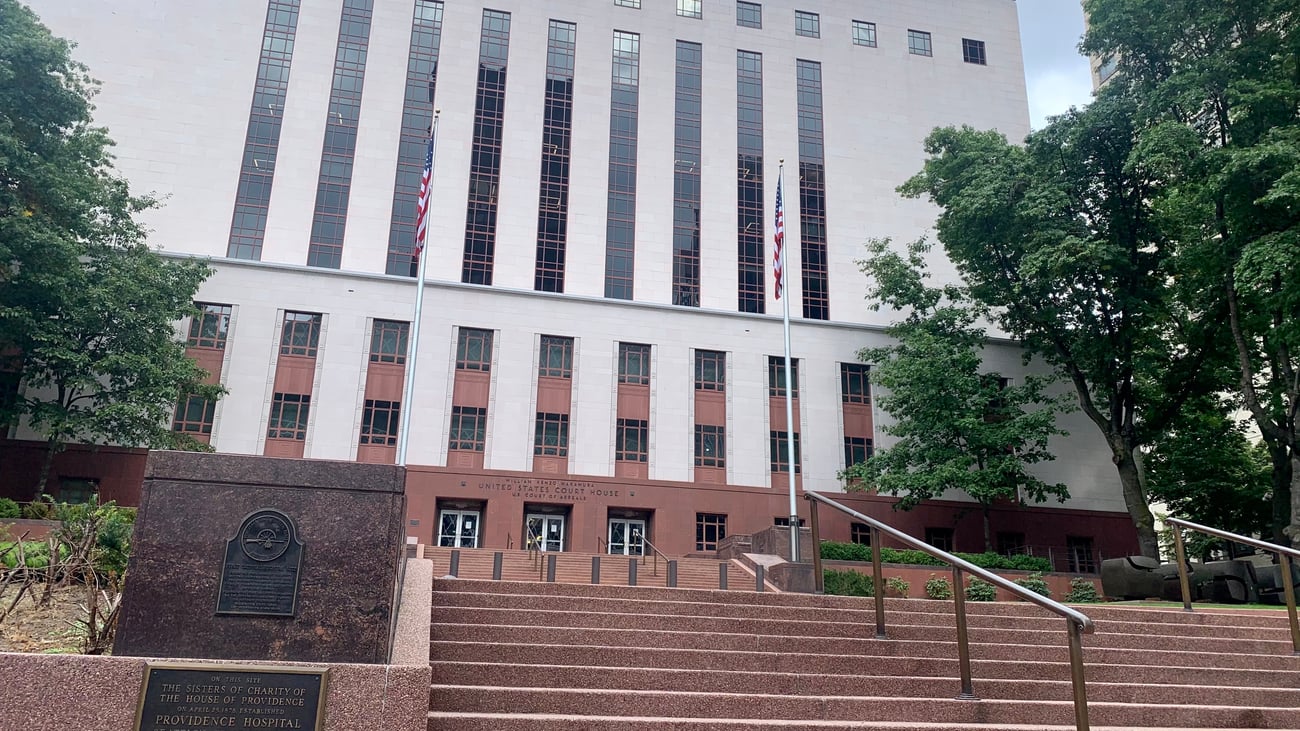
Ninth Circuit: Oregon Police Officers' Qualified Immunity Appeal
Summary
- A Ninth Circuit panel is set to decide whether Oregon police officers accused of fabricating evidence are entitled to qualified immunity.
- The case involves Nicholas McGuffin, who spent years in prison for a crime he did not commit and received the state's first-ever court-issued certificate of innocence last year.
- The outcome of this case has significant implications for wrongful conviction cases and police accountability.
Wrongful Conviction Case Heads to Ninth Circuit
The fact that on the actual evidence presented to the court, the inference that those statements were fabricated is completely contradicted by every piece of evidence in the record
A Ninth Circuit panel is set to decide whether Oregon police officers accused of fabricating evidence to secure a manslaughter conviction in a murder cold case are entitled to qualified immunity. The case involves Nicholas McGuffin, who spent years in prison for a crime he did not commit. McGuffin's conviction was overturned in 2019 based on the finding that law enforcement had withheld key information, including unidentified male DNA evidence. He received the state's first-ever court-issued certificate of innocence last year.
Legal Context: Qualified Immunity and Police Accountability
The police officers' appeal to the Ninth Circuit raises questions about qualified immunity and its application in cases involving police misconduct. Qualified immunity is a doctrine that protects government officials from lawsuits for actions taken within their official capacity, unless they clearly violate established law. However, critics argue that it can be used to shield police officers from accountability for misconduct. In this case, the police officers are arguing that they are entitled to qualified immunity because there is not enough evidence to tie them to McGuffin's claims of fabricated evidence and destruction of evidence.
Why It Matters: Implications for Wrongful Conviction Cases
The outcome of this case has significant implications for wrongful conviction cases. If the Ninth Circuit rules in favor of the police officers, it could set a precedent for police officers to argue that they are entitled to qualified immunity in similar cases. This could impact the strategy for future appeals and the ability to hold law enforcement accountable for misconduct. Lawyers representing individuals wrongfully convicted should watch this development closely, as it may affect their approach to seeking justice for their clients.
Practical Implications
Lawyers representing individuals wrongfully convicted should watch for this development, as it sets a precedent for police officers to argue they are entitled to qualified immunity in similar cases. This may impact the strategy for future appeals and the ability to hold law enforcement accountable for misconduct.
Source
How does this affect your business?
Get an AI analysis of this article grounded in your jurisdictions, practice areas, and any policy documents you've uploaded to Wansom.
Wansom is AI and can make mistakes.