
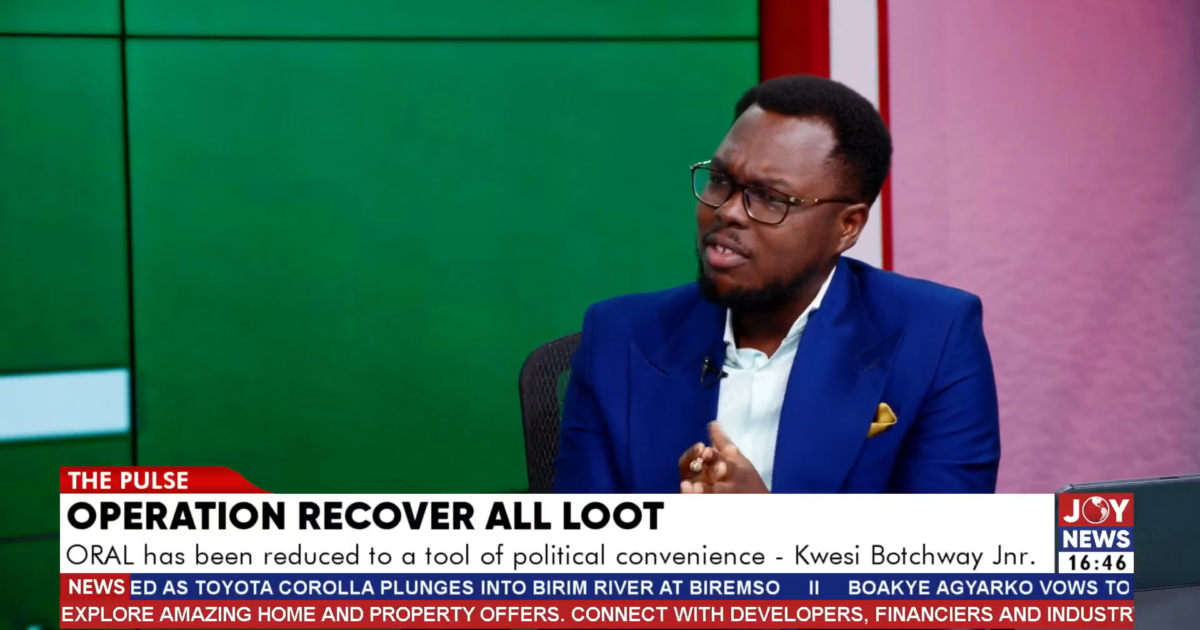
Kwesi Botchway Jnr: Attorney General's Control Over Prosecutions Sparks Concerns
Summary
- Kwesi Botchway Jnr accuses government of reducing ORAL to a tool for political convenience.
- Attorney General's control over prosecution powers has undermined credibility of ORAL.
- Concentration of prosecutorial discretion raises concerns about selective justice and accountability in Ghana.
Selective Prosecutions Raise Concerns
The authority to initiate prosecution is at the behest of the Attorney General of the Republic, and the authority to also withdraw prosecution is also at the behest of the Attorney General of the Republic.
The concentration of prosecutorial discretion by the Attorney General has sparked concerns about selective prosecutions in Ghana. This issue is not just limited to the effectiveness of Operation Recover All Loot (ORAL), but also extends to the broader implications for accountability and transparency in public office. According to Kwesi Botchway Jnr, a private legal practitioner, the credibility of ORAL has been undermined by the Attorney General's control over prosecution powers. This concentration of power has created an impression of selective justice, where individuals associated with the governing party are treated differently from opposition figures.
The Role of the Attorney General
The Attorney General plays a crucial role in the administration of justice in Ghana. As the chief law officer of the state, they exercise prosecutorial authority on behalf of the government. However, this power also comes with significant responsibilities and potential for abuse. The Attorney General has the authority to initiate or discontinue criminal prosecutions, which can have far-reaching consequences for individuals and institutions involved. In recent times, there have been allegations that the Attorney General has pursued cases against members of the previous administration while withdrawing charges against those affiliated with the governing party.
Implications for Accountability
The handling of criminal cases by the Attorney General has significant implications for accountability and transparency in public office. According to Kwesi Botchway Jnr, holding public office should come with an acceptance of scrutiny and responsibility for decisions taken while in office. However, the perception that individuals associated with the governing party are being treated differently from opposition figures raises concerns about selective prosecution and the erosion of trust in the justice system. This situation can have far-reaching consequences for compliance with anti-corruption regulations and the rule of law in Ghana.
Practical Implications
Lawyers should be aware that the concentration of prosecutorial discretion by the Attorney General may create concerns about selective prosecutions, which could impact their clients' cases and compliance with anti-corruption regulations.
Source
How does this affect you?
Get an AI analysis of this article grounded in your jurisdictions, practice areas, and any policy documents you've uploaded to Wansom.
Wansom is AI and can make mistakes.