
Only 39 of 137 SA Truck Stops Meet New Security Standard as Department of Transport Launches National Framework
The Scale of the Problem, Quantified Independently
The original announcement of this Framework, drawn from the Department of Transport's own statement describes the problems truck stops face in general terms: inadequate parking, poor lighting and security, insufficient ablution facilities, inconsistent standards, and limited provision for women in the sector. What's missing from that framing is a number, and there is one. Two days before the official launch, the SaferStops Association — a nonprofit driver-welfare organisation that assessed truck-stop facilities as part of the Framework's development process — published findings from its national assessment: of 179 truck and rest-stop facilities assessed nationally, only 39 of the 137 facilities formally classified as truck stops met the new framework's security requirements — roughly 28%. This figure gives concrete shape to what would otherwise read as a general policy statement about "challenges."
SaferStops is not a government body; it's a membership-based nonprofit, founded around 2023 with seed funding from USAID, built specifically around advocating for driver welfare and truck-stop standards — including a specific focus on the barriers facing women in long-haul trucking. Its close involvement in assessing facilities ahead of the government's launch suggests a working relationship between the Department and the organisation in developing the Framework's evidentiary basis, though the Department's own materials do not explicitly credit SaferStops as a co-author of the Framework itself — worth noting as an attribution gap in available sourcing.
What the Framework Actually Does
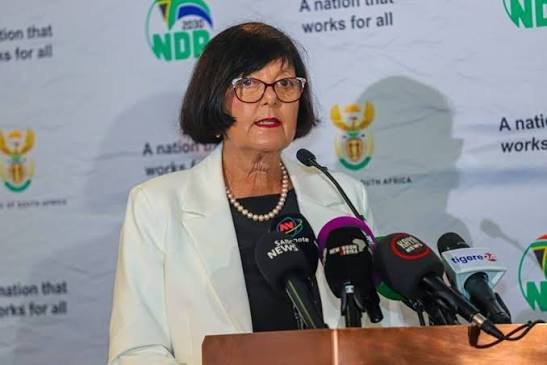
The National Truck Stop Framework establishes a national approach to planning, developing, managing, standardising, and improving truck-stop facilities, and — critically — introduces a system for assessing and classifying facilities by the level of security and amenities they provide. Speaking at the launch, Creecy described the purpose plainly: "a truck driver should be able to understand the level of service and security that can reasonably be expected from a particular facility."
Based on SaferStops' own published methodology for its parallel classification work, the rating approach functions similarly to a hotel star-rating system, with each facility receiving two separate ratings — one for service levels, one for security levels — rather than a single blended score. We note this detail is drawn from SaferStops' own published system rather than confirmed as the exact mechanism the government Framework itself will use, and flag it as the most likely model given the close relationship between the two efforts, without asserting it as officially confirmed Framework methodology.
Creecy was explicit that the Framework's purpose goes beyond parking infrastructure: "We cannot discuss freight efficiency without discussing the people who move that freight." She tied the initiative directly to road safety, noting that fatigue-related driver error is a major cause of vehicle crashes, and that truck stops are intended to become platforms for broader wellness interventions — health screening, fatigue awareness, and road safety education — not just rest stops.
The Women Drivers' Access Issue
Site visits conducted in developing the Framework found that many facilities were not designed with women drivers in mind — citing the absence of dedicated ablution and shower facilities, adequate lighting, and appropriate security as practical barriers to women entering or remaining in the freight sector. Creecy was careful to frame this as a problem infrastructure alone cannot fully solve, positioning the Framework as contributing to — rather than single-handedly resolving — a broader goal of drawing talent into freight logistics "from the full diversity of South African society."
What Comes Next: And What's Explicitly Not Yet Decided
Creecy was direct that the launch marks a beginning, not a conclusion: "Today's launch must therefore not be viewed as the conclusion of this process. It marks the beginning of the next phase." The Department said it will continue working with provinces, municipalities, Transport Entities, industry associations, truck-stop operators, freight operators, and organised labour to advance implementation — but no specific implementation timeline, compliance deadline, or enforcement mechanism was announced at launch, based on available reporting. Whether classification under the new system will eventually become compulsory for truck stops operating on national routes, or remain a voluntary standard operators can opt into, is not yet resolved.
Compliance Implications / What This Means for Freight and Logistics Businesses
Who must act, and what specifically changes: Nothing is mandatory yet. Truck-stop operators face no current legal compliance obligation arising directly from this Framework's launch. Freight and logistics operators are not required to route drivers only through classified facilities at this stage.
Operational and risk exposure: Given the SaferStops data showing fewer than three in ten assessed truck stops currently meet the new security bar, freight operators with duty-of-care obligations toward drivers — and insurers underwriting fatigue-related crash risk — have a concrete, quantified basis for auditing which facilities their drivers actually use along key corridors, independent of whether formal compliance becomes mandatory. Truck-stop owners and investors should treat the classification system as an emerging market signal: facilities that proactively upgrade toward the Framework's security and amenity standards may gain a competitive and reputational advantage as freight operators and drivers begin using classification (once available) to choose where to stop.
Realistic timeline: No compliance deadline exists yet. The Department has committed only to continued multi-stakeholder engagement on implementation, without a published schedule.
What remains uncertain or pending: Whether classification will become compulsory, what specific security and amenity thresholds each classification tier will require, how facilities will be audited and by whom, and whether SaferStops' existing assessment methodology will be formally adopted as the Framework's official classification system are all open questions not resolved by this launch.
Frequently Asked Questions
Is the National Truck Stop Framework a new law truck stops must comply with? No. It's a strategic policy framework providing planning tools and a common national approach — not binding legislation or a regulation with legal force. No mandatory compliance obligation currently exists for truck-stop operators.
How bad is the current state of truck-stop security in South Africa, based on actual data? An independent national assessment by the SaferStops Association, published two days before the Framework's launch, found only 39 of 137 facilities formally classified as truck stops — out of 179 total facilities assessed — met the new framework's security requirements, roughly 28%.
Who is the SaferStops Association? A membership-based nonprofit organisation focused on truck-driver welfare and truck-stop standards, founded around 2023 with USAID seed funding. It conducts independent facility assessments and has developed its own star-rating-style classification approach, separate from but closely related to the government's Framework.
Will truck-stop operators be forced to upgrade their facilities? Not based on what was announced at launch. No mandatory compliance deadline or enforcement mechanism was published. The Department described the Framework as equipping stakeholders with tools and common direction, with implementation to be worked out collaboratively going forward.
Where and when was the Framework officially launched? Thursday, 17 September 2026, at the Sasol N17 Truck Stop in Mpumalanga (corner R546 and N17, Highveld Ridge), per the Department of Transport's own media advisory.
Does the Framework specifically address facilities for women drivers? Yes. Site visits during the Framework's development found many facilities lacked dedicated ablution, shower, lighting, and security provisions for women, which the Framework identifies as a practical barrier to women entering and remaining in the freight sector — while explicitly noting infrastructure alone won't fully resolve this.
Citations
- 1.Original government statement: SAnews (South African Government News Agency), "Government develops plan to improve truck-stop facilities".
- 2.Official media advisory confirming launch date, time, and venue: South African Government, "Minister Barbara Creecy launches National Truck Stop Framework, 17 Sept" — the most authoritative primary source located for this article.
- 3.The SaferStops Association's independent assessment figures (179 facilities assessed, 39 of 137 classified truck stops meeting security requirements) and additional launch-day quotes: Inside Politics, "Creecy targets driver fatigue, wellness in truck stop framework".
- 4.SaferStops Association's classification methodology (dual service/security star ratings) and organisational background: Focus on Transport and Logistics, "National truck stop framework study underway"; SaferStops Association's own site, saferstops.co.za.
- 5.Additional launch-day corroboration: Arrive Alive, "Minister of Transport, Barbara Creecy officially launched the National Truck Stop Framework (NTSF) on the N17 Truck Stop".
Finish Reading the Full Story and Expert Analysis.
Get the latest legal & regulatory intelligence in South Africa
Wansom is AI and can make mistakes.