
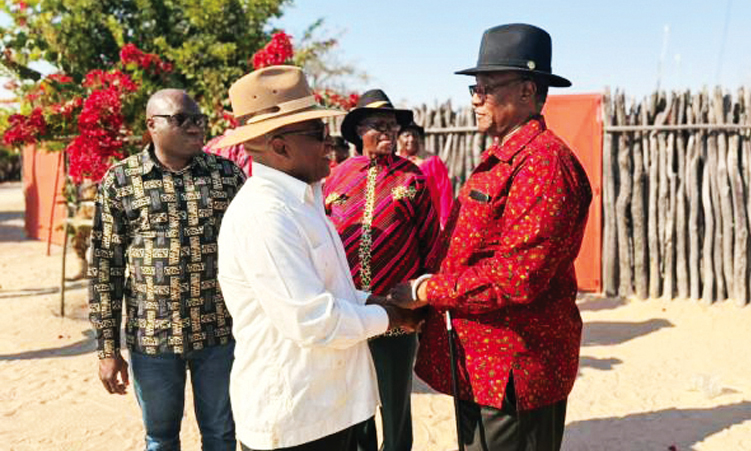
Ongandjera Traditional Authority Namibia: Transfers Land for Agriculture
Summary
- The Ongandjera Traditional Authority has transferred over 60 hectares of fertile land to the Namibian government.
- This land, located at Olupelengwa (9.9 ha) and Onamatanga (50.5 ha) in the Omusati region, is intended to boost agricultural production and national food security.
- Omukwaniilwa (King) Johannes Mupiya sanctioned the allocation, and the handover occurred in the presence of Prime Minister Elijah Ngurare.
- The transfer highlights a collaborative effort between traditional leadership and the government to address critical national development priorities.
Significant Land Transfer in Omusati Region
This development indicates a potential shift in land use and allocation policy by traditional authorities, particularly concerning agricultural development and food security.
The Ongandjera Traditional Authority in Namibia has formally transferred more than 60 hectares of fertile land to the government, a move explicitly aimed at bolstering agricultural output and strengthening national food security initiatives. This substantial Ongandjera land transfer government represents a notable collaboration between a traditional governance body and the national administration to address critical development priorities.
The allocation, which received the official sanction of Omukwaniilwa (King) Johannes Mupiya, encompasses two distinct parcels within the Omusati region. Specifically, 9.9 hectares are situated at Olupelengwa, while a larger tract of 50.5 hectares is located at Onamatanga. This strategic Ongandjera Traditional Authority land Namibia allocation underscores a commitment to leveraging regional resources for broader national benefit.
The formal handover of these land parcels occurred during an event attended by Prime Minister Elijah Ngurare. While the specific details of the ceremony were not fully elaborated, the Prime Minister's presence highlights the national significance attributed to this particular Omusati region land allocation and the collaborative spirit between traditional leadership and state institutions in Namibia.
Legal and Policy Implications for Land Use
This transfer by the Ongandjera Traditional Authority signals a potentially evolving approach to land administration and resource management within Namibia, particularly concerning the role of traditional authorities. These bodies traditionally hold significant sway over communal lands, and their decisions can profoundly influence local development trajectories. The explicit purpose of enhancing agricultural production and food security aligns with broader Namibia agricultural land policy objectives, suggesting a coordinated effort to optimize land use for national benefit.
Such an action by a traditional authority to cede control of fertile land to the central government for specific developmental purposes could set a precedent for future land transactions across the country. It highlights a potential shift where traditional authority land Namibia is increasingly viewed through the lens of national strategic priorities, especially in sectors critical for economic stability and population welfare. This collaborative model could become a template for other regions facing similar challenges in food production and land utilization.
Why This Matters for Future Development
The decision by the Ongandjera Traditional Authority to allocate over 60 hectares of prime agricultural land to the government carries significant implications for land tenure, property law, and agricultural investment in Namibia. This development indicates a potential shift in land use and allocation policy by traditional authorities, particularly concerning agricultural development and food security. It suggests a proactive stance by traditional leaders to contribute directly to national development goals, moving beyond customary land administration to facilitate large-scale agricultural projects.
For legal professionals advising on property law, land tenure, or agricultural investments, particularly within the Omusati region, this event warrants close monitoring. The precedent set by the Ongandjera land transfer government could influence how future land transactions are structured, how traditional authorities engage with government initiatives, and the overall landscape for agricultural development. Understanding this evolving dynamic will be crucial for navigating land-related legal frameworks and investment opportunities in Namibia, especially as the nation continues to prioritize food self-sufficiency and sustainable land management.
Practical Implications
This development indicates a potential shift in land use and allocation policy by traditional authorities in Namibia, particularly concerning agricultural development and food security. Lawyers advising on property law, land tenure, or agricultural investments in the Omusati region should monitor how this precedent might influence future land transactions or government initiatives.
Source
How does this affect you?
Get an AI analysis of this article grounded in your jurisdictions, practice areas, and any policy documents you've uploaded to Wansom.
Finish Reading the Full Story and the Expert Analysis.
Wansom is AI and can make mistakes.