
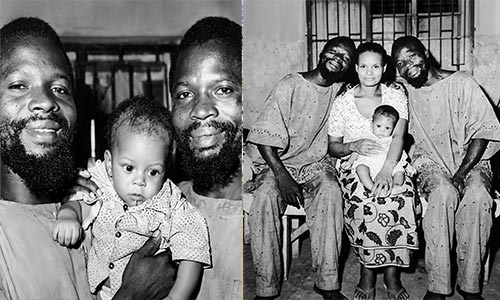
Nigeria: Ogundipe Twins Bigamy Cohabitation Challenges Marriage Law
Summary
- In 1978, Nigerian twins Taiwo and Kehinde Ogundipe reportedly considered themselves married to the same woman, Patricia Adewuyi.
- This unusual arrangement continues to attract curiosity nearly five decades later.
- The situation raises fundamental legal questions about the definition and validity of marriage under Nigerian law.
- It prompts a critical examination of the distinction between legally recognized marriage and mere cohabitation in Nigeria.
The Unusual Arrangement
This unique historical event underscores the importance for legal professionals to critically evaluate the legal definitions of marriage and cohabitation under Nigerian law.
In 1978, a highly unconventional domestic arrangement involving Nigerian twins, Taiwo and Kehinde Ogundipe, and a woman named Patricia Adewuyi, reportedly saw the brothers considering themselves married to the same individual. This unique situation, where two men were said to share a marital bond with one woman, has continued to capture public attention and provoke discussion for almost five decades since its initial reporting. The enduring fascination with the Ogundipe twins' purported shared wife underscores the profound questions it raises about societal norms and legal definitions.
The specifics of how this arrangement functioned in daily life remain a subject of historical curiosity. However, the core of the matter, as it pertains to legal analysis, revolves around whether such a union could ever be recognized under established Nigerian marriage law. The narrative of Taiwo and Kehinde Ogundipe's relationship with Patricia Adewuyi, therefore, transcends mere anecdote, presenting a complex scenario that challenges conventional understandings of marital status and family structure within the Nigerian context.
Legal Framework of Marriage in Nigeria
The legal meaning of marriage in Nigeria is typically understood through various statutory and customary frameworks, generally predicated on a union between one man and one woman. This fundamental principle immediately brings into question the Nigerian marriage law validity of an arrangement like that of the Ogundipe twins and Patricia Adewuyi. The concept of bigamy laws Nigeria, for instance, specifically prohibits a person from entering into a second marriage while still legally married to another, a provision designed to uphold monogamous unions.
However, the situation of the Ogundipe twins and Patricia Adewuyi presents a nuanced challenge: was it a case of bigamy, or simply a form of cohabitation legal status Nigeria, which carries different legal implications? The distinction is crucial, as cohabitation, while common, does not confer the same rights, responsibilities, or legal recognition as a formal marriage under Nigerian law. This historical case compels a deeper examination of what constitutes a legally binding marital union versus an informal domestic partnership, especially when considering the intricate layers of customary and statutory law.
Enduring Questions of Validity
Even after nearly fifty years, the 1978 arrangement of the Ogundipe twins, Taiwo and Kehinde, with Patricia Adewuyi, continues to serve as a compelling case study for legal scholars and practitioners. It highlights the critical need to precisely define the legal meaning of marriage Nigeria, particularly when confronted with arrangements that deviate significantly from established norms. The ongoing interest is not merely historical; it reflects persistent ambiguities at the intersection of social practice and legal codification.
This unique historical event underscores the importance for legal professionals to critically evaluate the legal definitions of marriage and cohabitation under Nigerian law. Advising on family law matters, inheritance, or property rights often requires a clear understanding of whether a relationship constitutes a valid marriage or merely a cohabitation legal status Nigeria. The Ogundipe twins bigamy cohabitation Nigeria scenario remains a potent reminder that the boundaries of legal recognition for unions can be complex and require careful consideration against the backdrop of existing statutes and judicial precedents.
Practical Implications
This historical case serves as a reminder for lawyers to critically evaluate the legal definitions of marriage and cohabitation under Nigerian law, particularly when advising on family law matters, inheritance, or property rights involving non-traditional or ambiguous marital arrangements.
Source
How does this affect you?
Get an AI analysis of this article grounded in your jurisdictions, practice areas, and any policy documents you've uploaded to Wansom.
Finish Reading the Full Story and the Expert Analysis.
Get the latest legal & regulatory intelligence in Nigeria
Wansom is AI and can make mistakes.