
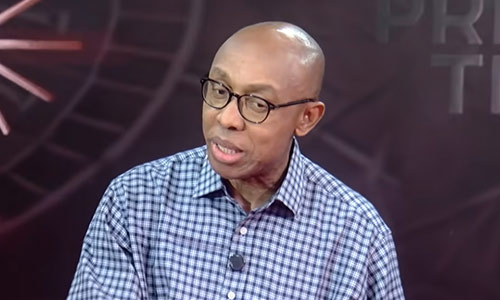
Odinkalu: Nganjiwa Omo-Agege Judgment Faulted, Judge's Fitness Questioned
Summary
- Professor Chidi Anselm Odinkalu criticized Justice Hyeladzira Nganjiwa's 167-page judgment.
- The Federal High Court Warri judgment disqualified Senator Augustine Ovie Omo-Agege from the 2027 Delta Central Senate race.
- Odinkalu, a human rights lawyer, stated Justice Nganjiwa "Should Not Be Sitting As A Judge."
- Senator Omo-Agege was restrained from running as the Nigeria Democratic Congress (NDC) candidate.
Judicial Ruling Sparks Controversy
Professor Chidi Anselm Odinkalu did not mince words in his assessment of the judgment, going as far as to declare that Justice Hyeladzira Nganjiwa "Should Not Be Sitting As A Judge."
Human rights advocate and former Chairman of the National Human Rights Commission, Professor Chidi Anselm Odinkalu, has publicly voiced strong disapproval regarding a recent judicial decision. His critique targets Justice Hyeladzira Nganjiwa of the Federal High Court, Warri Judicial Division, specifically concerning a judgment that spanned an extraordinary 167 pages. This extensive ruling directly impacts Senator Augustine Ovie Omo-Agege, who previously served as Deputy Senate President, by restraining his political ambitions.
The contentious judgment issued by Justice Nganjiwa effectively bars Senator Omo-Agege from participating in the 2027 Delta Central Senate race. The ruling specifically restrains him from presenting himself as the candidate for the Nigeria Democratic Congress (NDC) in the upcoming electoral contest. This judicial intervention has significant implications for the political aspirations of the former Deputy Senate President; however, Senator Omo-Agege has rejected the judgment and is appealing the decision, meaning his bid for the senatorial seat is not yet definitively ended, and the legal process is still ongoing.
Odinkalu's Sharp Rebuke and Context
Professor Chidi Anselm Odinkalu did not mince words in his assessment of the judgment, going as far as to declare that Justice Hyeladzira Nganjiwa "Should Not Be Sitting As A Judge." This exceptionally strong statement underscores the depth of Odinkalu's concern over the judicial process and the outcome of the case. Such a direct and public condemnation from a prominent legal figure like Odinkalu is a rare occurrence in judicial criticism within Nigeria, drawing considerable attention to the specific details of the Federal High Court Warri judgment and its implications for judicial integrity.
The sheer volume of the 167-page judgment itself has become a central element of the criticism. While the complexity of legal matters can sometimes necessitate detailed explanations, the length in this particular instance, especially for a pre-election disqualification, has raised questions about judicial efficiency, proportionality, and the clarity of reasoning. This critique from Professor Odinkalu adds to a broader discourse on the appropriate scope and style of judicial review in Nigeria, particularly concerning high-stakes political cases that often face intense public scrutiny. The focus on the length suggests a perceived lack of conciseness or perhaps an over-elaboration that may obscure the core legal arguments.
Broader Implications for Nigerian Electoral Justice
The controversy surrounding Justice Nganjiwa's ruling and Professor Odinkalu's subsequent judicial criticism highlights critical aspects of Nigeria's electoral justice system and the role of the judiciary in democratic processes. Decisions that disqualify candidates from future elections, particularly those involving prominent political figures like Augustine Ovie Omo-Agege, carry immense weight and can significantly shape the political landscape for years to come. The integrity and perceived fairness of such judgments are paramount for maintaining public trust in the judiciary and ensuring a level playing field in political contests.
This incident serves as a significant case study for legal practitioners and scholars observing judicial processes in Nigeria, especially those involved in electoral petitions or judicial review cases. The pointed remarks from Professor Chidi Anselm Odinkalu regarding the Federal High Court Warri judgment underscore the ongoing scrutiny faced by judges, particularly when their rulings impact democratic processes and the fundamental right to participate in elections. The disqualification of Senator Omo-Agege from the 2027 Delta Central Senate race by such a lengthy and criticized judgment will undoubtedly be a topic of discussion in legal and political circles, prompting reflection on judicial standards and the appropriate length and reasoning for such consequential decisions. This situation also brings to the fore the importance of clear, concise, and robust judicial reasoning in matters of public interest.
Practical Implications
Lawyers involved in electoral petitions or judicial review cases should note this prominent criticism of a Federal High Court judgment. It highlights potential issues with judicial reasoning and the perceived appropriateness of judgment length in high-stakes political disqualification matters, which may be relevant for crafting arguments or appeals.
Source
How does this affect you?
Get an AI analysis of this article grounded in your jurisdictions, practice areas, and any policy documents you've uploaded to Wansom.
Finish Reading the Full Story and the Expert Analysis.
Get the latest legal & regulatory intelligence in Nigeria
Wansom is AI and can make mistakes.