
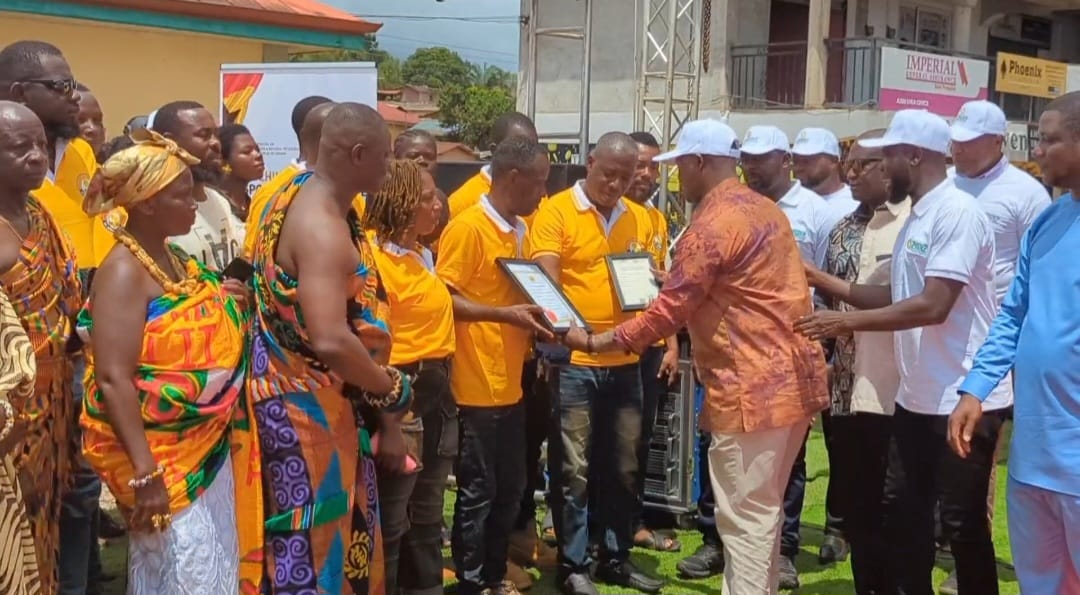
Ghana Launches Nzema East Responsible Cooperative Mining Programme
Summary
- The Nzema East Responsible Cooperative Mining Programme was launched on October 16, 2026, in Ghana's Western Region to promote safer small-scale mining.
- The initiative targets Akangoo, Axim-Agona, and Adelekezo to strengthen mining cooperatives and improve regulatory compliance.
- Minister Emmanuel Armah-Kofi Buah highlighted severe environmental destruction, including 44 destroyed forest reserves and widespread water pollution.
- The program will provide support for mine safety, processing technologies, water management, and rehabilitation of degraded areas.
- It aims to balance the economic importance of small-scale mining with critical environmental protection and sustainable practices.
Launch of a New Mining Initiative
For legal and compliance professionals advising small-scale mining operations in Ghana, particularly within the Nzema East Municipality, this program signals a period of increased regulatory scrutiny and a concerted push towards environmental compliance.
The government of Ghana recently inaugurated the Nzema East Responsible Cooperative Mining Programme in the Nzema East Municipality of the Western Region on October 16, 2026. This significant initiative aims to foster safer, more structured, and ecologically sound small-scale mining practices within the region. The program is specifically slated for implementation in the communities of Akangoo, Axim-Agona, and Adelekezo, where it is anticipated to bolster the capabilities of Ghana mining cooperatives, enhance adherence to existing Ghana small-scale mining regulations, and safeguard vital natural resources such as water bodies, agricultural lands, and vegetation from the detrimental effects of irresponsible mining activities.
Emmanuel Armah-Kofi Buah, the Minister for Lands and Natural Resources, underscored the critical necessity for more sustainable approaches to mineral extraction during the launch event. He highlighted the extensive environmental degradation caused by current irresponsible mining operations. The Minister specifically pointed to the severe damage inflicted upon forest reserves and the widespread pollution of water sources as pressing concerns, cautioning that the destruction of these natural assets poses substantial challenges for water treatment processes and broader environmental restoration efforts across the nation.
Addressing Widespread Environmental Degradation
The Minister for Lands and Natural Resources further elaborated on the scale of the environmental crisis, noting that out of Ghana's 118 forest reserves, a staggering 44 have been classified as destroyed. He also drew attention to the pervasive pollution impacting the country’s water resources, questioning the rationale behind damaging life-sustaining natural systems. Mr. Buah emphasized the considerable financial investment required to reclaim degraded lands and rehabilitate damaged ecosystems, stressing the urgent need for intervention.
While small-scale mining remains a crucial source of employment and income for numerous households and businesses within mining communities, the Minerals Commission has openly acknowledged the severe environmental consequences of unregulated operations. These include the degradation of farmlands, extensive water body pollution, destruction of vegetation, and significant threats to public health. Emmanuel Kwamena Anyimah, Deputy Chief Executive Officer (Support Services) of the Minerals Commission, articulated the paramount objective: to ensure that mineral resources are extracted in a manner that is legal, safe, and sustainable. He posed the challenge not merely as how to extract minerals, but how to do so responsibly.
A Framework for Enhanced Compliance and Support
In response to these challenges, the Minerals Commission has committed to a multi-faceted approach, which includes actively promoting lawful mining, strengthening regulatory oversight, and improving occupational health and safety standards. Furthermore, the Commission pledges support for initiatives designed to enhance the organization and operational performance of small-scale mining operators, with the Nzema East Responsible Cooperative Mining Programme serving as a prime example of such efforts.
Sheihu Siddiq, the Acting National Coordinator for the Responsible Cooperative Mining and Skills Development Programme, confirmed that participating cooperative societies will receive comprehensive support. This assistance is designed to facilitate their compliance with regulatory standards and to significantly improve their operational capacities. Key areas of support will encompass mine safety protocols, the adoption of appropriate processing technologies, responsible water management strategies, and the crucial rehabilitation of degraded mining areas. Mr. Siddiq urged all cooperative members to strictly adhere to their authorized concession boundaries and to comply with all applicable Ghana small-scale mining regulations, presenting the initiative as a vital opportunity to demonstrate that small-scale mining can indeed be both organized and profitable while simultaneously meeting stringent environmental and safety benchmarks.
Local Benefits and Sustainable Development
The local Member of Parliament, Kofi Arko Nokoe, expressed strong support for the new program, particularly welcoming efforts to decentralize licensing services closer to mining communities and to bolster local monitoring capabilities through municipal security structures. He articulated that responsible mining must translate into tangible benefits for host communities, providing decent employment opportunities and fostering sustainable livelihoods. Concurrently, Mr. Nokoe stressed the imperative of protecting rivers and farmlands, alongside the critical task of restoring lands that have been subjected to mining activities.
The launch of the Nzema East Responsible Cooperative Mining Programme places renewed emphasis on the delicate balance required between leveraging the economic importance of small-scale mining and ensuring robust Nzema East mining environmental protection. For legal and compliance professionals advising small-scale mining operations in Ghana, particularly within the Nzema East Municipality, this program signals a period of increased regulatory scrutiny and a concerted push towards environmental compliance. It highlights potential shifts in operational standards and environmental obligations, which could directly influence licensing procedures, risk assessments, and due diligence requirements for clients operating in this vital sector.
Practical Implications
Lawyers and compliance officers advising small-scale mining operations in Ghana, particularly in the Nzema East Municipality, must be aware of this new program. It signals increased regulatory oversight, support for compliance, and potential changes to operational standards and environmental obligations, which could impact licensing, risk assessments, and due diligence for clients in the sector.
Source
How does this affect you?
Get an AI analysis of this article grounded in your jurisdictions, practice areas, and any policy documents you've uploaded to Wansom.
Finish Reading the Full Story and the Expert Analysis.
Get the latest legal & regulatory intelligence in Ghana
Wansom is AI and can make mistakes.