
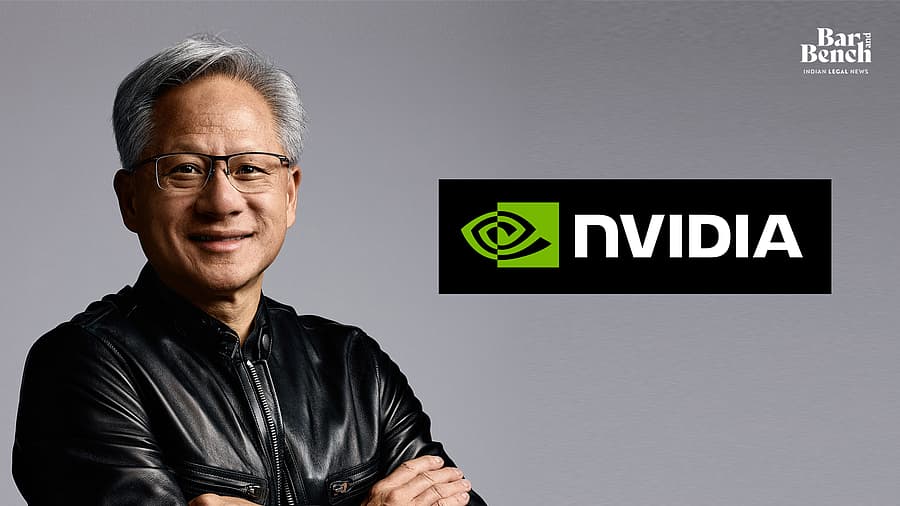
Indian Disclosure Law: Nvidia CEO Resignation Would Demand Faster Transparency
Summary
- Nvidia announced CEO Jensen Huang's immediate resignation on November 12, 2026, following board acceptance on November 11.
- Four days prior, on November 8, the board initiated an independent investigation into reports of Huang being a "foreign intelligence target."
- On the same day, Huang publicly admitted marital infidelity via an email to employees.
- Neither Nvidia's announcement nor its Form 8-K filing provided a reason for the resignation.
- Indian securities law would demand faster and fuller disclosure for such events compared to US regulations.
What Happened
Indian securities law would demand faster and fuller disclosure for such events compared to US regulations.
Nvidia Corporation announced on November 12, 2026, the immediate resignation of its co-founder, Jensen Huang, from his roles as President, CEO, and director. Filings with the U.S. Securities and Exchange Commission, specifically a Form 8-K, which is a mandatory "current report" for significant corporate events, indicated that the company's board had formally accepted his departure a day earlier, on November 11. Neither the public announcement nor the regulatory filing provided any specific rationale for Huang's sudden exit.
This resignation followed a series of events that began just four days prior to the public disclosure. On November 8, the Nvidia board initiated an independent investigation. This inquiry was prompted by "recent reporting" suggesting that Huang had become "the target of a foreign intelligence effort." Coincidentally, on the very same day, Nvidia released an email from Huang to his employees, in which he acknowledged having been unfaithful to his spouse. A company spokesperson had previously characterized Huang's interactions with an executive from Megaspeed, a customer based in Singapore, as "not unusual or unexpected." Following Huang's resignation, the company announced on November 12 that its Chief Financial Officer would assume the role of interim CEO while continuing to manage the company's finances.
Indian Disclosure Mandates
The sequence of events surrounding the **Nvidia CEO resignation** raises a critical question for legal professionals in India: how would such a scenario unfold if the company were listed on Indian stock exchanges? Under **Indian securities law executive disclosure** requirements, the response would likely demand a significantly faster and more comprehensive release of information to the public. Unlike the U.S. framework, where the initial focus might lean towards potential class-action litigation, the Indian regulatory environment prioritizes immediate market transparency regarding material events.
This distinction highlights a fundamental difference in regulatory philosophy. While the U.S. system allows for a more phased disclosure, often without explicit reasons for executive departures in initial filings, **Indian securities law** would compel a more proactive approach. The central tenet in India is not merely the private conduct of an executive, but rather the promptness and completeness with which the market is informed about any developments that could influence investor decisions or the company's standing. This necessitates a robust understanding of **SEBI disclosure requirements personal conduct** when it impacts corporate reputation.
Why Indian Law Differs
The more stringent disclosure obligations under Indian law underscore a commitment to robust **corporate governance India CEO scandal** prevention and management. **Indian lawyers and compliance officers** must advise listed companies that any event, even those seemingly personal, involving key management personnel that could potentially affect the company's reputation, market perception, or operational stability, requires swift communication to the exchanges. This proactive stance is crucial for maintaining investor confidence and market integrity.
While the U.S. has its Form 8-K for significant events, there isn't a direct **US Form 8-K Indian equivalent** in terms of specific event categories, but rather a broader, more demanding set of continuous disclosure obligations under SEBI (Listing Obligations and Disclosure Requirements) Regulations. These regulations mandate disclosure of any information that is "material" and could impact the company's performance or stock price. Therefore, the combination of an independent investigation into a "foreign intelligence effort" and a public admission of personal misconduct by a CEO would almost certainly trigger immediate and detailed disclosure requirements in India, far exceeding the initial information provided by Nvidia.
Practical Implications
Indian lawyers and compliance officers must advise listed companies that Indian securities law demands faster and fuller disclosure regarding executive conduct, even personal, compared to US regulations, especially when such conduct could impact the company's reputation or market standing. This necessitates robust internal reporting mechanisms and a proactive approach to SEBI compliance for any material event involving key management personnel.
Source
How does this affect you?
Get an AI analysis of this article grounded in your jurisdictions, practice areas, and any policy documents you've uploaded to Wansom.
Finish Reading the Full Story and the Expert Analysis.
Get the latest legal & regulatory intelligence in India
Wansom is AI and can make mistakes.