
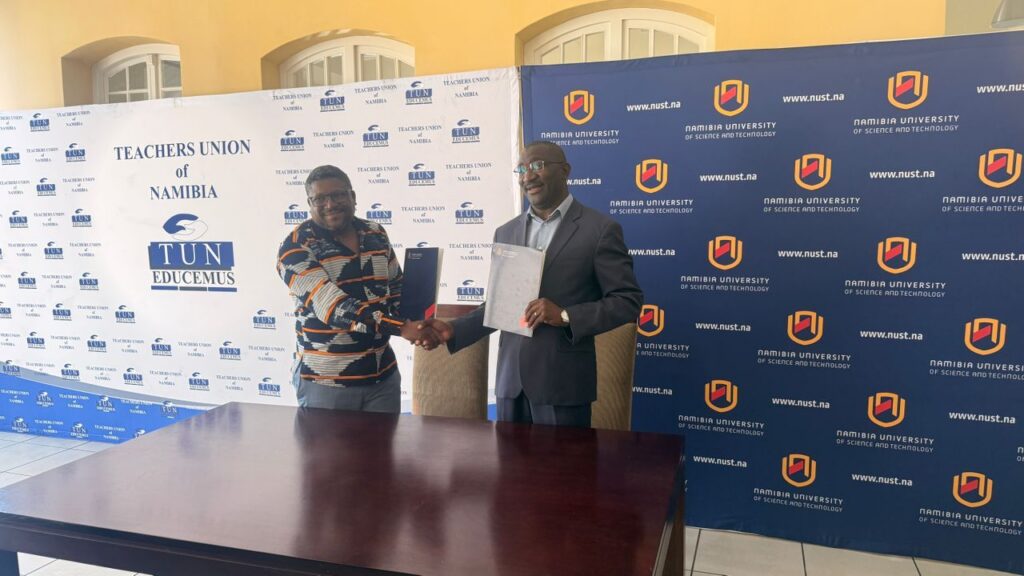
Nust: TUN Secures 5% Pay Rise Agreement for Academic Staff
Summary
- Academic staff at the Namibia University of Science and Technology will receive a 5% salary increase.
- This agreement was reached between Nust and the Teachers’ Union of Namibia.
- The pay rise is effective from January 1, 2026, for the 2026/27 financial year.
- The agreement resulted from salary and wage negotiations between the two parties.
A Landmark Pay Increase for Nust Academics
Lawyers advising educational institutions or unions in Namibia should particularly note this 5% salary increase agreement as a benchmark for future collective bargaining negotiations and employment contract reviews, particularly regarding the 2026/27 financial year.
Academic personnel at the Namibia University of Science and Technology (Nust) are set to receive a 5% salary increase, following a successful agreement reached between the institution and the Teachers’ Union of Namibia (TUN). This significant development ensures a notable Nust academic staff pay increase for those contributing to the university's educational and research endeavors.
The terms of this agreement specify that the increment will become effective on January 1, 2026, applying to the 2026/27 financial year. This forward-looking arrangement highlights a proactive approach to employee compensation within the higher education sector, providing clarity on future remuneration well in advance. The Nust TUN 5% pay rise agreement represents a tangible outcome for the academic workforce.
The Outcome of Proactive Collective Bargaining
The recently concluded Nust TUN 5% pay rise agreement is the direct result of comprehensive salary and wage negotiations undertaken by the Namibia University of Science and Technology and the Teachers’ Union of Namibia. These discussions were specifically geared towards establishing the compensation framework for the upcoming 2026/27 financial year.
The successful resolution underscores the efficacy of collective bargaining processes in the Namibian higher education landscape. The Teachers’ Union of Namibia agreement played a pivotal role in advocating for its members, leading to a mutually acceptable outcome. These Nust TUN salary negotiations exemplify how structured dialogue between institutional management and employee representatives can lead to significant advancements in employment terms, such as the adjustment to the Namibia University of Science and Technology salary structure.
Broader Implications for Namibia's Higher Education Sector
This 5% salary increase for academic staff at Nust holds considerable importance beyond the immediate parties involved, potentially influencing future Namibia collective bargaining higher education discussions. By finalizing terms for the 2026/27 financial year, the Nust TUN 5% pay rise agreement establishes a significant benchmark for other educational institutions and unions across the country.
The forward-dated implementation, commencing January 1, 2026, provides a clear precedent for future compensation adjustments. Lawyers advising educational institutions or unions in Namibia should particularly note this 5% salary increase agreement as a benchmark for future collective bargaining negotiations and employment contract reviews, particularly regarding the 2026/27 financial year. This outcome from the Nust TUN salary negotiations could shape expectations and demands in subsequent discussions, making it a crucial reference point for stakeholders involved in employment and labor law within the Namibian higher education system. The proactive resolution of salary adjustments for academic staff at Nust through the Teachers’ Union of Namibia agreement underscores the dynamic nature of labor relations in this vital sector.
Practical Implications
Lawyers advising educational institutions or unions in Namibia should note this 5% salary increase agreement as a benchmark for future collective bargaining negotiations and employment contract reviews, particularly regarding the 2026/27 financial year.
Source
How does this affect you?
Get an AI analysis of this article grounded in your jurisdictions, practice areas, and any policy documents you've uploaded to Wansom.
Finish Reading the Full Story and the Expert Analysis.
Wansom is AI and can make mistakes.