
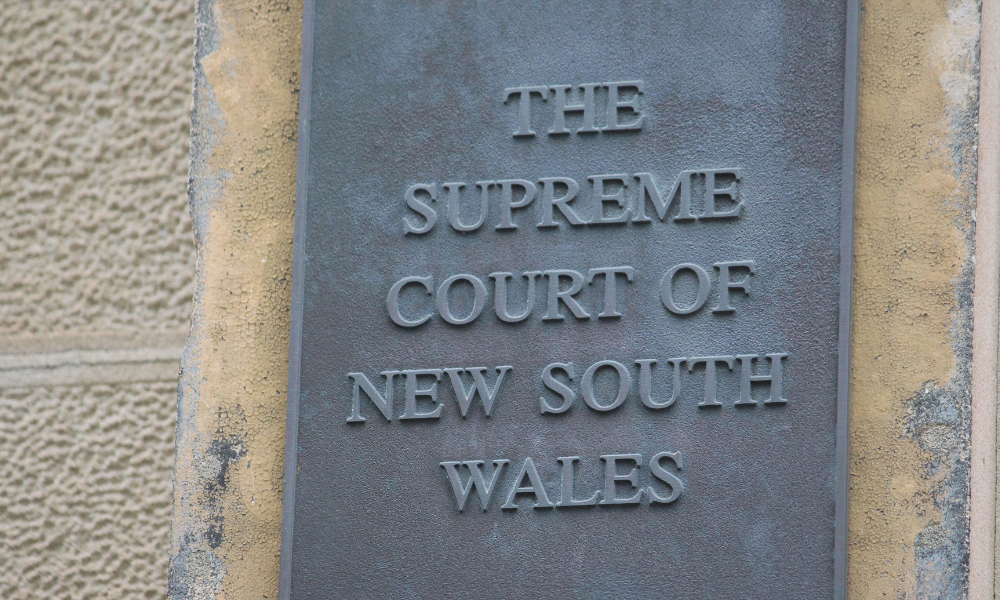
NSW Court of Appeal Remits Solicitor's Costs Assessment to District Court
Jurisdictional error found on the part of a judge who simply accepted costs assessment In a dispute involving the costs of a solicitor who acted in a personal injury proceeding, the New South Wales Supreme Court’s Court of Appeal remitted the consideration of whether the costs were fair and reasonable to the District Court. In Malouf v Mavrakis t/as Mavrakis & Associates Lawyers (No 2) [2026] NSWCA 176, the applicant sought to claim damages for injury sustained during an April 2017 incident. The first respondent, a solicitor, represented him in the personal injury claim until around May 2021. That year, the solicitor terminated his retainer before the conclusion of the proceeding for non-payment of his disbursements. On 29 March 2022, he applied for an assessment of his costs under s 68 of the Legal Profession Uniform Law Application Act 2014 (NSW) (LPULAA). On 21 October 2022, an assessor granted a certificate of determination of costs amounting to $111,274.54. The assessor found the solicitor’s costs payable on the retainer’s termination. The client applied for a review of the assessor’s determination. On 1 May 2023, the review panel issued a substituted determination valued at $31,158.63, reflecting the solicitor’s disbursements. The review panel found that he: While the review panel said it did not need to assess the solicitor’s professional fees, if such a requirement had existed, the review panel would have fixed them at $55k, including goods and services tax (GST). On 28 August 2023, before the NSW District Court, the solicitor appealed under s 89 of the LPULAA. In December 2025, the primary judge of the District Court stayed the appeal until the resolution of the client’s personal injury proceeding. The judge, who declined to assess the claim for costs, simply reinstated the assessor’s determination. The primary judge found that: A consent judgment dated 15 July 2024 resolved the personal injury claim in the client’s favour, awarding him the sum of $500k and costs of $200k. Through an amended summons filed on 24 June 2026, the client applied for a judicial review of the primary judge’s decision and orders. The NSW Supreme Court’s appeal court set aside the NSW District Court’s orders dated 12 December 2025, 13 February 2026, and 5 March 2026. The appeal court remitted the matter to the primary judge and ordered no costs. According to the appeal court, on appeal under s 89 of the LPULAA, the District Court of New South Wales should rehear the review application and should consider for itself whether the costs were fair and reasonable pursuant to the matters laid out in s 200 of the LPUL. The NSW appeal court saw a jurisdictional error in the primary judge’s failure to do what s 89 of the LPULAA required. The appeal court explained that the judge: According to the appeal court, if the primary judge had assessed the reasonableness of the costs, he potentially would have agreed with the review panel’s reasons for substituting a determination of the solicitor’s costs lower than that fixed by the assessor. Here are some other recent decisions by the Supreme Court of New South Wales, Court of Appeal. On 20 August 2026, the appeal court dismissed an appeal against a decision of the NSW Civil and Administrative Tribunal confirming that a solicitor failed to meet the standard of competence and diligence expected of a reasonably competent lawyer. On 15 June 2026, the appeal court adjourned the hearing of a motion for leave to issue a subpoena requiring the former president of the Law Society of New South Wales to attend and provide evidence in substantive proceedings. After the appellants received a substantial judgment sum, the appeal court issued a 23 February 2026 decision refusing to refer the second appellant to a pro bono scheme under r 7.36 of the Uniform Civil Procedure Rules (2005) NSW. Enjoy this story? Read the latest litigation a
How does this affect you?
Get an AI analysis of this article grounded in your jurisdictions, practice areas, and any policy documents you've uploaded to Wansom.
Finish Reading the Full Story and the Expert Analysis.
Wansom is AI and can make mistakes.