
NPP Rejects Ghana 5-Year Presidential Term Extension
Summary
- The New Patriotic Party (NPP) has rejected a proposal to extend Ghana's presidential term.
- The Constitutional Review Committee (CRC) had recommended increasing the term from four to five years.
- The NPP insists on retaining the current four-year mandate, citing democratic accountability.
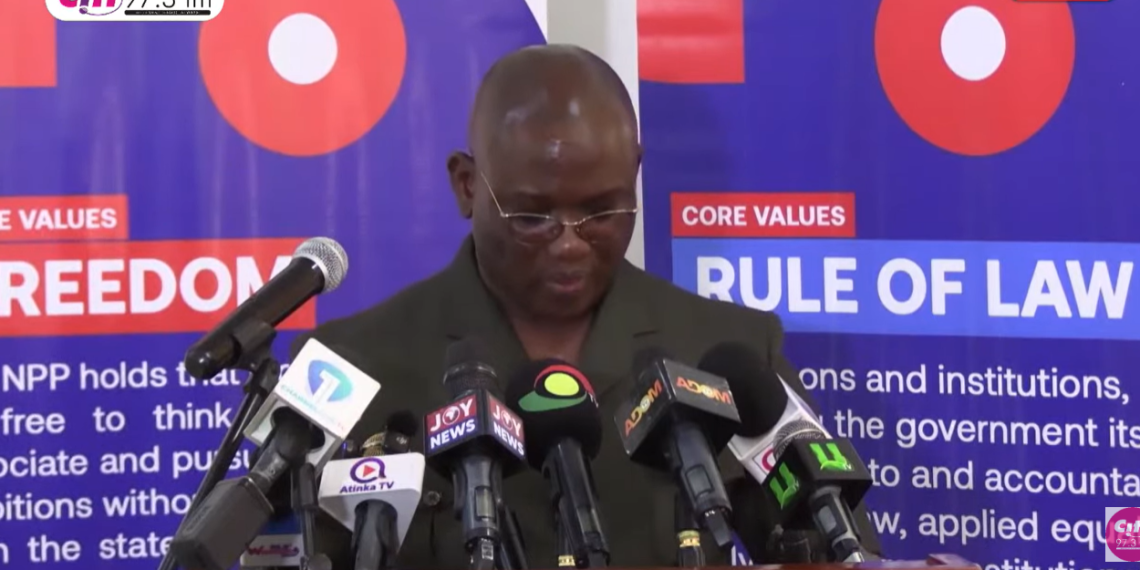
- This decision was announced at a press conference on Thursday.
What Happened
This development signals the opposition New Patriotic Party's (NPP) commitment to maintaining the current four-year presidential term, despite the government's recent acceptance of a proposal for extension.
The New Patriotic Party (NPP) has formally declined a recommendation put forth by the Constitutional Review Committee (CRC) concerning the duration of Ghana's presidential term. The proposal sought to lengthen the period a president serves in office from the current four years to five years. This rejection underscores the NPP's firm commitment to maintaining the established constitutional framework regarding executive tenure.
This decision, announced during a press conference held on Thursday, signals a clear stance from the opposition New Patriotic Party (NPP) on a significant aspect of national governance, a stance that contrasts with the government's recent acceptance of the proposal. The CRC's suggestion to extend the presidential mandate represents a notable potential alteration to Ghana's political structure, making the NPP's definitive refusal a key development in the ongoing discourse surrounding constitutional reform.
Rationale for Retention
The NPP's opposition to the proposed extension is rooted in its conviction that the existing four-year presidential mandate serves as a vital instrument for democratic accountability. The party maintains that this shorter term ensures that the executive branch remains closely answerable to the electorate, fostering a system where leaders are frequently subject to public scrutiny and electoral judgment.
This perspective highlights the party's belief that a more frequent electoral cycle strengthens the democratic process by providing regular opportunities for citizens to evaluate governmental performance and cast their votes accordingly. The emphasis on democratic accountability suggests a preference for a system that prioritizes responsiveness and direct public oversight over potentially longer periods of executive power.
Constitutional and Political Context
The Constitutional Review Committee (CRC) is tasked with examining Ghana's foundational legal document and proposing amendments deemed necessary for the nation's progress and democratic health. Its recommendation for a five-year presidential term was part of a broader effort to assess and potentially refine the country's governance structures. Such proposals often spark extensive public and political debate, touching upon fundamental principles of power distribution and citizen representation.
While the NPP's definitive rejection of the Ghana presidential term extension proposal represents a significant opposition stance, the government, led by President John Dramani Mahama, formally accepted the recommendation in July 2026, and an implementation committee has been inaugurated to advance the constitutional reform process. This stance by a major political party, especially one currently in opposition, carries significant weight in the national conversation about constitutional reform and the future direction of Ghana's democratic institutions.
Why It Matters
The New Patriotic Party's decision to uphold the four-year presidential mandate reinforces the existing constitutional provision and indicates a preference for stability in executive tenure. This position is particularly relevant for lawyers advising on constitutional law or political stability in Ghana, as it clarifies the opposition party's commitment to the current democratic accountability mechanisms. The NPP's firm stance suggests that any immediate efforts to alter the presidential term length are unlikely to gain traction under its leadership.
This development signals the NPP's commitment to maintaining the current four-year presidential term, despite the government's acceptance of the proposed constitutional amendments related to executive tenure. By rejecting the CRC's proposal, the party has effectively communicated its vision for the optimal balance between executive authority and democratic oversight, ensuring that the Ghana constitutional amendment debate around this specific issue will not proceed in the immediate future. The emphasis on the four-year term as a mechanism for accountability underscores a foundational principle that the party believes is crucial for the nation's democratic health.
Practical Implications
This development signals the NPP's commitment to maintaining the current four-year presidential term, preventing immediate constitutional amendments related to executive tenure. Lawyers advising on constitutional law or political stability in Ghana should note this stance, as it indicates a continued adherence to the existing democratic accountability mechanisms.
Source
How does this affect you?
Get an AI analysis of this article grounded in your jurisdictions, practice areas, and any policy documents you've uploaded to Wansom.
Finish Reading the Full Story and the Expert Analysis.
Get the latest legal & regulatory intelligence in Ghana
Wansom is AI and can make mistakes.