
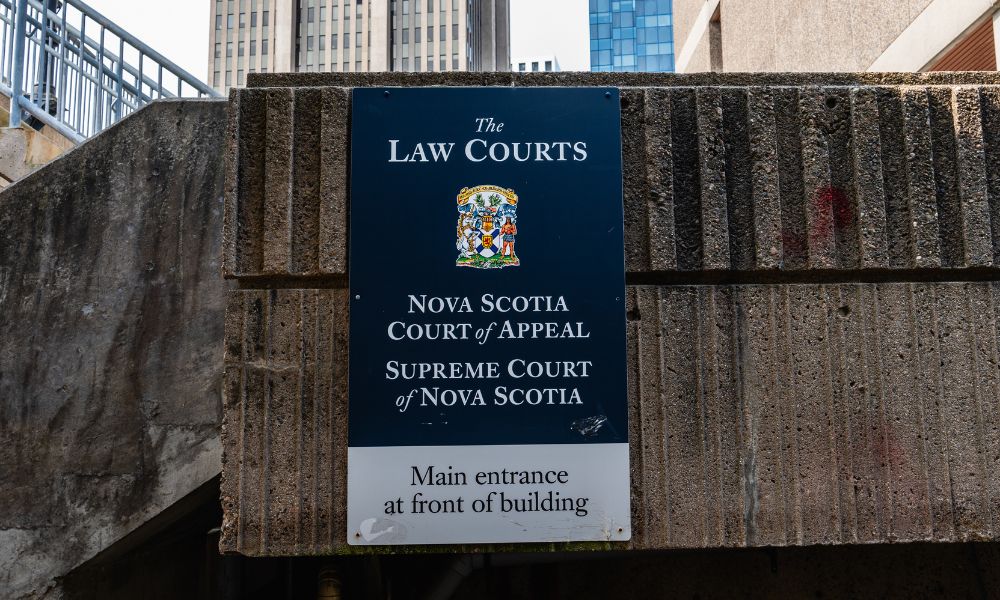
Nova Scotia Appeal Court Denies 'Double Dipping' Claim in Spousal Support
Ruling sees no error in Nova Scotia Supreme Court’s imputation of income to ex-husband In proceedings focusing on a man’s spousal support obligation to his former wife, the Nova Scotia Court of Appeal dismissed his appeal, which argued that the lower court’s judge did not properly consider both parties’ circumstances. After 24 years of marriage, the parties separated in October 2018 and divorced in January 2020. A corollary relief order initially set monthly spousal support at $8,000, beginning on Feb. 1, 2020, and increasing by two percent every year afterward. Since Feb. 1, 2022, the appellant ex-husband has paid the respondent ex-wife $8,237.50 per month. As of Oct. 1, 2023, pursuant to a workforce reduction, the employer terminated the ex-husband’s employment in the software sector. Given that he had remained unemployed after that, the ex-husband applied for a reduction of his spousal support obligation as of Apr. 1, 2023. He also asserted an overpayment of support. While accepting his continuing spousal support obligation, the ex-husband alleged a significant reduction of his income. The ex-wife objected to a decrease in spousal support. She claimed that there was no material change in circumstances since her ex-husband’s job loss was temporary and would be easily remedied by obtaining employment. However, if there was indeed a material change, the ex-wife wanted the court to impute income to her ex-husband for his intentional unemployment and to address an underpayment of support. On Nov. 25, 2025, in Crosby v. Crosby (Westhaver), 2025 NSSC 372, Justice Aleta Cromwell of the Supreme Court of Nova Scotia, Family Division, found an unforeseen material change in circumstances due to the ex-husband’s job loss. Beginning Oct. 1, 2023, the court reduced the ex-husband’s monthly spousal support obligation to $7,500. The court determined that he: The court found it appropriate to impute income to the ex-husband in accordance with Richards v. Richards, 2012 NSCA 7. Considering the parties’ mixed success on the issues, the court directed the parties to bear their own costs. On appeal, the ex-husband alleged that the NS Supreme Court judge erred in imputing income to him and breached the “double dipping” prohibition in Boston v. Boston, 2001 SCC 43. Last Nov. 10, in Crosby v. Westhaver, 2026 NSCA 81, the Nova Scotia Court of Appeal dismissed the appeal and ordered the ex-husband to pay his ex-wife $5,000 in costs, including disbursements. The appeal court saw no error on the part of the judge and no reason to interfere with her conclusions. The appeal court found evidentiary basis for the judge’s factual findings, resulting in her determination that the ex-husband was voluntarily underemployed. Rejecting the ex-husband’s “double dipping” argument, the appeal court noted that the judge specifically discussed that issue and held that the parties’ circumstances fell within a recognized exception to the extent that the Boston principles might apply. Last August, the appeal court refused a father’s request to stay an order for the relocation of his two youngest daughters to Ireland with their mother, who had encountered difficulties obtaining permanent residency status in Canada. In a dispute over whether to execute a consent interim order with a proposed parenting arrangement, the appeal court issued a June ruling finding an error in the judge’s failure to give the mother an opportunity to be heard. Enjoy this story? Read the latest family law news on the main page! The Canadian Legal Newswire is a FREE newsletter that keeps you up to date on news and analysis about the Canadian legal scene, providing targeted news and information of interest to Canadian Lawyers. Please enter your email address below to subscribe.
How does this affect you?
Get an AI analysis of this article grounded in your jurisdictions, practice areas, and any policy documents you've uploaded to Wansom.
Finish Reading the Full Story and the Expert Analysis.
Get the latest legal & regulatory intelligence in Canada
Wansom is AI and can make mistakes.