
CJEU: Nord Stream 2 EU Gas Rules Appeal Dismissed, Regulations Upheld
Summary
- The Court of Justice of the European Union rejected an appeal by Nord Stream 2 AG regarding EU gas rules.
- The appeal challenged a 2019 law extending EU gas regulations to external pipelines, including a waiver provision.
- Germany could have waived rules for the pipeline for up to 20 years if it was completed before May 23, 2019.
- Judges found EU institutions had given no firm assurance that the pipeline would be exempt from the rules.
- The pipeline's certification was halted before Russia's 2022 invasion of Ukraine, and it was later damaged by sabotage.
Court Upholds EU Gas Rules
This historical context underscores a long-standing intent by the EU to assert its energy law compliance over cross-border infrastructure, a stance now reinforced by the CJEU’s latest judgment.
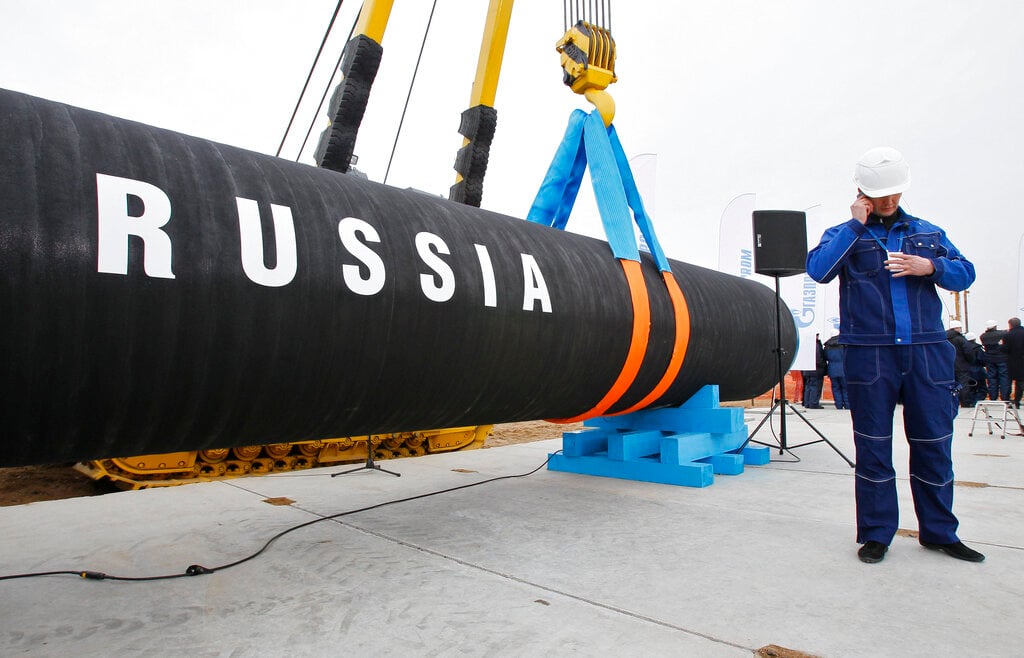
The Court of Justice of the European Union (CJEU) has dismissed an appeal from Nord Stream 2 AG, the company behind the gas pipeline connecting Russia to Germany. This decision, rendered on Thursday, confirms the application of European Union gas market regulations to the controversial energy project. Nord Stream 2 AG, a Swiss entity wholly owned by Russia’s Gazprom, which filed for bankruptcy in March 2022, had sought to overturn a previous ruling by the EU’s lower court and challenge a 2019 law that extended the bloc’s energy rules to pipelines originating outside its borders, which has since been replaced by new EU legislation in 2024.
The pipeline, constructed to transport gas from Ust-Luga, Russia, under the Baltic Sea to Lubmin, Germany, faced a critical deadline for exemption from these regulations. Had the project been completed before May 23, 2019, Germany possessed the authority to waive certain rules for its segment of the pipeline for up to two decades, with potential for renewal. Such a waiver would have been contingent on not harming competition, the broader gas market, or the security of supply within the EU. For Gazprom, this could have meant retaining full operational control and gas sales without the obligation to allow rival companies access to the pipeline at published tariffs.
The Regulatory Challenge
Nord Stream 2 AG’s appeal specifically targeted a waiver provision embedded within the 2019 EU gas directive external pipelines legislation, which has since been replaced by new EU legislation in 2024. The company requested the highest court to either invalidate the entire law, strike down the waiver provision, or eliminate its associated cutoff date. The core of their argument rested on the premise that EU institutions should have granted them more time to achieve compliance or offered compensation for the regulatory burden. However, the judges concluded that no firm assurances were ever provided by EU bodies suggesting the pipeline would be exempt from these rules.
Indeed, indications that the European Union might extend its gas regulations to external pipelines were present as early as 2010. Subsequently, the European Commission pursued authorization to engage in negotiations with Russia concerning the specific regulatory framework that would govern Nord Stream 2. This historical context underscores a long-standing intent by the EU to assert its energy law compliance over cross-border infrastructure, a stance now reinforced by the CJEU’s latest judgment.
A Lengthy Legal Battle
The recent CJEU ruling marks the culmination of a protracted legal challenge spanning seven years. The journey through the European courts began when the EU’s General Court initially dismissed Nord Stream 2 AG’s lawsuit on procedural grounds. In 2022, the Court of Justice of the European Union intervened, ruling that a portion of the company’s challenge could proceed, subsequently remanding the case back to the General Court for further consideration.
Following this, the General Court heard the substantive arguments and, in 2024, again rejected the company’s claims. Nord Stream 2 AG then lodged another appeal, contending that the 2022 ruling by the top court had already established a precedent of unequal treatment. However, the CJEU explicitly clarified in its recent decision that its 2022 judgment "in no way examined whether there was any difference in treatment between the appellant and the other pipeline operators," thereby refuting the basis of this particular argument.
Geopolitical Undercurrents and Market Impact
The Nord Stream 2 project was designed to significantly increase the gas-carrying capacity of the Baltic Sea route, effectively doubling that of its predecessor, Nord Stream 1. Its operational future, however, was dramatically altered by geopolitical events. Germany halted the pipeline’s certification process just prior to Russia’s full-scale invasion of Ukraine in February 2022. Later that year, in September, both the Nord Stream 1 and Nord Stream 2 pipeline systems suffered damage due to sabotage.
These developments occurred against a backdrop of already declining Russian pipeline gas deliveries to Europe, which began in late 2021. By 2022, Russia supplied approximately half the pipeline gas to European OECD countries compared to the previous year. This reduction contributed to a volatile energy market, with benchmark European wholesale gas prices averaging four times their summer 2021 levels during the summer of 2022. In response, Europe secured record volumes of liquefied natural gas (LNG) and filled underground storage facilities to prepare for winter, leading to a sharp decline in gas consumption, particularly within energy-intensive industries. Moniek de Jong, an energy policy researcher at the Chair of Sustainability Transition Policy at Friedrich-Alexander University Erlangen-Nuremberg, observed that the EU has strategically utilized its market regulations to achieve broader geopolitical objectives. She speculated that internal EU negotiations, where Germany initially supported the project, might have influenced the adoption of more generalized legal language, obscuring the direct link to Nord Stream 2. The company had also modified its operating structure before the invasion, though the subsequent war and sabotage made it impossible to ascertain if these changes would have been sufficient for the pipeline's operation.
Practical Implications
This ruling reinforces the European Union's broad regulatory authority over energy infrastructure projects originating outside the bloc, even those with significant geopolitical implications. Lawyers advising energy companies on cross-border pipelines must ensure early and thorough compliance with evolving EU energy market rules, as exemptions are difficult to obtain and courts will uphold the application of these regulations.
Source
How does this affect you?
Get an AI analysis of this article grounded in your jurisdictions, practice areas, and any policy documents you've uploaded to Wansom.
Wansom is AI and can make mistakes.