
No Ticket Found on Deceased? Supreme Court Says Railways Can't Deny Compensation
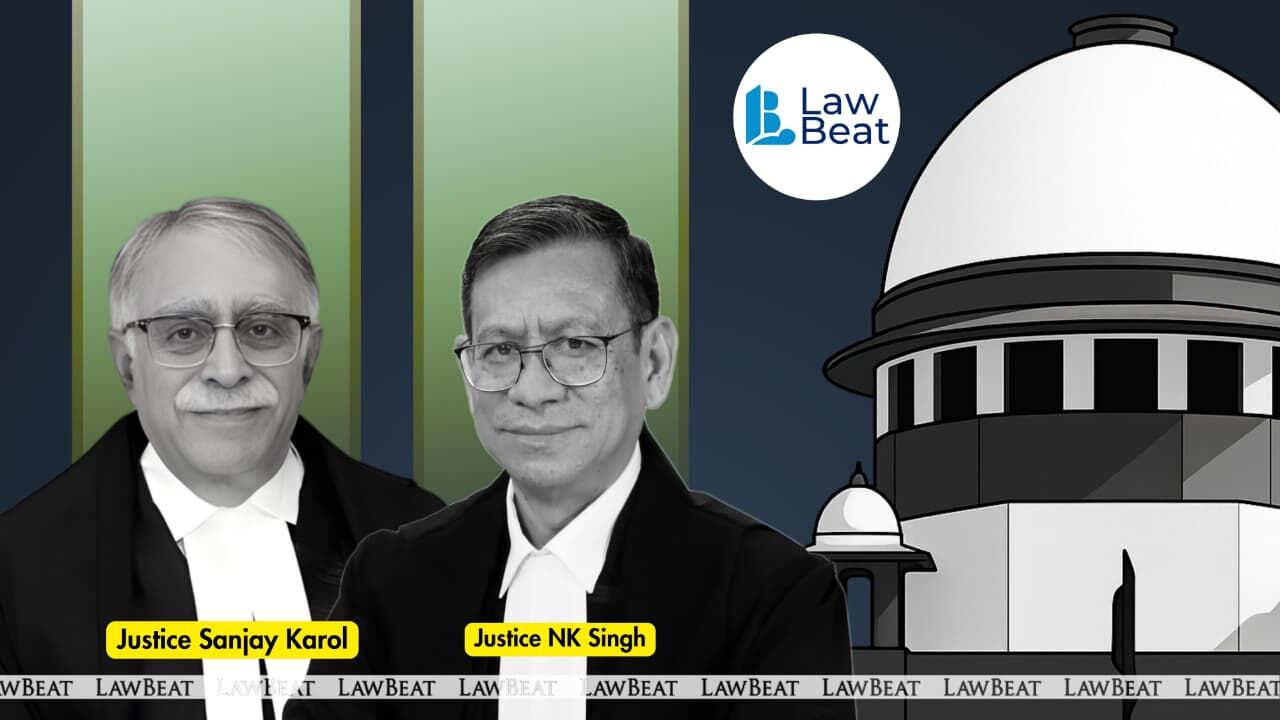
Home / Top Stories / Supreme Court Judgments No Ticket Found on Deceased? Supreme Court Says Railways Can't Deny Compensation X Supreme Court grants rail accident compensation despite missing train ticket. Supreme Court rules that claimants can establish bona fide passenger status through an affidavit under Sections 123(c) and 124A of the Railways Act, reiterating that compensation claims must be decided on the standard of preponderance of probabilities. The Supreme Court has held that the Railways must pay compensation for the death of a passenger in an untoward incident even if no ticket is found on the deceased, provided the claimant discharges the initial burden of proof through an affidavit. A Bench of Justices Sanjay Karol and N Kotiswar Singh said the compensation mechanism under Section 124A of the Railways Act is a beneficial provision meant to provide expeditious relief to victims of untoward incidents without requiring claimants to prove negligence. Court said a technical or restrictive interpretation that defeats the welfare objective of the law must be avoided. It also clarified that the applicable standard of proof is the "preponderance of probabilities" and not proof beyond reasonable doubt. Bona fide passenger in absence of train ticket Court held that the mere absence of a ticket on the deceased passenger does not automatically mean he was not a bona fide passenger. Also Read| SC directs Railways to pay compensation for death of passenger due to fall "The mere absence of a ticket on a deceased passenger does not negative the claim that he was a bona fide passenger. The initial burden lies on the claimant to establish this through an affidavit, upon which the burden shifts to the Railways to disprove it based on the facts and attending circumstances," the Bench said. Relying on its decision in Union of India vs Rina Devi (2019) , Court held that once the claimant files an affidavit establishing the foundational facts, the burden shifts to the Railways to rebut the claim. Applying that principle to the present case, Court found that the appellant's affidavit was sufficient to discharge the initial burden. The Bench reiterated that beneficial legislation must be interpreted in a purposive and liberal manner so that its social welfare objective is achieved rather than defeated by a literal or restrictive reading. Why did the Supreme Court interfere? The appeal was filed by Lata, whose claim for compensation as the wife of deceased Chandrakant Thakkar had been rejected by both the Railway Claims Tribunal, Bhopal Bench, and the Madhya Pradesh High Court. Thakkar was travelling from Raipur to Ahmedabad on Train No. 12834 Ahmedabad-Howrah Mail on November 28, 2015, when he fell from the running train in the Khandbada-Khatgaon section and died due to the injuries. Although the Railway Claims Tribunal accepted that the incident was an "untoward incident" under Section 123(c)(2) of the Railways Act, 1989, it denied compensation on the ground that it had not been established that the deceased was a bona fide passenger. Also Read| Supreme Court Urges Railways To Adopt Tech Like Auto-Videography To Avoid Excess Weight Disputes The Madhya Pradesh High Court, by its judgment dated January 3, 2024, affirmed the Tribunal's decision, observing that the claim could not succeed as none of the deceased's belongings, including the ticket, had been recovered. It also noted an inconsistency regarding the date of travel between the appellant's statement and the claim petition. The Supreme Court, however, held that both the tribunal and the high court had adopted an unduly technical approach. Railways Act is a welfare law Court observed that Section 124A creates a "no-fault liability" regime and therefore reflects the beneficial intent of Parliament. "The Railways although a facet of colonial inheritance, today have been expanded, developed and modernised, serving as the backbone of the nation in terms of movement of material, passenger
How does this affect your business?
Get an AI analysis of this article grounded in your jurisdictions, practice areas, and any policy documents you've uploaded to Wansom.
Wansom is AI and can make mistakes.