
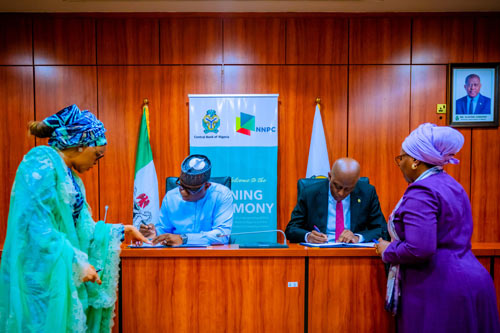
NNPC, CBN Sign MoU: New Foreign Exchange Framework for Energy
Summary
- The Nigerian National Petroleum Company Limited (NNPC Ltd.) and the Central Bank of Nigeria (CBN) have signed a Memorandum of Understanding.
- This agreement aims to strengthen cooperation between Nigeria's energy sector and its financial system.
- Key objectives include improving foreign exchange management and creating new financing opportunities for the petroleum industry.
- The Group Chief Executive Officer of NNPC Ltd. was involved in the signing of this significant accord.
- The MoU is expected to impact foreign exchange access, financing frameworks, and risk assessments for energy sector stakeholders.
What Happened
Lawyers advising clients in Nigeria's energy sector should closely monitor the implementation details of this NNPC-CBN MoU, as it is likely to introduce new frameworks for foreign exchange access and financing, potentially impacting investment structures, operational compliance, and risk assessments for petroleum industry stakeholders.
The Nigerian National Petroleum Company Limited (NNPC Ltd.) and the Central Bank of Nigeria (CBN) have formally entered into a Memorandum of Understanding (MoU), signaling a strategic alignment between the nation's energy and financial sectors. This significant NNPC CBN agreement is designed to foster enhanced cooperation, streamline foreign exchange management, and unlock new avenues for financing within Nigeria's vital petroleum industry. The Group Chief Executive Officer of NNPC Ltd. was a key participant in the signing of this accord.
This collaborative effort underscores a concerted drive to integrate the operations of two of Nigeria's most critical economic institutions. By bringing together the national oil company, responsible for the country's primary revenue stream, and the central monetary authority, tasked with maintaining financial stability, the MoU seeks to create a more cohesive and efficient economic environment. The initiative aims to leverage their combined strengths to address systemic challenges and capitalize on opportunities within the energy landscape.
Legal and Economic Context
The newly established NNPC CBN MoU foreign exchange framework is poised to play a pivotal role in Nigeria's broader economic stability. Effective foreign exchange management is indispensable for a resource-dependent economy like Nigeria, influencing everything from import costs to investor confidence and the valuation of the national currency. This agreement represents a direct effort to optimize these processes, particularly for the capital-intensive petroleum industry.
This CBN NNPC collaboration is strategically positioned to tackle long-standing issues in Nigeria energy sector finance. By establishing clearer guidelines and more efficient mechanisms for foreign currency transactions, the MoU could significantly reduce operational complexities and financial uncertainties for companies operating in the petroleum industry foreign exchange market. Such a structured approach is expected to provide greater predictability, which is crucial for attracting and retaining investment in the sector.
Why It Matters
For legal professionals and their clients operating within Nigeria's energy sector, this NNPC CBN agreement heralds a potentially transformative shift in the regulatory and operational landscape. Lawyers advising clients in Nigeria's energy sector should closely monitor the implementation details of this NNPC-CBN MoU, as it is likely to introduce new frameworks for foreign exchange access and financing, potentially impacting investment structures, operational compliance, and risk assessments for petroleum industry stakeholders. This development necessitates a proactive approach to understanding the evolving rules of engagement.
Ultimately, the success of this initiative could have far-reaching implications for Nigeria financial stability energy. By fostering a more transparent and efficient system for foreign exchange, the MoU has the potential to mitigate risks for businesses, stimulate foreign direct investment, and contribute to the sustainable growth and resilience of the energy sector. This strategic alliance reflects a deep commitment to harnessing the synergy between Nigeria's primary economic engine and its financial governance to achieve broader national economic objectives.
Practical Implications
Lawyers advising clients in Nigeria's energy sector should closely monitor the implementation details of this NNPC-CBN MoU, as it is likely to introduce new frameworks for foreign exchange access and financing, potentially impacting investment structures, operational compliance, and risk assessments for petroleum industry stakeholders.
Source
How does this affect you?
Get an AI analysis of this article grounded in your jurisdictions, practice areas, and any policy documents you've uploaded to Wansom.
Finish Reading the Full Story and the Expert Analysis.
Get the latest legal & regulatory intelligence in Nigeria
Wansom is AI and can make mistakes.