
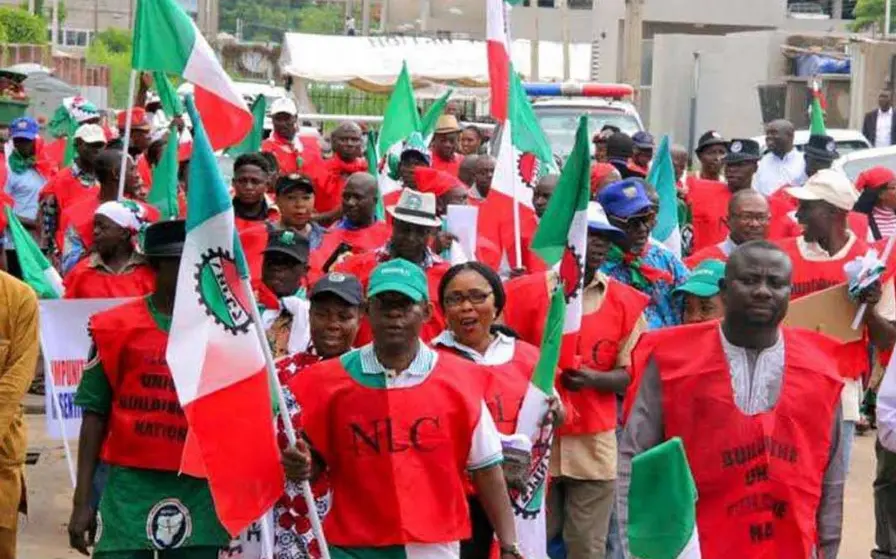
NLC: Wike No-Work No-Pay Unconstitutional, Violates Rights
Summary
- The Nigeria Labour Congress (NLC) and the National Union of Teachers (NUT) have declared Wike's "no-work, no-pay" directive unconstitutional and unenforceable.
- Their stance is based on Section 40 of the 1999 Constitution, which guarantees the right of workers to strike.
- The Trade Unions Act also provides statutory backing for workers' right to engage in industrial action after due process.
- Nigeria has ratified ILO Conventions 87 and 98, which further protect the right to organize and strike.
- These legal instruments collectively ensure workers' right to strike, provided due process is followed.
The Controversy Over Wike's Directive
Any assessment of the enforceability of "no-work, no-pay" directives during industrial actions must account for these powerful legal protections, which suggest that penalizing workers for lawful strikes could be deemed unconstitutional and contrary to international labor standards.
The Nigeria Labour Congress (NLC) and the National Union of Teachers (NUT) have jointly asserted that a "no-work, no-pay" directive, attributed to Wike, lacks constitutional backing and cannot be legally enforced. This declaration marks a significant point of contention in Nigeria's industrial relations landscape, as major labor organizations push back against measures perceived to undermine workers' fundamental rights. The unions' position underscores a critical debate concerning the permissible scope of government or employer actions during periods of industrial unrest.
This directive, which aims to withhold salaries from employees participating in strike actions, has been met with firm opposition from organized labor. The NLC and NUT argue that such a policy contravenes established legal frameworks designed to protect the right to strike. Their collective voice emphasizes the importance of adhering to national and international labor laws, particularly when addressing disputes that lead to work stoppages. This confrontation brings into sharp focus the legal parameters governing industrial actions and the rights of workers to withdraw their labor.
Legal Foundations of Strike Action in Nigeria
The basis for the NLC and NUT's strong opposition to the Wike "no-work, no-pay" directive rests firmly on a tripartite foundation of national constitutional provisions, specific labor legislation, and ratified international conventions. Central to their argument is Section 40 of the 1999 Constitution of the Federal Republic of Nigeria, which unequivocally guarantees the right of workers to participate in industrial actions. This constitutional safeguard is a cornerstone of labor rights in the country, ensuring that employees can collectively express grievances through work stoppages after fulfilling due process requirements.
Further reinforcing this position is the Trade Unions Act, a pivotal piece of Nigerian legislation that outlines the framework for trade unions and their activities, including the right to embark on strikes. This Act provides the statutory details and procedures that must be followed for industrial actions to be considered lawful. Together, the 1999 Constitution and the Trade Unions Act establish a robust domestic legal environment that recognizes and protects the right to strike as a legitimate tool for workers to advocate for their interests, provided that established protocols are observed.
International Commitments and Enforceability
Beyond national statutes, Nigeria's international commitments through the International Labour Organization (ILO) further bolster the unions' argument against the "no-work, no-pay" policy. The country has formally ratified two significant ILO Conventions: Convention 87, which addresses Freedom of Association and Protection of the Right to Organise; and Convention 98, concerning the Right to Organise and Collective Bargaining. These international treaties, once ratified, become an integral part of Nigeria's legal landscape, imposing obligations on the state to uphold the principles enshrined within them.
The NLC and NUT specifically highlight that these conventions, alongside the 1999 Constitution and the Trade Unions Act, collectively affirm the fundamental right of workers to engage in strike action, provided that all necessary due process is observed. Consequently, any governmental or employer directive, such as the Wike "no-work, no-pay" policy, that seeks to penalize employees for exercising this legally protected right following due process, is viewed by the unions as a direct contravention of both domestic and international legal principles. This comprehensive legal framework, encompassing constitutional, statutory, and international law, forms the bedrock of the unions' assertion that the directive is unconstitutional and unenforceable.
Why It Matters for Nigerian Labor Law
The firm position adopted by the Nigeria Labour Congress and the National Union of Teachers regarding the Wike "no-work, no-pay" directive holds substantial implications for the future of industrial relations and the interpretation of labor law across Nigeria. This dispute serves as a crucial reminder for legal practitioners, particularly those advising employers or unions, to meticulously consider the comprehensive legal framework that underpins the right to strike. The unions' challenge highlights that such directives face considerable constitutional and international law hurdles, making their enforceability highly questionable.
Lawyers advising employers or unions in Nigeria should therefore note the specific legal grounds cited by the NLC and NUT. The provisions of Section 40 of the 1999 Constitution, the detailed stipulations within the Trade Unions Act, and the binding nature of ILO Conventions 87 and 98, both ratified by Nigeria, collectively establish a robust legal basis for the right to strike. Any assessment of the enforceability of "no-work, no-pay" directives during industrial actions must account for these powerful legal protections, which suggest that penalizing workers for lawful strikes could be deemed unconstitutional and contrary to international labor standards.
Practical Implications
Lawyers advising employers or unions in Nigeria should note the legal grounds cited by NLC and NUT (1999 Constitution, Trade Unions Act, ILO Conventions) when assessing the enforceability of 'no-work, no-pay' directives during industrial actions, as such directives face significant constitutional and international law challenges.
Source
How does this affect you?
Get an AI analysis of this article grounded in your jurisdictions, practice areas, and any policy documents you've uploaded to Wansom.
Finish Reading the Full Story and the Expert Analysis.
Get the latest legal & regulatory intelligence in Nigeria
Wansom is AI and can make mistakes.