
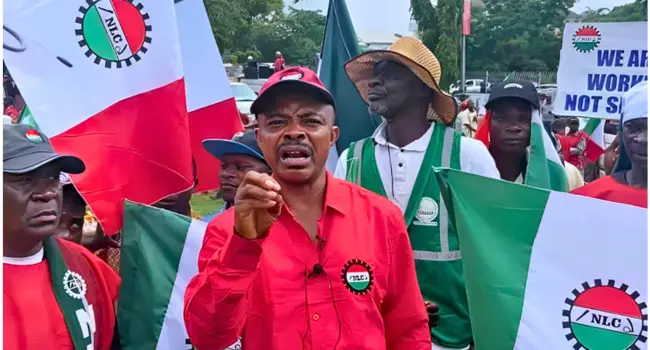
NLC: N500,000 Minimum Wage Demand Nigeria for Workers' Economic Relief
Summary
- The Nigeria Labour Congress (NLC) and civil servants, through the JNPSNC, Trade Union Side, recently demanded a new national minimum wage of N500,000.
- The unions also backed a demand for the price of petrol to be set at N500.
- These demands are a direct response to the economic hardship currently affecting Nigerian citizens.
- The NLC's proposals could significantly impact payroll and compliance obligations for Nigerian employers.
- Employers and HR professionals should closely monitor these developments due to potential industrial action and adjustments to remuneration.
Workers' Unions Table Significant Demands
Employers and HR professionals in Nigeria should closely monitor the ongoing NLC demands for a new minimum wage.
In a recent development, the Nigeria Labour Congress (NLC), alongside civil servants represented by the Joint National Public Service Negotiating Council (JNPSNC), Trade Union Side, has formally put forward a substantial demand for a new national minimum wage. This collective call seeks to establish a minimum monthly remuneration of N500,000 for workers across Nigeria, reflecting a significant proposed increase from current figures.
This assertive stance by the NLC and its allied civil service unions is not limited to wage adjustments. The workers' representatives have also voiced support for a N500 price point for petrol, indicating a broader set of economic grievances. These NLC workers' demands Nigeria are rooted in the prevailing economic hardship experienced by the populace, which has prompted the unions to advocate for measures aimed at alleviating financial strain on households.
Context of Economic Hardship and Industrial Relations
The backdrop to the JNPSNC N500k wage demand and the call for a fixed petrol price is the severe economic hardship currently impacting Nigerian citizens. This environment of financial strain has intensified pressure on labor organizations to push for more robust protections and improved living standards for their members. The Nigeria Labour Congress minimum wage proposal, therefore, emerges as a direct response to these challenging conditions, aiming to provide a more sustainable income floor for the workforce.
Such demands are critical indicators of the evolving Nigeria industrial relations outlook. They underscore the ongoing tension between workers' expectations for fair compensation and the broader economic realities of the nation. The NLC's role as a key advocate for labor rights means that its pronouncements carry significant weight, often setting the tone for national conversations around economic policy and worker welfare.
Implications for Employers and Compliance
The NLC N500,000 minimum wage demand Nigeria carries profound implications for employers and human resources professionals across the country. Should these negotiations prove successful, businesses would face substantial adjustments to their payroll structures and operational budgets. This necessitates a proactive approach to financial planning and a thorough review of existing compensation frameworks to ensure future compliance.
Employers and HR professionals in Nigeria should closely monitor the ongoing NLC demands for a new minimum wage. The potential for industrial action remains a significant consideration if these demands are not met, which could disrupt operations across various sectors. Successful negotiations could lead to significant adjustments in payroll and compliance obligations, requiring businesses to adapt swiftly to new regulatory landscapes and employee expectations.
Practical Implications
Employers and HR professionals in Nigeria should closely monitor the ongoing NLC demands for a new minimum wage, as successful negotiations could lead to significant adjustments in payroll and compliance obligations, and potential industrial action if demands are not met.
Source
How does this affect you?
Get an AI analysis of this article grounded in your jurisdictions, practice areas, and any policy documents you've uploaded to Wansom.
Finish Reading the Full Story and the Expert Analysis.
Get the latest legal & regulatory intelligence in Nigeria
Wansom is AI and can make mistakes.