
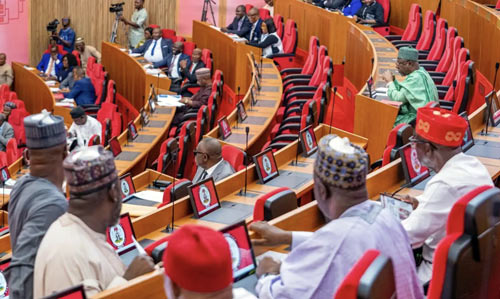
Nigerian Senate Orders NCC Probe: Failed Call Airtime Deductions Investigated
Summary
- The Nigerian Senate has directed the Nigerian Communications Commission (NCC) to investigate mobile network operators' billing practices.
- This investigation follows complaints of airtime deductions for failed, interrupted, or dropped calls.
- The Senate urged the NCC to introduce measures requiring operators to automatically refund or reverse airtime for verifiably failed calls.
- These measures should also cover qualifying network-related issues, ensuring subscribers do not pay for undelivered services.
What Happened
The Senate's firm stance on this matter reinforces a fundamental principle of consumer rights: payment should only be rendered for services that are actually delivered.
The Nigerian Senate has initiated a significant inquiry into the billing practices of the nation's mobile network operators. This directive mandates the Nigerian Communications Commission (NCC) to conduct a thorough investigation, prompted by a growing number of complaints from subscribers. These grievances primarily concern the unauthorized deduction of airtime for calls that either fail to connect, are interrupted mid-conversation, or are prematurely dropped, leading to widespread consumer dissatisfaction.
The legislative body's intervention underscores a commitment to addressing persistent consumer concerns within the telecommunications sector. The Senate's order for this Nigerian Senate NCC failed call probe highlights a systemic issue where users are allegedly charged for services that are not fully rendered, resulting in financial losses for millions of mobile subscribers across the country. This move signals a heightened scrutiny over how mobile network operators manage their billing systems, particularly in scenarios where call quality is compromised and service delivery is incomplete.
Regulatory Mandate
Beyond merely investigating, the Senate has also issued a clear directive to the Nigerian Communications Commission regarding future regulatory actions. While the Senate has issued a clear directive for future regulatory actions, the NCC, in collaboration with the Central Bank of Nigeria (CBN), introduced a framework in February 2026 for automatic refunds for failed airtime and data transactions, designed to protect consumers from unfair airtime deductions for failed calls in Nigeria. Specifically, the Senate urged the regulator to compel operators to automatically reverse or refund any airtime that has been deducted for calls that are verifiably unsuccessful. This proactive approach aims to shift the responsibility from the consumer to the service provider.
This mandate extends to situations where call failures are attributable to qualifying network-related issues, ensuring that the burden of proof or the often-cumbersome process of seeking redress does not fall solely on the consumer. The Senate order NCC airtime refunds aims to establish a transparent and efficient system where billing errors related to service delivery failures are rectified without manual intervention from the subscriber, thereby streamlining the process of compensation for undelivered services and enhancing consumer trust.
Consumer Protection and Industry Impact
The Senate's firm stance on this matter reinforces a fundamental principle of consumer rights: payment should only be rendered for services that are actually delivered. This legislative push for greater accountability is expected to significantly bolster telecom consumer protection Nigeria, setting a precedent for how service providers are held responsible for service quality. It places a direct responsibility on mobile network operators billing practices to ensure the integrity and fairness of their charging mechanisms, moving away from practices that penalize users for network deficiencies.
Compliance officers at Nigerian mobile network operators should review their billing systems for failed/dropped calls and prepare for potential NCC audits and new regulatory requirements mandating automatic refunds. This development also signals increased scrutiny on consumer protection in the telecom sector, potentially impacting future litigation and requiring a re-evaluation of existing service level agreements. The Nigerian Communications Commission investigation into these practices could lead to substantial changes in how telecommunication services are billed and how consumer complaints are handled, potentially setting a new benchmark for industry standards and fostering a more equitable relationship between operators and their subscribers.
Practical Implications
Compliance officers at Nigerian mobile network operators should review their billing systems for failed/dropped calls and prepare for potential NCC audits and new regulatory requirements mandating automatic refunds. This development also signals increased scrutiny on consumer protection in the telecom sector, potentially impacting future litigation.
Source
How does this affect you?
Get an AI analysis of this article grounded in your jurisdictions, practice areas, and any policy documents you've uploaded to Wansom.
Finish Reading the Full Story and the Expert Analysis.
Get the latest legal & regulatory intelligence in Nigeria
Wansom is AI and can make mistakes.